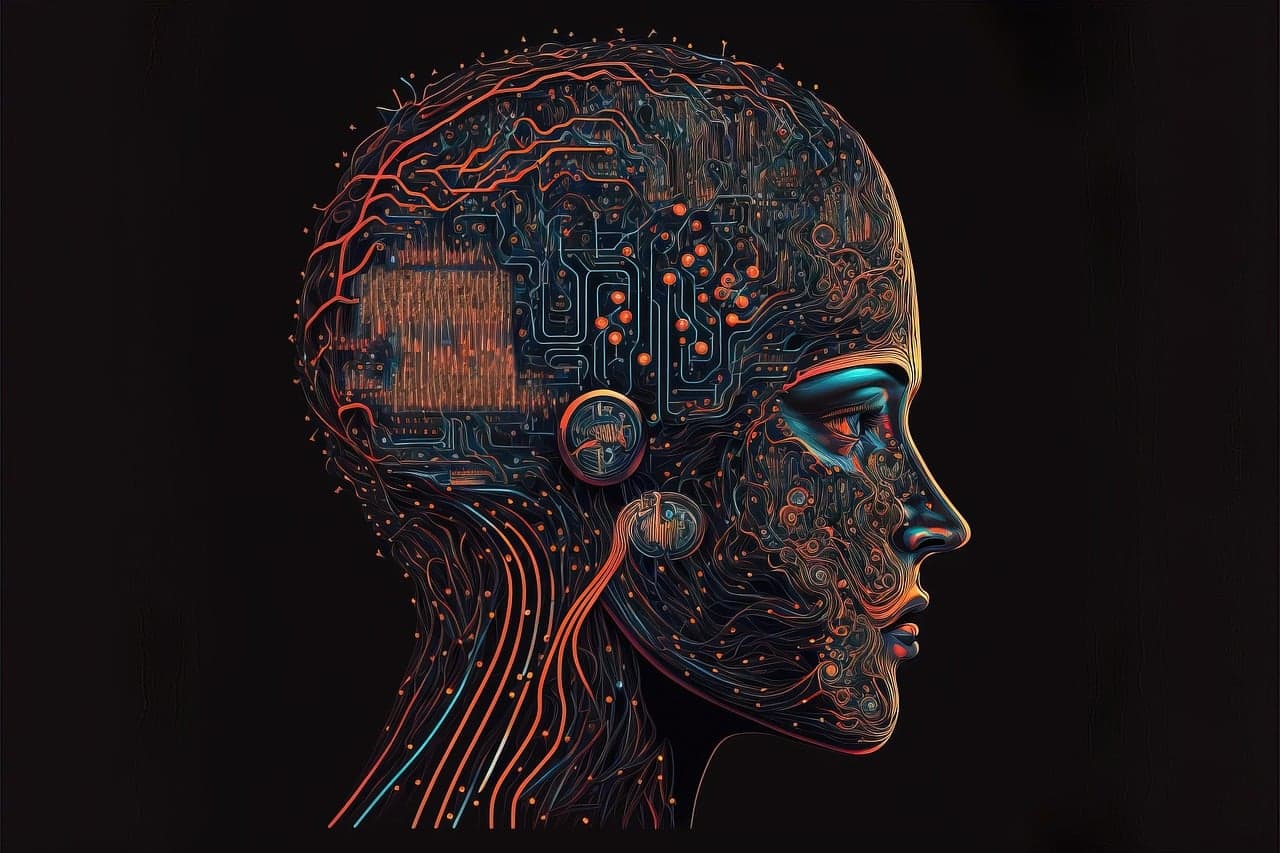
A deepfake is fake image, video or audio content that uses AI techniques to imitate or alter a person's face, movements or voice in a way that looks close to real. The term comes from the English words "deep learning" and "fake"; in Turkish, the equivalents "derin kurgu" and "derin sahte" are also used. Türkiye's Personal Data Protection Authority (Kişisel Verileri Koruma Kurumu, KVKK) covers the topic in an information note it published in January 2024.
How does a deepfake work?
The AI learns a person's face and voice from their existing photos, videos or audio recordings, then transfers these features onto another image or speech. According to KVKK's note, a relatively small number of recordings can be enough for a highly realistic result. The technology is also used in fields such as cinema and advertising; the real risk comes from making someone appear to do something they did not do, or say something they did not say. KVKK draws attention to the risks of manipulation, fraud, cyberbullying and financial harm, and notes that children and older people are particularly targeted.
Example
A voice message that arrives in the voice of someone close to you urgently asking for money, or a video in which a well-known face praises an investment opportunity, could be a deepfake. Some of the clues KVKK lists are:
- Does the person blink naturally; are their eye movements normal?
- Does their facial expression match the emotion of what they are saying?
- Do the head and body move in harmony with each other?
- Is there a robotic quality to the tone of voice?
- When the footage is slowed down, do unnatural frames appear?
No single sign counts as conclusive proof. When you are suspicious, verify by calling the person through another channel you know, and wait before sharing the content.
What is the difference between a deepfake and ordinary photo editing?
Edits such as filters, cropping or colour adjustments change an existing image but leave the person and the event in it as they are. A deepfake, by contrast, uses the face and voice that carry a person's identity to produce a moment that never happened. That is why KVKK recommends being careful with posts in which your face and voice can be seen.
Related pages
Frequently asked questions
What does deepfake mean?
It means fake content in which a person's face, movements or voice are imitated or altered with AI in a way that looks close to real. In Turkish, the equivalents derin kurgu and derin sahte are also used.
How can you tell a deepfake video?
According to KVKK's tips, look at eye movements and blinking, whether the facial expression matches the words, whether the head and body move in harmony, and whether there is a robotic quality to the voice. When you are suspicious, verify by calling the person through another channel.
Does making a deepfake require many photos?
Not necessarily. According to KVKK, a relatively small number of videos, photos or audio recordings can be enough for highly realistic content.
How can I protect myself from deepfakes?
Be careful with posts in which your face and voice are clearly visible, verify messages asking for money urgently through another channel, and check the source of suspicious content before sharing it.
Is a deepfake always illegal?
The technology is also used in fields such as cinema and advertising. KVKK states that misusing personal data in this way can lead to criminal offences and misdemeanours; in a specific case, consult a legal professional or the relevant authority.
Editorial desk
Stories signed by the Cultvia editorial desk follow our editorial policy; every story lists its sources at the end and errors are fixed under our corrections policy.
Last updated:
What changed?
- : First published
Your follow list is kept only on this device; when the page is updated you'll see it in Following.
Get email updates
Sources
- Deepfake Bilgi Notu (duyuru) — Kişisel Verileri Koruma Kurumu
- Deepfake Bilgi Notu (PDF) — Kişisel Verileri Koruma Kurumu
Up next
 AI in Everyday LifeHow can AI help you prepare your CV?26 October 2026 · 5 min read