Start your Düzce trip at ancient Prusias ad Hypium in the Konuralp district of the provincial centre, where the theatre locals call the "forty steps" and the museum fit into a single morning. In the afternoon, head down to Akçakoca on the Black Sea coast for the Genoese Castle and the historic houses of the Upper Quarter. Waterfalls, highland pastures and nail-free timber çantı mosques turn the province into a green, multi-day route.
What should first-time visitors to Düzce see?
Düzce sits on the road between Istanbul and Ankara, in a fertile plain ringed by forest. According to Go Türkiye, the Turkish tourism promotion agency, the historic heart of the province is the Konuralp district in the centre, home to the ancient city and its museum.
Prusias ad Hypium
The ancient city, also known as Konuralp, dates back to the third century BC. Many of its monumental structures, among them aqueducts, a theatre, a bath and a bridge, were built in those centuries. The Horse Gate at the entrance and the walls joined to it stand out for the horse relief on the lintel; an inscription mentions a funerary stele a citizen of Prusias had made for his mother.
Konuralp Theatre
The theatre known locally as the "forty steps" was built in the Hellenistic period and its Roman-era additions survive. It is one of the liveliest reminders of the artistic wealth of the Prusias kingdom. Climb to the top row and look out over the plain.
Düzce Konuralp Museum
Founded to protect the legacy of the ancient city, the museum has four main sections: archaeology, stonework and mosaics, ethnography and the museum garden. Statues, jewellery, glassware and coins from the Bronze Age to the Eastern Roman period are shown alongside regional costumes and hand embroidery. Check current hours and fees on the museum's official page.
What is there to do in Akçakoca?
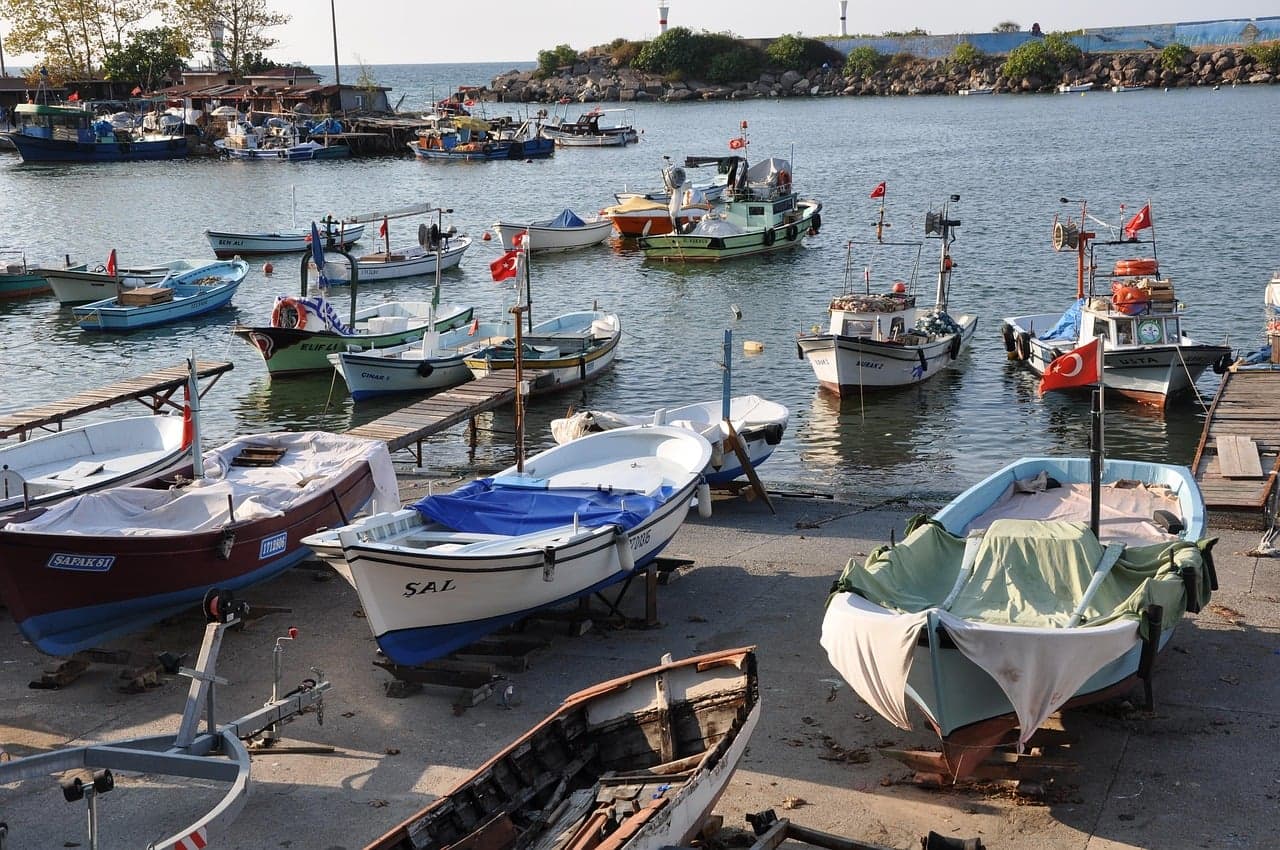
According to the Düzce Governorship, Akçakoca was one of the first places in Türkiye where tourism began in the 1950s, built on sea holidays and caravanning. Known as Diapolis in the Roman and Byzantine periods, the district is known today for its fishing harbour, long beaches, mountain strawberries and chestnut honey.
Akçakoca Genoese Castle
The castle, left from the Roman and Eastern Roman periods, is registered as an archaeological and natural site and is on the UNESCO World Heritage Tentative List. There are two separate beaches to its east and west, and green slopes running from the cliff to the sea recall fjords. Watch the sunset here.
Upper Quarter and historic houses
In the Upper Quarter, one of Akçakoca's oldest neighbourhoods, one hundred and sixty historic houses are registered and protected. The largest is the white-fronted, twenty-eight-room Mehmet Arif Bey Mansion. The nearby local market sells traditional dishes and handmade ornaments.
Fakıllı Cave
In Fakıllı village, eight kilometres southeast of Akçakoca, this natural cave is full of stalactites and stalagmites. Its total length is 1,017 metres, of which 350 metres is open to visitors.
Where are the waterfalls and highland pastures?
Güzeldere Waterfall Nature Park
In the Gölyaka district, the water falls 120 metres among giant beech and hornbeam trees. The park has walking trails and camping areas, and is suitable for cycling and photo walks.
Samandere and Aydınpınar waterfalls
Samandere Waterfall Natural Monument, close to the city centre, is known for its tufa-like formations and rich vegetation. The waterfall in Aydınpınar village, ten kilometres from the centre, is surrounded by a trail suited to walking.
Kardüz and Topuk plateaus
Kardüz Plateau in Gölyaka has a 24-kilometre trail, notable for its endemic plants and wildlife; the hike calls for good fitness and navigation experience. Topuk Plateau and Pond in Kaynaşlı, at 1,300 metres, is popular for canoeing, tent camping and nature walks.
Geyiklibel Canyon and Sarıkaya Cave
Along Geyiklibel Canyon in the Yığılca district you pass fir, beech, black pine and oak forests, with small ponds and waterfalls. A small waterfall also flows in the high-ceilinged hall of Sarıkaya Cave, also in Yığılca.
Why are the çantı mosques special?
Düzce's villages hold çantı-style mosques built by communities that settled in the area after the fourteenth century. Built without nails, with log ends notched into one another, they have no foundations and sit on rings set on large stones.
- Orhan Gazi Mosque, Çayağzı village (Akçakoca): built nail-free from interlocking long logs and about seven hundred years old. A good first stop to see the çantı technique in its plainest form.
- Hemşin village Mosque (Akçakoca): built in 1877, with a stone lower storey, a çantı upper storey and a wooden minaret.
- Gaziler village Mosque (Yığılca): the door carries rosettes and pinwheels painted with plant dyes in a brick colour.
What is on the table in Düzce?
Düzce cuisine brings together the culinary traditions that live side by side in the province. Start with Düzce köftesi, kneaded with cornmeal instead of bread, Konuralp pilaf made with rice grown at Konuralp since the 1800s, and the Akçakoca black cabbage pide made with mancar greens. In Akçakoca, follow fresh fish with hazelnut halva and tea, and try melengüçceği for dessert. Haluj, abısta, hinkal, göbete and smoked cheese from the Caucasian and Crimean kitchens are part of the table too. On the way home, buy hazelnut damat şekeri and Tepeköy's sugar-cane molasses, as listed by Go Türkiye.
How many days do you need in Düzce?
Two days is ideal. A sample route:
- Day one: the ancient city, theatre and museum at Konuralp in the morning; Samandere Waterfall and Aydınpınar in the afternoon.
- Day two: Akçakoca: the Genoese Castle, Upper Quarter, Fakıllı Cave and the çantı mosque in Çayağzı village.
- Day three, if you have time: Güzeldere Waterfall and Kardüz or Topuk plateau.
For more routes on the western Black Sea, browse our City Guides section.
When should you go, and how do you get there?
Waterfalls run strongest in spring; June to September suits the sea and the plateaus, and October is best for autumn colour. Kardüz Plateau is covered in snow in winter. Düzce lies on the main road between Istanbul and Ankara and is easy to reach from both by bus or car. You need a vehicle for the plateaus and village mosques.
What should you watch out for?
- Do not take long hikes such as the Kardüz trail alone; tell someone your route and check the weather.
- Rocks around waterfalls are wet and slippery; wear sturdy shoes.
- Çantı mosques are still village places of worship; mind visiting hours and dress.
- Hazelnut orchards are private property; do not enter without permission.
Frequently asked questions
How many days do you need in Düzce?
Allow one day for the ancient city, theatre, museum and Samandere Waterfall in Konuralp, and one day for Akçakoca. Add a third day for Güzeldere Waterfall and the Kardüz or Topuk plateau.
What is a çantı mosque?
Çantı is a timber building technique in which log ends are notched together without nails. Düzce's villages have foundationless mosques built this way on large stones.
When is the best time to visit Düzce?
Spring suits the waterfalls, June to September the sea and plateaus, and October the autumn colours. Kardüz Plateau is snow-covered in winter.
How do you get to Düzce?
Düzce is on the main road between Istanbul and Ankara and is easy to reach by bus or car from both. You need a vehicle for the plateaus and village mosques.
Editorial desk
Stories signed by the Cultvia editorial desk follow our editorial policy; every story lists its sources at the end and errors are fixed under our corrections policy.
Last updated:
What changed?
- : First published
Sources
- Gör Düzce — Go Türkiye (Türkiye Tourism Promotion and Development Agency), 22 October 2026
- Turizm — T.C. Düzce Valiliği, 22 October 2026
- Taste Local Flavors of Düzce — Go Türkiye (Türkiye Tourism Promotion and Development Agency), 22 October 2026
Up next
 City RoutesParis Photo 2026: opening hours, sectors and what to see13 November 2026 · 1 min read


