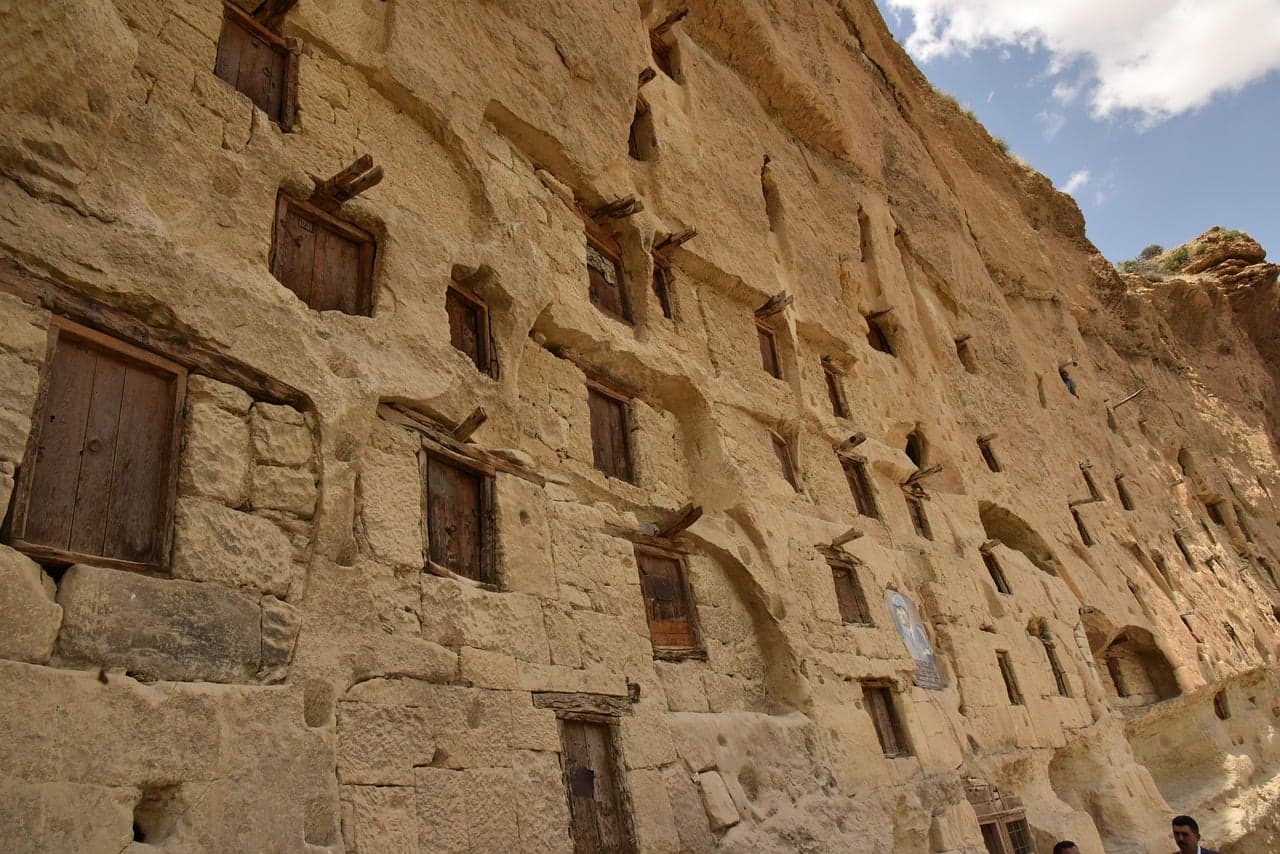
Start your Karaman trip at the citadel on the mound in the middle of town, then walk to the mosque that holds Mevlânâ's mother's tomb, the Yunus Emre Mosque and the Hatuniye Madrasa. Spend a second day outside the city, among the Byzantine ruins of Mount Karadağ, the rock-cut granaries of Taşkale and, if you have a third day, Ermenek, the first capital of the Karamanoğlu dynasty. Go Türkiye, Türkiye's tourism promotion agency, lists these stops as the core of a visit.
Why is Karaman linked with the Turkish language?
Karaman is named after the Karamanoğlu principality, founded in the thirteenth century. According to the Karaman Governorship, Karamanoğlu Mehmet Bey issued a decree in May 1277 asking that no language other than Turkish be used in official business. Since 1960 the city has marked that decree with a Turkish Language Festival each May. Keep that story in mind: the buildings below make more sense as chapters of one local history.
What can you see in the city centre?
The monuments cluster together, so half a day on foot is enough.
Karaman Castle. The fortress is thought to date from the late eleventh century and was renewed under the Seljuks and the Karamanoğlu dynasty; the Ottomans repaired the inner castle in 1465. Inscriptions and fragments from older, fallen buildings were set into the walls, so you will see stones from several periods. The mound underneath carries Bronze Age, Roman and Byzantine traces.
Karaman Museum. Two halls, archaeology and ethnography, show objects from Roman times to the Republic: clay vessels, idols, bone and metal jewellery, tear bottles and coins. Visit before heading out to the Byzantine sites. Check the museum's official page for current hours and fees.
Aktekke (Mader-i Mevlâna) Mosque. Built in 1370, the mosque forms a complex with a bath, dervish cells and cemeteries. Rumi came to Karaman with his family in 1222, married here and stayed seven years. The tomb of his mother, Mümine Hatun, is inside, which is why the building is also called the Mother of Mevlânâ Mosque; twenty-one stone sarcophagi of the family stand in a reserved space.
Yunus Emre Mosque and Tomb. The tomb beside the mosque's west wall is attributed to Yunus Emre, one of Anatolia's best-loved mystic poets. Pause for a quiet moment in front of it.
Hatuniye Madrasa. Built in 1382, it has student rooms lining its east and west façades and decoration that mixes geometric and plant motifs, palmettes and inscription bands.
Çeşmeli Church. In the old Tapucak quarter, this Byzantine-style church was restored in 2007 and now hosts exhibitions, meetings and concerts. Check the programme before you go.
Hürrem Dayı House and Tartanlar Mansion. The first is a house of nearly three centuries with timber and painted decoration; the second, built in 1810, is a two-storey mansion around a central hall.
How do you visit the Thousand and One Churches?
Mount Karadağ, an extinct volcano north of Karaman, is dotted with Byzantine settlements. Two stops cover it.
Madenşehri. The largest of the Binbir Kilise buildings is Basilica No. 1 at the village entrance. First built in the year 500, it fell into ruin and was repaired in the 900s. A necropolis runs north of it, and some sarcophagi carry reliefs and figures.
Değle. Houses of two or three rooms give an idea of Byzantine domestic building. An altar predating the Byzantine period, later reused as a rock tomb, shows a man holding a bowl and scattering seed, a sign this was farming country.
What is on the road to Taşkale and Ermenek?
Taşkale Granaries. More than 250 granaries, each of one or two rooms, are carved by hand into the soft rock of Taşkale village; grain could be kept there for over thirty years. People reach them by gripping niches in the rock face, and grain is hauled up by chain pulleys. Photograph from below rather than climbing.
Tol Madrasa. The 1339 madrasa in Ermenek is known as the first major madrasa of the Karamanoğlu period and now shows ethnographic items and stonework. Ermenek was the capital of the principality from 1256 to 1475, according to the Governorship page.
Gökçeseki. A stepped sanctuary crowns the hill and the slopes hold many Roman and Byzantine rock tombs, some with couches and lion-shaped lids still in place.
What do you eat in Karaman?
The table sits between Central Anatolia and the Taurus. The Governorship describes Karaman şebit pilavı, a protected-designation dish of coarse bulgur, chickpeas and green pepper topped with roasted lamb or mutton and eaten wrapped in thin griddle-baked şebit bread. Also try the leavened Karaman bread, tahini pide, calla, arabaşı soup, Ermenek batırık and Ermenek halva made with molasses and tahini. Go Türkiye's food page adds Divle obruk cheese and Başyayla clotted cream.
How many days do you need, and when should you go?
Two days is ideal, three with Ermenek. Spring and autumn suit Karadağ walks; avoid open sites in midday summer heat. The Language Festival is in May. Reach Karaman by road or rail via Konya; the centre is walkable, but Karadağ, Taşkale and Ermenek need a car.
- Day one: castle and museum, Aktekke, Yunus Emre, Hatuniye, Çeşmeli Church and the old houses.
- Day two: Madenşehri and Değle in the morning, Taşkale in the afternoon.
- Day three: Tol Madrasa and Gökçeseki in Ermenek.
Check current hours and fees on the official pages, bring a hat, water and sturdy shoes for Karadağ, and keep quiet at tombs and mosques. For more routes, see the Reads section.
Frequently asked questions
How many days do you need in Karaman?
One day for the city centre and one for Karadağ and Taşkale covers the main sites in two days. Add a third day for Tol Madrasa and Gökçeseki in Ermenek.
Where is Binbir Kilise?
The Thousand and One Churches stand at Madenşehri and Değle on Mount Karadağ, an extinct volcano north of Karaman. The largest is Basilica No. 1 at the Madenşehri village entrance, first built in the year 500.
When is the best time to visit Karaman?
Spring and autumn suit the ruins and Karadağ walks best. The Turkish Language Festival takes place in May.
How do you get to Karaman?
Reach Karaman by road or rail via Konya. The city centre is walkable, but Karadağ, Taşkale and Ermenek need a vehicle.
Editorial desk
Stories signed by the Cultvia editorial desk follow our editorial policy; every story lists its sources at the end and errors are fixed under our corrections policy.
Last updated:
What changed?
- : First published
Sources
- Gör Karaman — Go Türkiye (Türkiye Turizm Tanıtım ve Geliştirme Ajansı), 20 October 2026
- Ermenek — T.C. Karaman Valiliği, 20 October 2026
- Karaman Şebit Pilavı — T.C. Karaman Valiliği, 20 October 2026
- Tat Karaman — Go Türkiye (Türkiye Turizm Tanıtım ve Geliştirme Ajansı), 20 October 2026
Up next
 City RoutesParis Photo 2026: opening hours, sectors and what to see13 November 2026 · 1 min read


