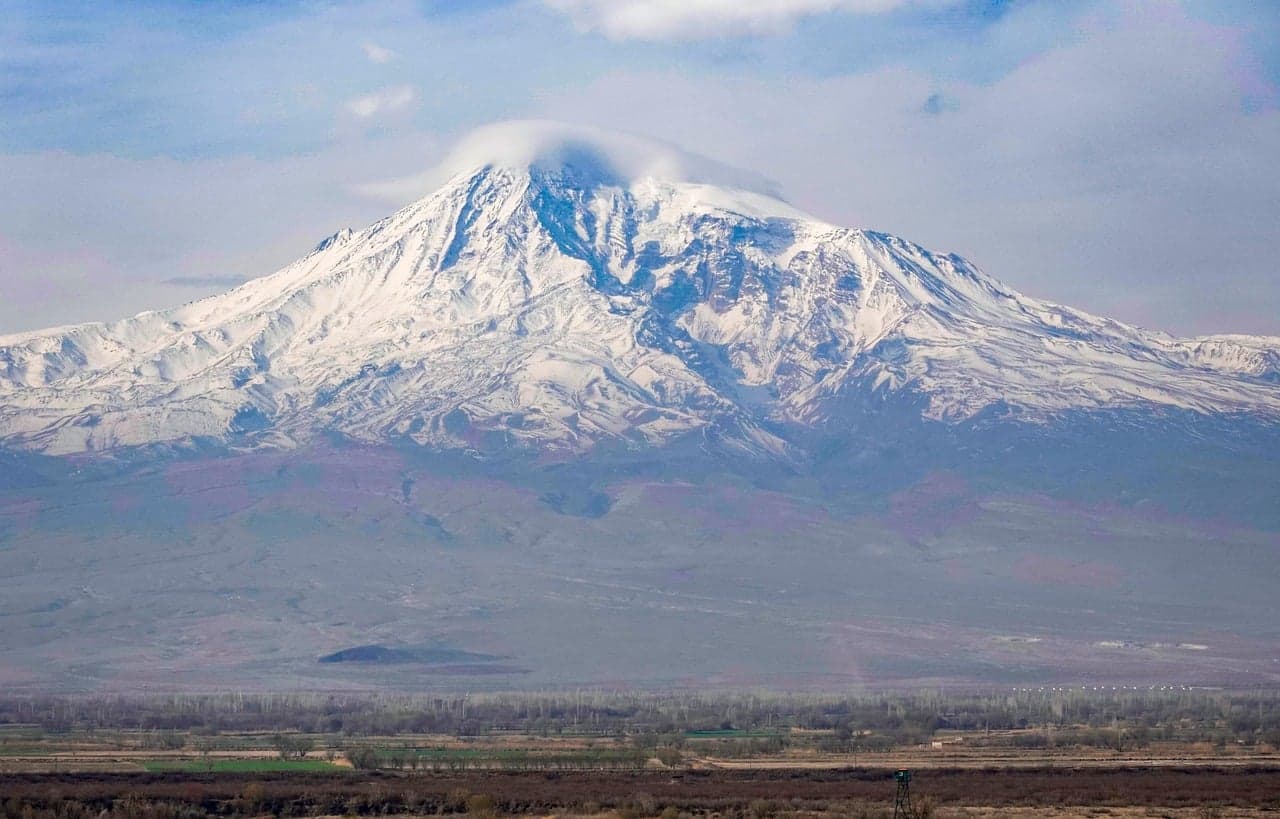
The heart of any route in Ağrı is Doğubayazıt: the İshak Paşa Palace on the hillside, the Urartian castle right beside it and the Old Bayazıt Mosque fit into a single frame, with snow-capped Mount Ağrı (Ararat) rising behind them. At the foot of the mountain wait the site known as the trace of Noah's Ark and the Meteor Crater, and on the Patnos and Diyadin side the Urartian mounds and the Meya Caves. With two or three days you can get to know the palace, the mountain and Ağrı's table with its abdigör köftesi.
What can you see at a glance in Doğubayazıt?
İshak Paşa Palace
The palace stands on a hill a few kilometres south-east of Doğubayazıt, overlooking Old Bayazıt and the plain. Its construction began in 1685 and was completed in 1784; in other words, it took about a century to finish. Spread over an area of about seven thousand six hundred square metres, the palace has a harem, a selamlık (men's quarters), two courtyards, a mosque, a tomb, a kitchen, a bath and hundreds of rooms. Its architecture combines Seljuk, Ottoman and Iranian influences, with traces of European Baroque too. Come back towards sunset to see the palace in a different light.
The palace's details
The monumental portal on the east facade, with its reliefs and plant motifs, carries the features of Seljuk stonework. The single-domed mosque, with its minaret built of two-coloured stone, is the best-preserved part of the complex, and the tomb outside the qibla wall is decorated with geometric and plant motifs. The brackets on the north facade of the selamlık bear winged dragons, lions and human figures. Cavities inside the stone walls show that the palace was heated by a central heating system.
Doğubayazıt Castle (the Urartian Castle)
The castle stands on cliffs about five kilometres east of Doğubayazıt, at the Belleburç locality north-east of Old Bayazıt. No one knows who built it, but it was used and enlarged by many civilisations. Inside are Urartian rock tombs, caves and the remains of a temple; it was also used in the Seljuk and Ottoman periods. Be careful when climbing on the rocks.
The Old Bayazıt Mosque
The mosque was built on a terrace created by walling a levelled slope beside the castle. It is a simple building of cut stone with a central dome and a single minaret, known as the oldest mosque in Doğubayazıt. The short walk between the palace, the castle and the mosque fits the region's layered history into a single frame.
The Tomb of Ahmed-i Hani
The tomb, eight kilometres from Doğubayazıt, was built in honour of Ahmed-i Hani, the seventeenth-century scholar, astronomer and historian; there is also a mosque beside it. You can easily add it to the route on the day you see the palace.
What is there around Mount Ağrı?
Mount Ağrı National Park
Mount Ağrı, Türkiye's highest point at 5,137 metres, and its surroundings were declared a national park in 2004. The park consists of Greater Ararat, Lesser Ararat at about 3,900 metres, the Meteor Crater and the area where Noah's Ark is located. At the summit is Türkiye's largest glacier; twenty-one plant species endemic to Mount Ağrı, as well as the Süphan lizard and the Apollo butterfly, live here. The first ascent of the summit was made in 1829; today climbing is possible only along certain routes.
The trace of Noah's Ark
The site lies south of Mount Ağrı, between the villages of Telçeker and Meşar, a few kilometres from the transit road. It is known as the place where, in the flood story of the sacred narratives, the ark is believed to have come to rest; the area around it is also called Noah's Lost City. It is worth a stop even just for the view of the mountain's foothills.
The Meteor Crater
The Meteor Crater, one of the three main parts of the national park, is also within Doğubayazıt; the crater, thought to have been made by an object falling from the sky, is part of the mountain's geological variety. It is easy to fit Mount Ağrı, the trace of Noah's Ark and the Meteor Crater into the same day; ask about roads and weather before setting off.
What Urartian traces are there in Ağrı's districts?
Girik Tepe and Aznavur Tepe
Girik Tepe, about a kilometre south-east of Patnos, is among the oldest remains in Ağrı; it was founded in the time of the Urartian king Menua and his son Argishti and is also known as Değirmen Tepe. Aznavur Tepe, known as Patnos Castle, is among the most important Urartian remains to survive, thanks to its architecture.
The Toprakkale Mosque
In Toprakkale village near Eleşkirt, some walls and towers of the castle known to have been built in the Urartian period still stand. The mosque at the foot of the mound is square in plan, with pointed arches and a single dome and no minaret; a simple but unusual building.
The Meya Caves
In Günbuldu village, twelve kilometres from the centre of Diyadin, is an old settlement carved into the rocks. Alongside water channels, graves and church remains, stone statues with horse, ram and sheep motifs have been found in the caves.
The Hamur Tomb
The tomb in the Hamur district was built in 1802 and consists of two parts. With its rectangular body and wooden entrance door, it differs from Seljuk tomb towers; it is an interesting example showing that old burial traditions continued until fairly recently.
What should you eat in Ağrı?
Ağrı's best-known dish is abdigör köftesi: lean, sinew-free and boneless beef is mixed with very little onion, egg and spices and served with pilaf. It is said to take its name from Çolak Abdi Paşa, who began the building of the palace. Selekeli, diced lamb or kid cooked in butter on a griddle, comes with garlic yoghurt and tandır bread. Keledoş, made with pounded wheat, kavurma, chickpeas, green lentils and kurut, Ağrı kete baked with butter, and light-coloured Ağrı honey from the rich flora of the highland pastures are also local flavours.
How many days do you need in Ağrı?
Two days in Doğubayazıt is enough for the main route; add a third day if you also want to see the Urartian traces in the districts. A sample route:
- Day one: İshak Paşa Palace in the morning; Doğubayazıt Castle, the Old Bayazıt Mosque and the Tomb of Ahmed-i Hani in the afternoon; watch the palace again at sunset.
- Day two: The trace of Noah's Ark and the Meteor Crater at the foot of Mount Ağrı; national park views on the way back.
- Day three: Girik Tepe and Aznavur Tepe in Patnos, or the Meya Caves in Diyadin.
For other stops in eastern Anatolia, see the City Routes page.
When should you go, and how do you get there?
Ağrı is on a high plateau; winters are long and harsh, and the most comfortable time is June to September. If you are thinking of climbing Mount Ağrı, choose the summer months and start preparing months in advance. There are flights to Ağrı from Istanbul and Ankara; Doğubayazıt is about forty-five minutes from Ağrı by road. Between the districts, a car or a tour is the most practical option.
What should you keep in mind?
- Climbing Mount Ağrı requires experience and a guide; find out the current permit conditions and routes from official sources.
- Doğubayazıt is a district close to the border crossing; do not leave the marked roads and visitor areas.
- Evenings get cool even in summer; dress in layers and do not forget sunscreen.
- Check current visiting hours and ticket prices for the palace and archaeological sites on their official pages.
Frequently asked questions
How many days do you need in Ağrı?
One day for İshak Paşa Palace, the castle and the mosque in Doğubayazıt, and one for the trace of Noah's Ark and the Meteor Crater at the foot of Mount Ağrı, is enough. You can add a third day for the Urartian traces in Patnos and Diyadin.
When is the best time to visit Ağrı?
Ağrı is on a high plateau, so winters are long and harsh. The most comfortable time for a trip is June to September; climbs of Mount Ağrı also take place in summer.
How do you get to Ağrı?
There are flights to Ağrı from Istanbul and Ankara. Doğubayazıt is about forty-five minutes from Ağrı by road; between the districts, a car or a tour is practical.
Where is İshak Paşa Palace?
The palace stands on a hill a few kilometres south-east of Doğubayazıt in Ağrı province, overlooking Old Bayazıt and the plain. Doğubayazıt Castle and the Old Bayazıt Mosque are right nearby.
What should you eat in Ağrı?
Abdigör köftesi, selekeli cooked with butter on a griddle, keledoş made with pounded wheat and pulses, Ağrı kete and light-coloured Ağrı honey are the standout local flavours.
Editorial desk
Stories signed by the Cultvia editorial desk follow our editorial policy; every story lists its sources at the end and errors are fixed under our corrections policy.
Last updated:
What changed?
- : First published
Sources
- Tarihi İshak Paşa Sarayı — T.C. Ağrı Valiliği
- Ağrı'da Görülecek Yerler — Go Türkiye (Türkiye Turizm Tanıtım ve Geliştirme Ajansı)
- Ağrı Lezzetleri — Go Türkiye (Türkiye Turizm Tanıtım ve Geliştirme Ajansı)
- Ağrı Dağı — Kültür Portalı – T.C. Kültür ve Turizm Bakanlığı (Ağrı İl Kültür ve Turizm Müdürlüğü)
Up next
 City RoutesParis Photo 2026: opening hours, sectors and what to see13 November 2026 · 1 min read


