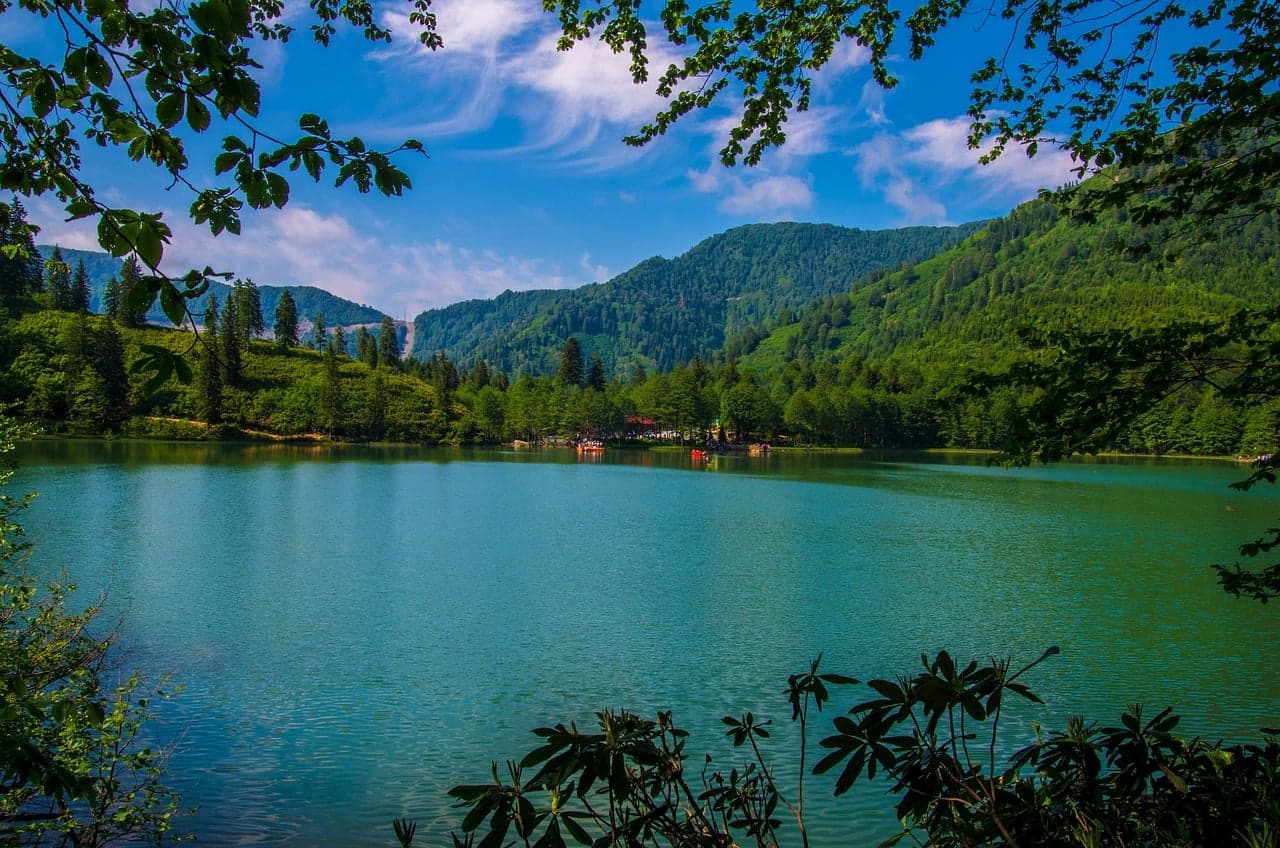
In Artvin, spend the first day on Livane Castle above the Çoruh and the town's old mansions, then give the following days to the medieval churches and lakes hidden in the valleys. Borçka Karagöl, the Camili basin declared a biosphere reserve by UNESCO, the Hatila Valley and the Kaçkar Mountains are the province's real showcase. Artvin should be explored without rushing, stopping often on the winding roads; allow at least three days.
What can you see in and around central Artvin?
The town is built on the slope of a deep valley bowl; the stops in the centre are few, but each one tells something about its character.
Artvin (Livane) Castle
In the Çayağzı neighbourhood, on the bank of the Çoruh river, stands a small but steep castle that controlled the entrance to the town. According to the sources, it was built in 937 by the Bagratid king Ashot the Great, and its old name is Livane. Inside are the remains of a cistern and a chapel. You see the castle best from the road down into town, as it rises above the Çoruh.
The Artvin Culture House
According to the inscription on its hearthstone, this mansion with a garden in the Orta neighbourhood was built in 1799. The cypress motifs carved on either side of the hearth are a fine example of the "tree of life" tradition that Ottoman craftsmen used everywhere, from tiles to gravestones. Linger a little in front of the hearth to look closely at the stone and woodwork.
Kafkasör Yaylası and Atabarı
Kafkasör, eight kilometres from the town centre, is a highland pasture with bungalows in the middle of the forest, ideal for walks in the town forest. At the Kafkasör Yaylası Festival and Sports Fair, held every year in the last week of June, the bull wrestling draws the most interest. Eight kilometres further up, Atabarı has a ski centre with a chairlift.
Hatila Valley National Park
In this narrow, deep valley very close to town, Mediterranean and Black Sea vegetation grow side by side. The valley is home to species such as bears, deer, foxes and eagles, and you will also see special beehives built on wooden posts; the story of Artvin honey starts partly here.
How do you explore the route of the Georgian churches?
Artvin, ruled by Georgian kingdoms through the Middle Ages, is one of Türkiye's richest regions for the churches and monasteries of that period. The buildings are far apart and at the end of mountain roads, so it is easiest to split the route over two separate days, Yusufeli and Şavşat.
İşhan Church
This is the grandest building in the region. According to a manuscript cited in the sources, its construction began in 955 and was completed in 1027; the domed basilica, about thirty-five metres long, should be seen together with the Chapel of the Virgin Mary to its south-west. Wait for the afternoon light to study the stone decoration on the facade.
Barhal Church
In the village of Altıparmak, thirty kilometres from Yusufeli, stands a three-aisled basilica dedicated to St John the Baptist. Its facades, built of smoothly cut grey stone, are enlivened with blind arches; with the wooden houses around it and the sound of the stream, it is the most peaceful stop on the route. It may be closed during restoration periods, so check the official page before your visit to see whether it is open.
Dört Kilise (Tekkale)
Seven kilometres past the village of Tekkale, on the road to a hamlet, the monastery consists of a church, a refectory, a seminary room and a separate chapel. Because it is made up of four separate buildings, it has been called "Dört Kilise" (Four Churches) for centuries. It is regarded as the place that best reflects the layout of a medieval monastery in the region.
Dolishane (Hamamlı) Church
It is in the village of Hamamlı, reached by a short road leaving the Artvin–Şavşat road at the twentieth kilometre. According to its inscription it was built in the time of the Bagratid king Sumbat. On the outer facade, a relief of a standing king offering a model of the church with both hands and facing figures of angels await you.
Porta (Pırnallı) Monastery
The monastery is in the village of Pırnallı near the town, on a ridge between two valleys. Made up of a church, a chapel, a fountain and a bell tower, it was abandoned at the end of the sixteenth century; with the hamlet houses around it, you can still read the layout of a medieval settlement.
The Ortacalar Twin Bridges
Near the village of Ortacalar in Arhavi, two single-span stone bridges, thought to have been built in the eighth century, stand at right angles to each other. With their sloping backs they look like a painting in photographs; walk carefully on the path down to the stream.
What makes Artvin's lakes, canyons and biosphere reserve special?
What sets Artvin apart from the other Black Sea provinces are its lakes buried in the forest and its villages that still keep their wooden architecture.
Borçka Karagöl
Artvin has two landslide lakes called "Karagöl"; the one in Borçka is easier to reach. Surrounded by dense forest, its still, dark water looks completely different in the morning mist. You can add the other Karagöl, on the Şavşat side, to the Şavşat route.
The Camili (Maçahel) Biosphere Reserve
The Camili basin, forty-five kilometres from Borçka on the Georgian border, is part of UNESCO's Man and the Biosphere Programme as Türkiye's first biosphere reserve. The basin, home to the pure Caucasian honeybee, lies on one of the important migration routes of soaring birds of prey. There are six villages in the basin; explore it with respect for the villagers' daily life.
Cehennem Deresi Canyon
The canyon, seven kilometres north-west of the centre of Ardanuç, is about five hundred metres long and in places narrows to a width of one or two metres. It is a demanding route reached by stony, steep paths; sturdy shoes are a must to see its walls turn green in spring.
Madenköy (Şavşat)
Madenköy, once called Bazgiret, lies in a valley surrounded by rock and forest on three sides. All the village's houses are wooden and its traditions are still alive; it is a good stop for seeing on site Artvin's "forest homeland" architecture, where everything from village houses to raised granaries (serenders) is made of wood.
What should you know if you want to climb the Kaçkars?
The highest point of the Kaçkar Mountains is 3,932 metres; with their glaciers, lakes and highland pastures, they are a favourite with mountaineers. From Yusufeli you drive to the village of Hevek (Yaylalar) and from there to the Olgunlar neighbourhood; the campsite closest to the summit is Dilberdüzü at 2,860 metres. The governor's office warning is clear: going beyond Dilberdüzü without a guide is dangerous, as fog can descend suddenly. June to September is the best time for summer climbs.
What should you eat in Artvin?
Artvin's cuisine carries traces of Black Sea, Anatolian and Georgian cooking. Hopa Laz böreği, with geographical indication status, is baked with a milk and egg mixture between layers of pastry and eaten sprinkled with black pepper. Puçuko, also with geographical indication status, is a winter dish made with green beans dried in the sun. Çinçar soup made from nettles, çarğala made from chard and silor, topped with yoghurt and melted butter, are also worth trying. Do not forget to buy Maçahel honey on the way home.
How many days do you need in Artvin?
Three to four days is ideal. A sample route:
- Day one: Livane Castle and the Culture House, the Hatila Valley in the afternoon and Kafkasör in the evening.
- Day two: İşhan, Dört Kilise and Barhal on the Yusufeli side.
- Day three: Dolishane and Porta, then Şavşat and Madenköy.
- Day four: Borçka Karagöl and Camili; the Ortacalar bridges if you have time left.
For other stops in the eastern Black Sea region, take a look at the City Routes page.
When should you go, and how do you get there?
May to October is the most comfortable time for the highland pastures, the churches and the lakes; the Kafkasör festival is at the end of June, and the villages hold highland festivals through the summer. Winter suits skiing at Atabarı, but mountain roads become harder. Artvin is reached by road; the nearest airports are in neighbouring provinces. Driving between the districts and villages is the most practical way to get around.
What should you keep in mind?
- Settlements and roads in Yusufeli have changed because of the dam; find out the current road conditions before setting off on the church route.
- Mountain roads are narrow and winding; follow landslide warnings after rain.
- Do not walk alone in the Kaçkars or at Cehennem Deresi; take a guide.
- Check current visiting hours for museums and historic buildings on official sources.
Frequently asked questions
How many days do you need in Artvin?
Allow one day for the town centre and the Hatila Valley, two days for the churches in Yusufeli and Şavşat, and one day for Borçka Karagöl and Camili, and you can explore comfortably in four days.
When is the best time to visit Artvin?
May to October is the best time for the highland pastures, lakes and church route. June to September is recommended for summer climbs in the Kaçkars; in winter you can ski at Atabarı.
How do you get to Artvin?
Artvin is reached by road; the nearest airports are in neighbouring provinces. The churches and lakes are spread out, so getting around by car is the most practical way.
Where are the Georgian churches in Artvin?
İşhan, Barhal and Dört Kilise are on the Yusufeli side; Dolishane and Porta Monastery are on the Artvin–Şavşat line. The buildings lie at the end of mountain roads, so it is best to split the route over two days.
What should you eat in Artvin?
Hopa Laz böreği and puçuko, both with geographical indication status, çinçar soup made from nettles, çarğala made from chard and silor with yoghurt stand out. Maçahel honey from Camili is also among the local products.
Editorial desk
Stories signed by the Cultvia editorial desk follow our editorial policy; every story lists its sources at the end and errors are fixed under our corrections policy.
Last updated:
What changed?
- : First published
Sources
- Kaçkar Yaylası ve Kaçkar Dağları Turizm Merkezi — T.C. Artvin Valiliği
- Artvin'de Görülecek Yerler — Go Türkiye (Türkiye Turizm Tanıtım ve Geliştirme Ajansı)
- Camili Biyosfer Rezerv Alanı — Kültür Portalı – T.C. Kültür ve Turizm Bakanlığı
- Artvin'in Lezzetleri — Go Türkiye (Türkiye Turizm Tanıtım ve Geliştirme Ajansı)
Up next
 City RoutesParis Photo 2026: opening hours, sectors and what to see13 November 2026 · 1 min read


