In Bilecik, start with the Tomb of Sheikh Edebali, the Orhan Gazi Mosque and the Tomb of Ertuğrul Gazi in Söğüt, all going back to the founding years of the Ottoman state. Then move on to the Osmaneli houses, designed for raising silkworms, and to natural stops in the Sakarya valley such as the Harmankaya Canyon. This small but layered province is a good stop for anyone looking for a quiet weekend route between Istanbul and Central Anatolia.
What should you see in central Bilecik?
The town centre spreads across the slopes of a valley; the historic buildings are close together, but be ready for steep streets.
The Tomb of Sheikh Edebali
This is one of Bilecik's most important historic monuments. The tomb of Edebali, the scholar and sheikh of the Ottoman state's founding years, stands on a hilltop above the Orhan Gazi Mosque, looking out over the valley. Try going in the late afternoon for its calm atmosphere and view.
The Orhan Gazi Mosque
Built in the early fourteenth century on the steep cliffs near the Tomb of Sheikh Edebali, the mosque is one of the earliest Ottoman buildings. Because it was the first building whose dome was covered with lead, it is also known locally as the "Kurşunlu Camii" (Lead Mosque). Its most unusual feature is its minaret, built on a natural rock mass about thirty metres from the main building.
The Bilecik Living City Museum and the Bilecik Museum
Opened in a traditional building of timber frame and stone, the Living City Museum tells the city's history from the Palaeolithic to the Republic with wax figures and dioramas, and also covers crafts such as weaving and pottery. The Bilecik Museum in the town centre displays the region's ethnographic objects and weaving tools. Check current hours on the museums' official pages.
What is there in Söğüt?
Söğüt is the district with the densest concentration of monuments from the founding period of the Ottoman state.
The Tomb of Ertuğrul Gazi
The hexagonal tomb in the centre of Söğüt, with walls built of one course of stone and two of brick and a lead-covered dome, is a simple example of early Ottoman tomb architecture. It was repaired many times in the Ottoman period; the inscription on the fountain built at the cemetery entrance documents one of these repairs. Right next to the tomb are the graves of Halime Hatun and Savcı Bey and the cenotaph of Osman Gazi.
The Hamidiye Mosque
The mosque on Ertuğrul Gazi Avenue in Söğüt was built of red cut stone between 1903 and 1905. Because of its twin minarets, it is known locally as the "Çifte Minareli Cami" (Twin-Minaret Mosque). The calligraphy panels inside were specially made at the Yıldız Tile Factory, and together with the old school buildings next door it forms the fabric of a small complex.
The Söğüt Ertuğrul Gazi Museum
Here are ethnographic objects of the nomadic groups who lived in and around Söğüt, handwoven kilims and carpets, measuring and weighing instruments, and coins from the Roman, Byzantine and Ottoman periods. It is ideal for a short stop after the tomb.
What are the silkworm houses of Osmaneli and Gölpazarı like?
Bilecik's most distinctive heritage is perhaps its domestic architecture rather than its monuments.
The Osmaneli houses
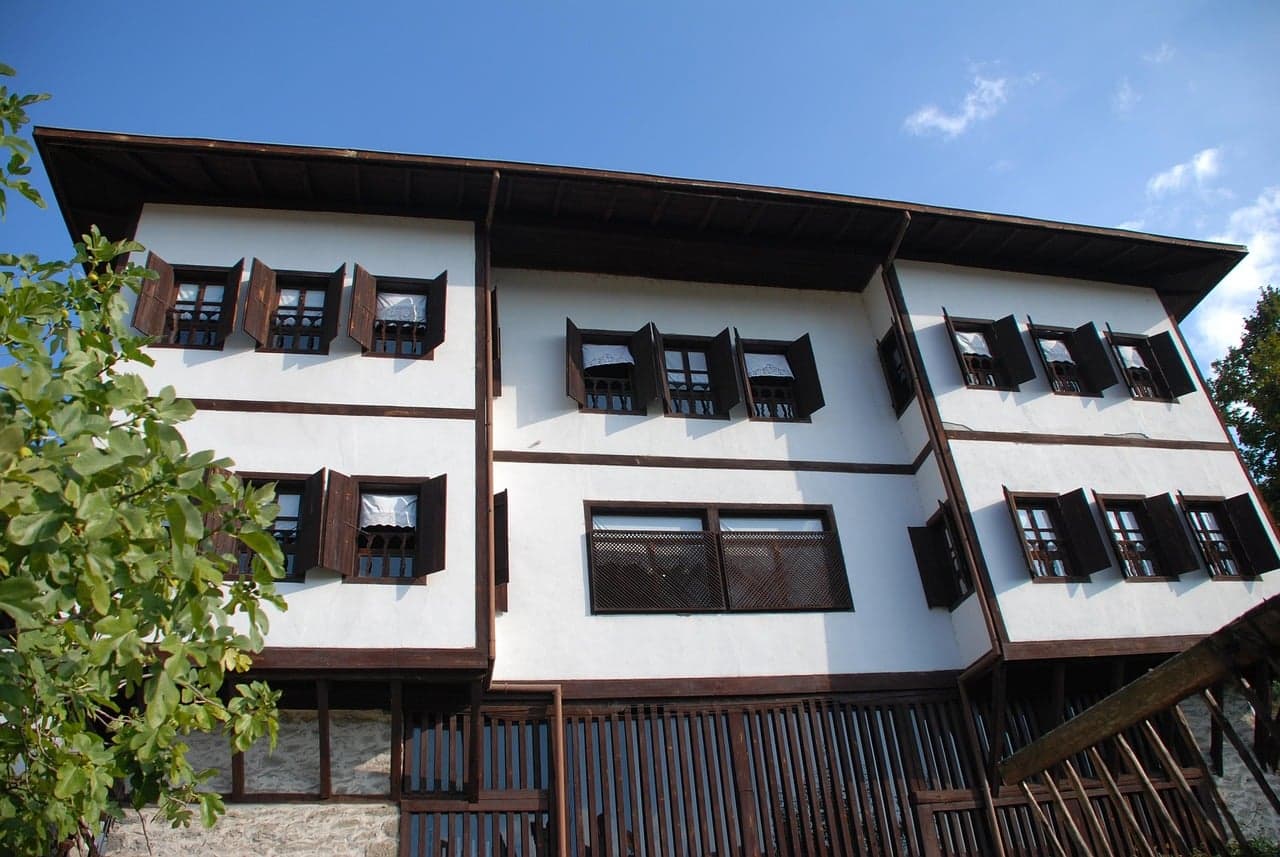
The traditional houses in the oldest neighbourhoods of Osmaneli, Cami-i Cedid and Cami-i Kebir, led to the area being declared an urban conservation area in 2005. When silkworm raising became the town's main livelihood from the seventeenth century onwards, houses were designed around it: a mulberry-leaf store on the ground floor, the living floor in the middle and, at the top, an open, bright space with no partitions called the "böceklik" (silkworm room). Bevelling the corner of the first floor to open a small window is a detail unique to Osmaneli, so look out for these corner windows as you walk the streets. The coloured-glass upper windows of the Tokluoğlu Mansion and a painted Bosphorus scene on the pediment of another mansion stand out like surprises among the plain facades.
The historic houses of Gölpazarı
The two- and three-storey houses in the historic neighbourhoods of Gölpazarı were built with timber frames filled with mud brick or stone. The bay windows jutting out above stone ground floors, the brackets and the wooden door details still make the fabric of an Ottoman small town legible.
Which stops stand out in Bilecik's nature?
Harmankaya Canyon Nature Park
In Harmanköy, between Yenipazar and İnhisar, lies a canyon of about four square kilometres. With its two waterfalls, many small cascades and a cave, it is Bilecik's favourite nature area for walking and camping. Watch for signs of wildlife as you walk among oak, juniper and black pine.
Suuçtu Waterfall
In Yenipazar, at 875 metres above sea level, a waterfall drops from a height of about thirty metres. The water in the small pool below is ice-cold even in summer, and the greenery around it suits a long break.
Gedikkaya İn Cave
In İnhisar, on the slope of İnkaya Hill overlooking the Sakarya valley, is a cave about a hundred and eighty metres long. Excavations under way since 2019 have pushed the region's history back to the Palaeolithic, which is why finds such as the mother-goddess figurine are important. As it is an excavation site, ask the museum for information before visiting.
Kınık village and the King Gordios rock tombs
Kınık, near Pazaryeri, is a village where traditional pottery lives on, and you can watch the potters at work. In a valley fifteen kilometres from Gölpazarı there are rock tombs carved in the shape of rooms; locals believe one of them belonged to the Phrygian king Gordios.
What should you eat in Bilecik?
Bilecik's cuisine stands out for its pastries and desserts. Bozüyük's mantı filled with lentils and served with garlic yoghurt, kesme soup made with sour wild plums and büzme, a walnut dessert in syrup, are the first things to try. Osmaneli quince lokum, with geographical indication status, is made only from quince, starch, sugar and water; Pazaryeri halva and boza are also the district's emblems. Linga, a dessert with grape molasses and walnuts, poppy-seed lokum, quail kebab with geographical indication status and the red pepper of Çukurören village, also registered, are the table's other flavours.
How many days do you need in Bilecik?
Two days is enough. A sample route:
- Day one: The Orhan Gazi Mosque, the Tomb of Sheikh Edebali and the Living City Museum in central Bilecik in the morning; the Tomb of Ertuğrul Gazi, the Hamidiye Mosque and the museum in Söğüt in the afternoon.
- Day two: The Osmaneli houses in the morning, the Harmankaya Canyon or Gölpazarı in the afternoon; a halva stop in Pazaryeri on the way back.
For other cities nearby, take a look at the City Routes page.
When should you go, and how do you get there?
Spring and autumn are the best seasons; in April the waterfalls are in full flow, and in October the canyon and ponds take on autumn colours. Summer days are hot, but the highland pastures are cool. Thanks to its position on the Istanbul–Ankara line, Bilecik is easy to reach by road and by rail; driving between the centre and the districts is most comfortable.
What should you keep in mind?
- The tombs and mosques are places of worship; visit in suitable clothing and mind the prayer times.
- People still live in most of the houses in Osmaneli and Gölpazarı; respect their privacy when taking photos.
- Paths in the Harmankaya Canyon become slippery after rain; wear suitable shoes.
- Check current visiting hours for the museums on official sources.
Frequently asked questions
How many days do you need in Bilecik?
One day for the centre and Söğüt and another for the Osmaneli houses and the Harmankaya Canyon or Gölpazarı lets you see the province's highlights in two days.
When is the best time to visit Bilecik?
Spring and autumn are the best seasons. In April the waterfalls are in full flow, and in October the canyon and ponds take on autumn colours.
How do you get to Bilecik?
Bilecik lies on the main transport line between Istanbul and Ankara and is easy to reach by road and rail. Driving between the districts is most comfortable.
What makes the Osmaneli houses different?
The houses were designed for raising silkworms: a mulberry-leaf store on the ground floor, the living floor in the middle and an open space called the böceklik at the top. The small window in the bevelled corner is also unique to Osmaneli.
What should you eat in Bilecik?
Bozüyük lentil mantı, kesme soup with wild plums, büzme and linga desserts, Osmaneli quince lokum, Pazaryeri halva and boza, and quail kebab stand out.
Editorial desk
Stories signed by the Cultvia editorial desk follow our editorial policy; every story lists its sources at the end and errors are fixed under our corrections policy.
Last updated:
What changed?
- : First published
Sources
- Osmaneli Tarihi Evleri — T.C. Bilecik Valiliği
- Ertuğrul Gazi Türbesi — T.C. Bilecik Valiliği
- Bilecik'te Görülecek Yerler — Go Türkiye (Türkiye Turizm Tanıtım ve Geliştirme Ajansı)
- Bilecik'in Lezzetleri — Go Türkiye (Türkiye Turizm Tanıtım ve Geliştirme Ajansı)
Up next
 City RoutesParis Photo 2026: opening hours, sectors and what to see13 November 2026 · 1 min read


