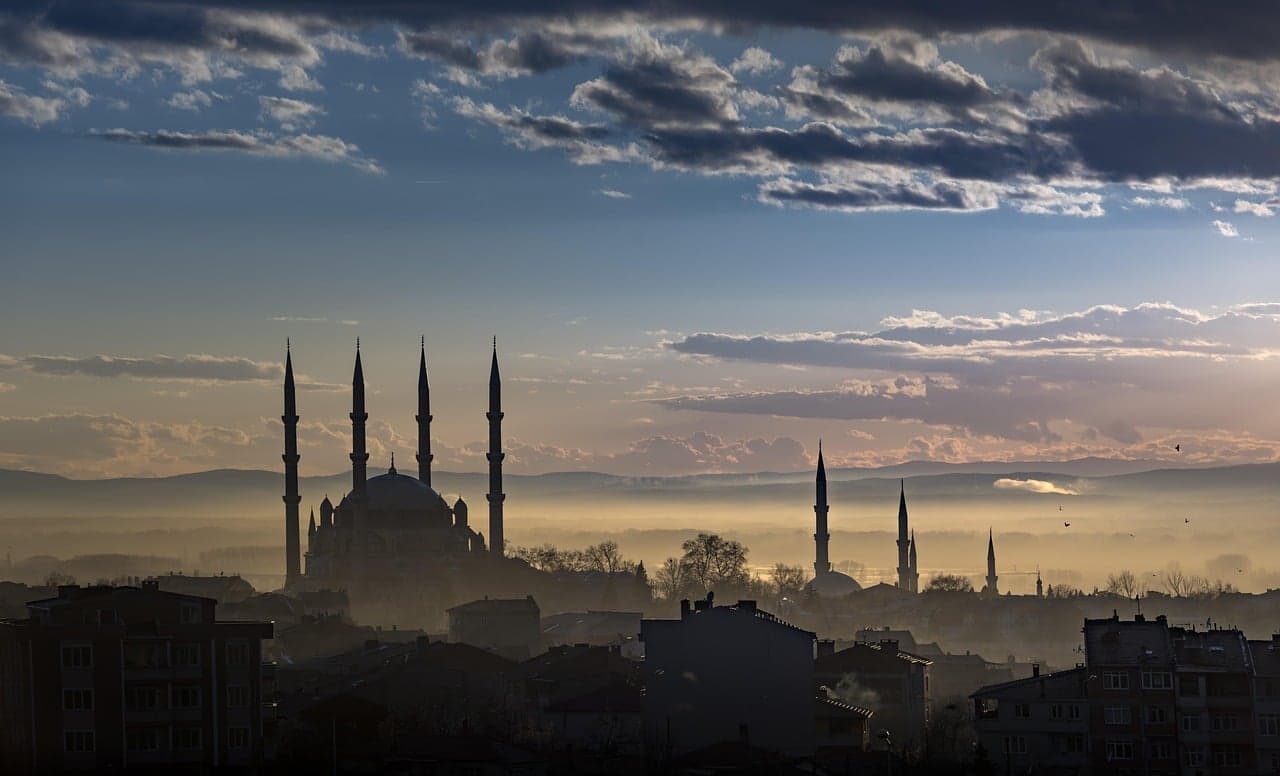
Make your first stop in Edirne the Selimiye Mosque and Complex, Sinan's masterpiece, visible from every corner of the city; the Old Mosque, the Bedesten and the Arasta around it are within walking distance. Then make room for the stone bridges over the Tunca and the Meriç, for Sarayiçi, home of oil wrestling, and for tava ciğer, the city's fried liver. A day and a half to two days is enough to see both Edirne's monuments and its everyday flavour.
What should first-time visitors see in Edirne?
The Selimiye Mosque and Complex
Built by the architect Sinan between 1569 and 1575, the Selimiye dominates the city's skyline with its monumental dome and four slender minarets. Counted among the masterpieces of Turkish art and of world architectural history, it was added to the UNESCO World Heritage List in 2011. Inside, take in the breadth of the dome first, then turn to the details: carved stone and marble, glazed tiles, wood carving and mother-of-pearl inlay are all hidden here. Take your time in the courtyard and the outer porticoes too.
The Museum of Turkish and Islamic Arts and the Archaeology and Ethnography Museum
The Museum of Turkish and Islamic Arts, in the complex's Dar-ül Tedris Madrasa, displays belongings of Kırkpınar wrestlers, woodwork, Ottoman tiles and ceramics. The Archaeology and Ethnography Museum close by holds the horseman stelae typical of Thrace and objects from everyday life in Edirne. After the Selimiye, these two museums complete the story of the complex.
The Old Mosque
The Old Mosque (Eski Cami), the oldest surviving monumental building in the city, was begun in 1403 and completed in 1414. It is considered a classic example of the multi-domed mosque. The large calligraphic inscriptions on the inner walls are its most striking detail. Visit it alongside the Selimiye and you will see how architecture changed within a century.
The Bedesten and the Arasta
The Bedesten, right beside the Old Mosque, is a fourteen-domed market building built in 1418 of two-coloured cut stone. The Arasta below the Selimiye was once known as the Cobblers' Bazaar; it is said that the shopkeepers here prayed each morning for honest trade. In both markets you will find fruit-shaped soaps, almond paste and handicrafts.
The Rüstem Paşa Caravanserai and the Ali Paşa Bazaar
The caravanserai, built by Sinan in 1561, is one of the grandest classical Ottoman inns, with two storeys of rooms around a rectangular courtyard. The long, domed Ali Paşa Bazaar is one of the city's busiest shopping streets; you can see both on the same walk.
The Üç Şerefeli Mosque
A short walk from the Selimiye, the Üç Şerefeli Mosque takes its name from the three balconies on one of its minarets. Think of it as the link between the Old Mosque and the Selimiye for understanding the shift from early Ottoman architecture to the classical period.
Why do Edirne's bridges and riverbanks deserve a separate outing?
The Meriç (Mecidiye) Bridge
The bridge over the Meriç river, on the road from Edirne to Karaağaç, was begun in 1842 and completed in 1847. About two hundred and sixty metres long, this stone bridge with twelve pointed arches has a marble kiosk bearing an inscription at its centre. Watching the river and the trees on its banks from the bridge at sunset is one of Edirne's best-loved evening rituals.
The Tunca Bridge and the other bridges
There are dozens of bridges over the Arda, Tunca, Meriç and Ergene rivers that surround the city. The Tunca, Saraçhane, Bayezid II, Gazimihal and Yalnızgöz bridges are the best known. Walking or cycling along the riverbank, you can see several of them on the same route.
Sarayiçi and Kırkpınar
Sarayiçi, on the bank of the Tunca, is today the ground where the Kırkpınar Oil Wrestling is held. Kırkpınar is a centuries-old tradition that, according to legend, takes its name from a lush spring that rose where two wrestlers who lost their lives mid-bout were buried. The cazgır who introduces the wrestlers to the crowd, the peşrev warm-up performed to drum and shawm, the kispet leather breeches made of water buffalo or calf hide and the title of chief wrestler held for a year are all part of the tradition. A wrestler who keeps the title three years running wins the golden belt. In the past, invitations to the bouts were made with red-based candles hung in village coffee houses.
What should you eat in Edirne?
Tava ciğer and Edirne's cuisine
Edirne's best-known dish is tava ciğer, thinly sliced liver fried in sunflower oil produced in Edirne and served with fried dried red peppers that are also local. Ciğer sarma, made with rice, onion and mint, and kapama and kaçamak are among the regional dishes as well. For something sweet there is almond paste and almond biscuits, and to drink, hardaliye, a traditional grape drink made with mustard seed. Edirne white cheese and İpsala rice are other things you can pick up at the market.
How many days do you need in Edirne?
One full day for the monuments in the centre and another half-day for the bridges and Sarayiçi is ideal. A sample day-and-a-half route:
- The Selimiye Mosque and the museums of the complex in the morning.
- The Arasta, the Old Mosque and the Bedesten at midday; tava ciğer for lunch.
- The Üç Şerefeli Mosque, the Rüstem Paşa Caravanserai and the Ali Paşa Bazaar in the afternoon.
- Sarayiçi and the Bayezid II Bridge on the Tunca on the morning of day two.
- In the late afternoon, head towards Karaağaç and watch the sunset from the Meriç Bridge.
When should you go, and how do you get there?
Spring and autumn are the best seasons for exploring the city on foot. The Kırkpınar wrestling takes place in summer; the city gets very crowded then, so book accommodation early and follow the official announcements for the dates. You can easily reach Edirne from Istanbul by road, by bus or car. The sights in the centre are close together, and walking or cycling is enough for the bridges.
What should you keep in mind?
- Check the current visiting hours and ticket prices of the museums and of buildings still in use on their official pages.
- Visit mosques outside prayer times, wear clothes that cover your shoulders and knees, and keep quiet inside.
- During Kırkpınar, follow the staff's instructions on entry to the wrestling ground and seating.
- Watch out for cycle paths when walking along the river; the riverbank can be cool in the evening.
You can find other city routes on the City Routes page.
Frequently asked questions
How many days do you need in Edirne?
One full day is enough for the monuments in the centre. If you also want to see the bridges, Sarayiçi and the sunset on the Meriç, add another half-day.
When is the best time to visit Edirne?
Spring and autumn are the best seasons for exploring the city on foot. The Kırkpınar wrestling takes place in summer; the city is very crowded then, so book accommodation early.
How do you get to Edirne?
You can easily reach Edirne from Istanbul by road, by bus or car. The sights in the centre are close together; walking or cycling is enough for the bridges.
How is Edirne liver made?
Tava ciğer is made by frying thinly sliced liver in sunflower oil produced in Edirne, and it is served with the region's fried dried red peppers.
Where does the name Kırkpınar come from?
According to legend, two wrestlers who lost their lives while wrestling were buried in a meadow, and years later a lush spring rose where they lay. People named the place Kırkpınar, and the tradition has continued for centuries.
Editorial desk
Stories signed by the Cultvia editorial desk follow our editorial policy; every story lists its sources at the end and errors are fixed under our corrections policy.
Last updated:
What changed?
- : First published
Sources
- Edirne'de Görülecek Yerler — Go Türkiye (Türkiye Turizm Tanıtım ve Geliştirme Ajansı)
- Taste the Flavors of Edirne Guide — Go Türkiye (Türkiye Turizm Tanıtım ve Geliştirme Ajansı)
- Mecidiye Köprüsü — Kültür Portalı – T.C. Kültür ve Turizm Bakanlığı
- Kırkpınar Yağlı Güreşleri — T.C. Edirne Valiliği
Up next
 City RoutesParis Photo 2026: opening hours, sectors and what to see13 November 2026 · 1 min read


