Your first stop in Eskişehir should be Odunpazarı, on the UNESCO World Heritage Tentative List since 2012 for its timber houses with bay windows and its narrow lanes. After that, the Kurşunlu Complex, the meerschaum workshops, the banks of the Porsuk and Sazova Park show both the historic and the youthful sides of the city. A weekend is enough to explore the centre comfortably.
What should first-time visitors see in Eskişehir?
Odunpazarı
Odunpazarı, set on the hills overlooking the Eskişehir plain, is the city's first Turkish settlement. With its winding roads, dead-end alleys and terraced houses whose bay windows jut out over the street, it preserves traditional urban architecture as a whole. Some houses brighten the streets with white walls and brown frames, others with indigo-blue and brick-red facades. The district, praised by Evliya Çelebi in his Book of Travels, is protected as a "historic and urban conservation area". Come in the morning and you will see the streets before the crowds.
The Kurşunlu Complex
The complex on the slope of Odunpazarı was built between 1517 and 1525 for the vizier Çoban Mustafa Paşa; its architect was Acem Ali, chief architect before Sinan. Made up of a mosque, an ablution fountain, a dervish lodge, a soup kitchen, a tomb and two caravanserais, the complex takes its name from its lead-covered dome. Today one of the caravanserais houses a hot glass workshop and glass arts centre, and watching the craftspeople shape the glass is one of the highlights of a visit.
The Atlıhan Handicrafts Bazaar
Built in the 1850s for market traders and travellers, the Atlıhan is now a bazaar where local crafts are displayed and sold. You can watch meerschaum carving, marbling (ebru), illumination, calligraphy and silverwork at the craftspeople's benches.
The Meerschaum Museum
Meerschaum, a soft white mineral, is considered Eskişehir's emblem because this region is the only place in the world where it is mined. The museum in Odunpazarı brings together meerschaum works that have stood out in national and international competitions; it is a short but rewarding stop for seeing the finesse of the craft, from pipes to figurines.
The Alaeddin Mosque
The Alaeddin Mosque, known to have been built in 1267 in the Seljuk period, is one of the city's oldest buildings. Add it to your route if you want to read Odunpazarı's layered history from the pre-Ottoman period onwards.
The Porsuk and its banks
Eskişehir is one of the few cities in Türkiye with a river running through it. Sitting at the cafés on the Porsuk, walking between the bridges or watching the city from the water on a gondola or boat tour is an essential part of a visit. Late afternoon is the best time for a walk along the illuminated banks.
Sazova Science, Culture and Art Park
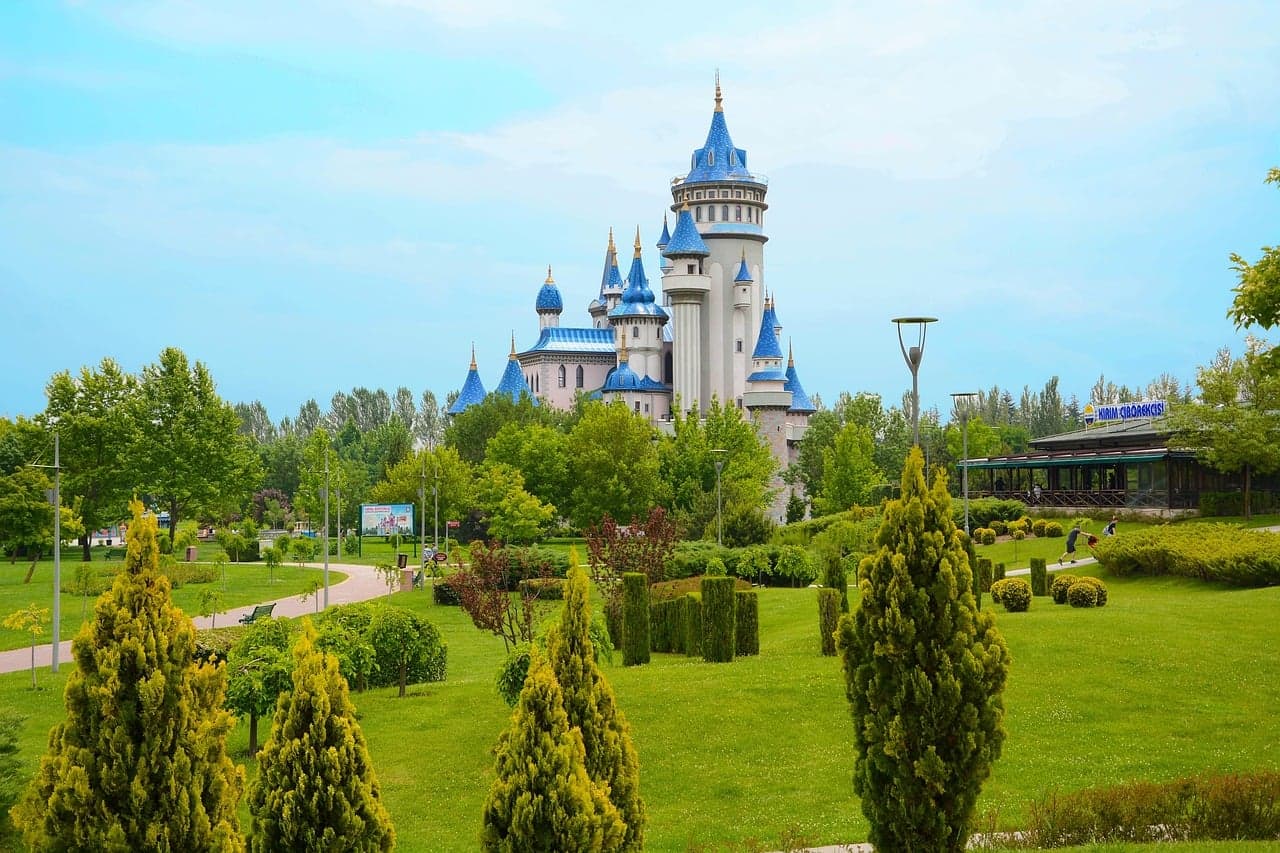
Built on former farmland, this themed park of about four hundred thousand square metres is the city's largest. Inside are the Fairy Tale Castle, a galleon, a science experiment centre, a space house, a zoo, an aquarium and a large pond suitable for water sports. The narrow-gauge train that once carried factory workers now gives visitors a nostalgic ride. If you are travelling with children, allow half a day.
The Archaeology Museum
The city's archaeology museum has a collection spanning the Neolithic to the Ottoman period; among the marble statues, stelae, jewellery and coins, the first meerschaum seal, which documents trade between Anatolia and Mesopotamia, stands out. Its interactive displays make it appealing for children too.
What is there around Eskişehir?
- The Midas Monument (Yazılıkaya): The grandest rock monument of the Phrygian civilisation, named after the Phrygian inscription on its carved rock face. The surrounding Phrygian Valley, with its ancient settlements and rock formations, is good for walking.
- Sivrihisar: The Sivrihisar Grand Mosque, whose roof is carried by sixty-seven wooden pillars, is one of the largest wooden-pillared mosques in Anatolia and has been on the UNESCO World Heritage Tentative List since 2016. The town's stone streets and clock tower are also worth seeing.
- Seyitgazi: The Seyit Battal Gazi Complex is one of the region's important groups of historic buildings.
What should you eat in Eskişehir?
In a region considered Anatolia's granary since ancient times, dishes made with flour and poppy seeds stand out. The cooking of Crimean and Caucasian communities who settled here has enriched the city's table too.
- Çibörek: Thin dough with a minced-meat filling, fried; the city's signature dish.
- Met helvası: A halva unique to Eskişehir, named after an old children's game.
- Balaban: A hearty local dish whose name means "very big" in Tatar.
- Haşhaşlı çörek: A poppy-seed pastry, one of the best-known baked goods of this poppy-loving cuisine.
How many days do you need in Eskişehir?
Two days is enough for the city centre; you can add one more for the Midas Monument or Sivrihisar. A sample two-day route:
- The streets of Odunpazarı and the Kurşunlu Complex in the morning, with a short stop at the glass workshop.
- The Atlıhan, the Meerschaum Museum and the Alaeddin Mosque in the afternoon; a gondola tour on the Porsuk in the evening.
- Sazova Park and the Fairy Tale Castle on the morning of day two.
- The Archaeology Museum in the afternoon; çibörek for dinner.
When should you go, and how do you get there?
Spring and autumn are the most comfortable seasons for exploring Odunpazarı on foot and spending time along the Porsuk. Winters can be cold, while summers are dry and hot. Eskişehir is on the high-speed rail line between Istanbul and Ankara, so arriving by train is very convenient; it is easy to reach by road too. Within the city, the tram takes you to most of the central sights.
What should you keep in mind?
- Check current visiting hours and prices for the museums, the complex and the Fairy Tale Castle on their official pages.
- Odunpazarı's streets are cobbled and hilly; wear comfortable shoes.
- Meerschaum pieces are fragile; make sure anything you buy is packed securely.
- Odunpazarı and Sazova can get very crowded at weekends; go early in the morning if you can.
For other cities, browse City Routes.
Frequently asked questions
How many days do you need in Eskişehir?
Two days is enough for the city centre: Odunpazarı and the Porsuk on the first day, Sazova Park and the museums on the second. You can set aside a third day for the Midas Monument or Sivrihisar.
Is Odunpazarı on the UNESCO list?
The Odunpazarı Historic Urban Centre was added to the UNESCO World Heritage Tentative List in 2012. It is among the sites waiting as candidates for the main list.
How do you get to Eskişehir?
The city is on the high-speed rail line between Istanbul and Ankara, so the train is very convenient. It is easy to reach by road too, and within the city the tram links the main sights.
When is the best time to visit Eskişehir?
Spring and autumn are the most comfortable seasons for walking around Odunpazarı and spending time along the Porsuk. Winters are cold, and summers can be dry and hot.
What should you eat in Eskişehir?
Çibörek is the city's signature dish. Met helvası, balaban and poppy-seed pastries are other well-known flavours of Eskişehir's cuisine.
Editorial desk
Stories signed by the Cultvia editorial desk follow our editorial policy; every story lists its sources at the end and errors are fixed under our corrections policy.
Last updated:
What changed?
- : First published
Sources
- Top Things to See in Eskişehir — Go Türkiye (Türkiye Turizm Tanıtım ve Geliştirme Ajansı)
- Odunpazarı Tarihi Kent Merkezi — Kültür Portalı – T.C. Kültür ve Turizm Bakanlığı
- Kurşunlu Camii ve Külliyesi — Kültür Portalı – T.C. Kültür ve Turizm Bakanlığı
- Sazova Bilim Kültür ve Sanat Parkı — Eskişehir Büyükşehir Belediyesi
Up next
 City RoutesParis Photo 2026: opening hours, sectors and what to see13 November 2026 · 1 min read


