Your first stop in Gaziantep should be the Zeugma Mosaic Museum; counted among the largest mosaic museums in the world, it displays works recovered from the villas of the ancient city on the banks of the Euphrates. After that, Gaziantep Castle, the Coppersmiths' Bazaar and the inns district lead you into the food culture that is the real key to the city. Gaziantep has been a member of the UNESCO Creative Cities Network for gastronomy since 2015.
What should first-time visitors see in Gaziantep?
Zeugma Mosaic Museum
The museum brings together mosaics, Roman statues, columns and fountains rescued from the ancient city of Zeugma on the Euphrates. The works are arranged according to where they were found in the city: the mosaics of the villas nearest the river are at the entrance, and those from the hillside terraces are on the upper floors. The museum's emblem is the Gypsy Girl mosaic, a small panel dated to the second century AD and made with a "three-quarter view" technique; it is worth lingering in the darkened room devoted to it. The bronze statue of Mars is another favourite. Allow at least two hours for the visit.
The ancient city of Zeugma
Going on to the ancient city near Nizip after the museum helps you understand which houses the mosaics came from. Part of the city lies under the waters of the Birecik Dam, while the villas on the higher ground have been protected and opened to visitors. Excavations are still going on.
Gaziantep Castle
Rising on a mound in the middle of the city, the castle is one of the finest surviving castles in Türkiye. It was built as a watchtower in the Roman period and took its present form under Justinian in the sixth century AD. Its walls, laid out on an irregular circular plan, carry twelve towers. One of the galleries inside the castle houses a panorama museum.
The Coppersmiths' Bazaar and the inns district
The Coppersmiths' Bazaar at the foot of the castle is a cluster of markets where many craftspeople work, not only the coppersmiths it is named after. The single-storey shops, thought to date from the nineteenth century, open onto stone-paved streets through arched entrances of hard local limestone. The hammering of coppersmiths still sets the rhythm of the bazaar. Do not forget a coffee break in one of the historic inns nearby.
The kastels and the livas system
Gaziantep's underground heritage is just as interesting as what lies above ground. Underground channels called livas were dug to stop water from evaporating in the hot summers and distributed it across the city. Built over these channels were kastels, reached by steps and containing areas for washing laundry, bathing and resting. The kastels are on the UNESCO World Heritage Tentative List, and you can see one of the city's oldest in place.
Gaziantep Archaeological Museum
Though overshadowed by the Zeugma museum, the Archaeological Museum deserves a visit of its own for its rich collection reaching from the Palaeolithic to the present. The region's Hittite and Late Hittite finds are easier to understand here.
The Emine Göğüş Cuisine Museum and the Pistachio Museum
Two small museums are a good introduction to the city's food culture. The cuisine museum presents Gaziantep's traditional cooking, while the Pistachio Museum follows the journey of the pistachio, with its thousands of years of history, from the branch to the table.
What is Gaziantep's cuisine like?
Gaziantep's cuisine is a heritage enriched by the city's position on the Silk Road and by the meeting of different cultures. Dishes use spices such as safflower, mint, tarragon, cumin, fennel and cinnamon, and a range of sour notes such as lemon, unripe grape juice, sumac and pomegranate molasses. Kebabs, aubergine dishes, stuffed vegetables and soups come in dozens of varieties.
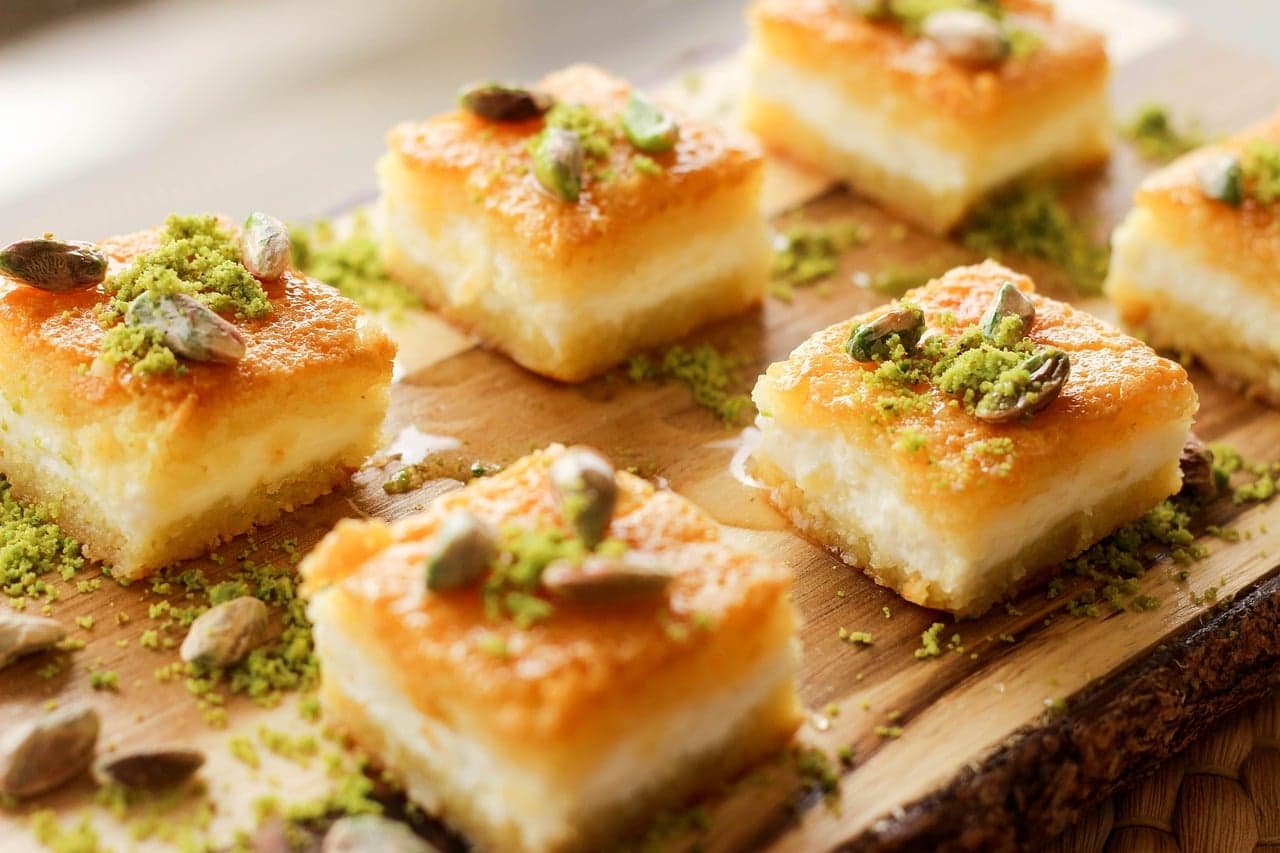
- Baklava: Made with thin layers of pastry, Antep pistachios and syrup. Antep baklava is known as the first Turkish product to receive geographical indication registration in the European Union.
- Beyran: A spicy rice soup made by simmering meat and marrow bones for hours; in the city it is eaten mostly at breakfast.
- Lahmacun: Thin dough spread with a mixture of minced meat, parsley, garlic, tomato and pepper and baked in a stone oven.
- Meyan şerbeti: In summer, this liquorice drink is recognised by the clink of the bowls played by street vendors pouring it into glasses from big vessels on their backs.
What is there around Gaziantep?
- Yesemek Open-Air Museum: Near İslahiye, this site is a large Late Hittite quarry and sculpture workshop. Unfinished lion statues and sphinxes show every stage of production.
- The ancient city of Dülük: Around Dülük Baba Hill north of the city, an area thought to be one of the oldest settlements in the world holds an underground temple of Mithras and rock tombs.
How many days do you need in Gaziantep?
Two days is enough for the city centre and its food; if you want to add the ancient city of Zeugma or Yesemek, plan a third day. A sample two-day route:
- The Zeugma Mosaic Museum in the morning; lahmacun or kebab for lunch.
- Gaziantep Castle, the Coppersmiths' Bazaar and the inns district in the afternoon.
- Beyran for breakfast on day two, then the kastels and the Archaeological Museum.
- The cuisine and pistachio museums in the afternoon; in the late afternoon, watch a baklava master at work.
When should you go, and how do you get there?
Spring and autumn are the best seasons for avoiding the high summer temperatures. Late summer, when the pistachio harvest takes place, also brings a special liveliness to the city. You can reach Gaziantep by air through its airport or by road; most of the sights in the centre are within walking distance.
What should you keep in mind?
- Check the current visiting hours and ticket prices of museums and archaeological sites on their official pages.
- In summer, visit open-air sites early in the morning and take water and a hat.
- When buying copperware in the bazaar, ask the craftsman whether it is handmade, and remember that tin lining matters for items that come into contact with food.
For other city articles, see City Routes.
Frequently asked questions
How many days do you need in Gaziantep?
Two days is enough for the city centre, the museums and the food. If you also want to see the ancient city of Zeugma, Yesemek or Dülük, set aside a third day.
What can you see at the Zeugma Mosaic Museum?
Mosaics recovered from the villas of ancient Zeugma, along with Roman statues, columns and fountains. The best-known work is the Gypsy Girl mosaic, dated to the second century AD; the bronze statue of Mars also draws a lot of interest.
When is the best time to visit Gaziantep?
Summers are very hot, so spring and autumn are the best seasons. The pistachio harvest in late summer also brings a special buzz to the city.
Why is Gaziantep a UNESCO city of gastronomy?
The city joined the UNESCO Creative Cities Network for gastronomy in 2015 for its rich, deep-rooted food culture. Its variety of spices and sour flavours, its kebabs, stuffed vegetables and baklava are all part of that heritage.
What should you eat in Gaziantep?
Baklava, beyran for breakfast, stone-oven lahmacun, many kinds of kebab and liquorice sherbet in summer are the city's best-known flavours.
Editorial desk
Stories signed by the Cultvia editorial desk follow our editorial policy; every story lists its sources at the end and errors are fixed under our corrections policy.
Last updated:
What changed?
- : First published
Sources
- Top Things to See in Gaziantep — Go Türkiye (Türkiye Turizm Tanıtım ve Geliştirme Ajansı)
- Taste the Flavors of Gaziantep — Go Türkiye (Türkiye Turizm Tanıtım ve Geliştirme Ajansı)
- Zeugma Mozaik Müzesi — Kültür Portalı – T.C. Kültür ve Turizm Bakanlığı
- Bakırcılar Çarşısı — Kültür Portalı – T.C. Kültür ve Turizm Bakanlığı
Up next
 City RoutesParis Photo 2026: opening hours, sectors and what to see13 November 2026 · 1 min read


