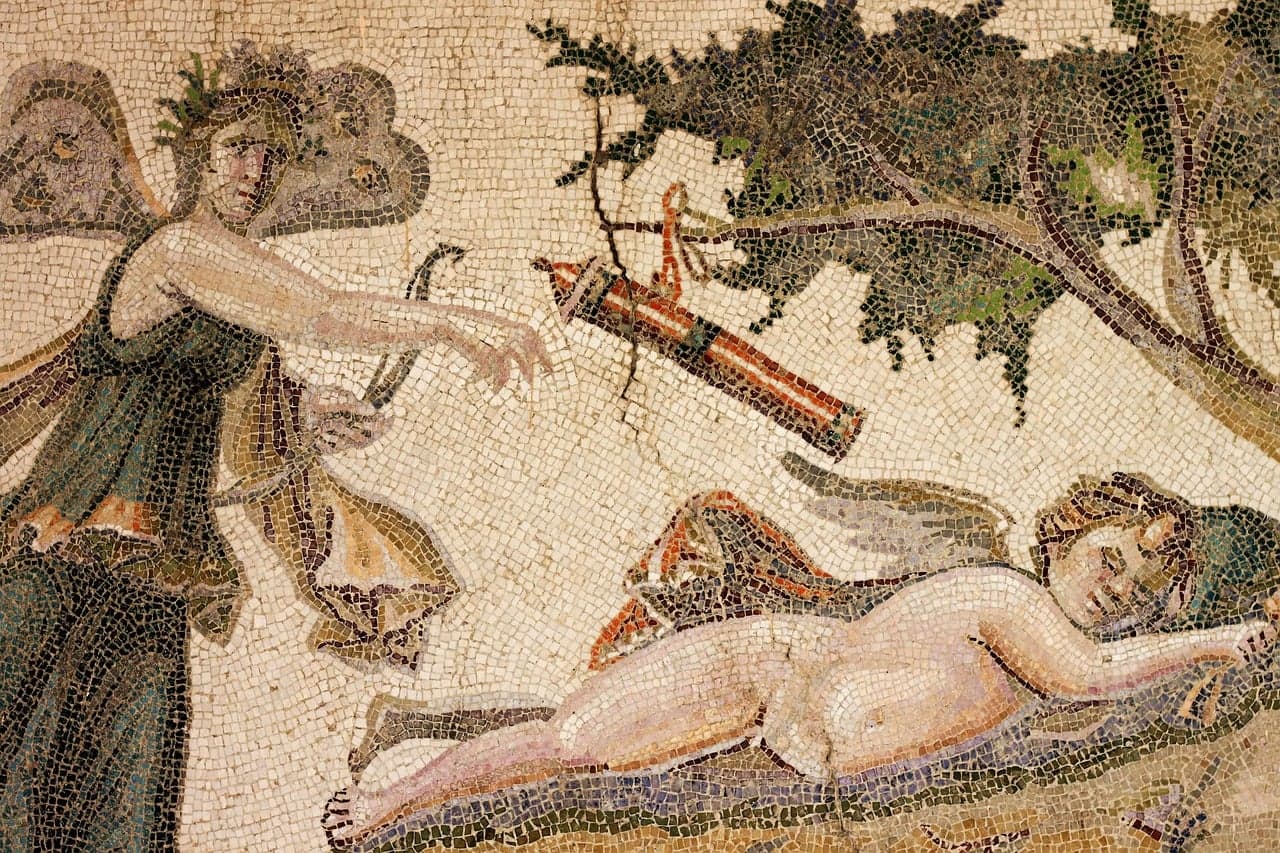
Make your first stops in Hatay the Harbiye (Defne) waterfalls, which pour into the Asi (Orontes) river just south of Antakya, and the Roman-era Titus Tunnel carved into the mountain at Samandağ. Then watch the sunset on Samandağ beach, one of the longest in Türkiye, and taste künefe, oruk and zahter salad at the table of Hatay, which UNESCO has named a city of gastronomy. Restoration work is under way at many historic buildings in the province, so plan each one by checking its official page before your visit to see whether it is open.
What should you keep in mind when planning a trip to Hatay?
In Hatay, open-air natural areas and ancient structures carved into the rock form the backbone of a visit, while some of the mosques, churches, bazaars and museums in the city are going through repairs. So build your route in two layers: first the waterfalls, the coast and the rock monuments, then the historic buildings whose status you have confirmed. For each building, check its official page before your visit to see whether it is open; local tourist information points also give up-to-date information.
Where should you follow the water around Antakya?
The springs that supplied ancient Antioch still flow today. Water is Hatay's oldest and most enduring story.
The Harbiye (Defne) waterfalls
Harbiye, Hatay's district of cascades, is about six kilometres from Antakya. Springs rising in the south of the valley form waterfalls and join the Asi river; their ancient names were Kastalia, Pallas and Saramanna. In the Hellenistic and Roman periods it was a famous summer retreat where the wealthy built mansions and villas. Legend says the nymph Daphne, fleeing Apollo, turned into a laurel tree here, and the waterfalls are believed to be her tears. None of the ancient buildings still stand, but the sound of the water and the shady slopes are still the best way to cool off in summer.
The ancient aqueducts
A few sections of the Roman-era water channels that carried the water of the Harbiye springs to Antakya have survived. The aqueduct sections between Dermasta and Esenbulak and east of Harbiye make short stops you can add to the waterfall trip; check the official page before your visit to see whether the area is open.
Teknepınar (Batıayaz) Yaylası
In this highland village about 20 kilometres from Antakya and 17 from Samandağ, there are camping and picnic areas around cold springs. Among Mediterranean vegetable gardens and orchards, it is a good place to escape the heat of the city.
What is there on the Samandağ coast?
The plain where Kel Dağı and Musa Dağı run down to the Mediterranean brings together Hatay's longest beach and its most impressive Roman engineering in the same place.
The Titus Tunnel
Begun in AD 69 on the orders of the Roman emperor Vespasian to divert the floods and torrents coming down from the mountains, the tunnel was completed in AD 81 under his son Titus. Carved entirely into the mountain, it is about 1,380 metres long, 7 metres high and 6 metres wide. Above the tunnel is a single-arched Roman bridge built of stone blocks; the site was added to the UNESCO World Heritage Tentative List in 2014. Inside the tunnel the ground is slippery and uneven in places; wear sturdy shoes and check the official page before your visit to see whether it is open.
Beşikli Cave
About a hundred metres to the right of the tunnel's seaward entrance is the largest and best known of the rock tombs in the area. In chambers separated by columns and arches carved into the rock are twelve tombs; you go down by stone steps. Check the official page before your visit to see whether it is open.
Seleucia Pieria and Çevlik
Çevlik, where the Titus Tunnel is located, is the site of Seleucia Pieria, the ancient port city of Antioch. On the same outing as the tunnel and the rock tombs, you can see traces of the harbour and the city.
Samandağ beach
The beach, about 14 kilometres long, is one of the longest in Türkiye and one of the nesting grounds of sea turtles. In summer, do not put up an umbrella near the marked nests on the beach, and do not shine lights at night.
The Tree of Moses
The giant monumental tree in Hıdırbey village near Samandağ is linked with the legend that the staff of the prophet Moses sprouted and grew into a sapling. Resting in the shade of its thick trunk is a calm break on the coast route.
Which historic buildings should you ask about?
The buildings below are among Hatay's emblems; for each, check the official page before your visit to see whether it is open.
St Pierre Church
The cave church on the western slope of Mount Habib-i Neccar (Stauris), east of Antakya, took shape through additions to a natural cave; its front facade was renewed in the Gothic style in the twelfth and thirteenth centuries. Its floor has remains of mosaics from the fourth and fifth centuries. The church was added to the UNESCO World Heritage Tentative List in 2011. Check the official page before your visit to see whether it is open.
The Habib-i Neccar Mosque and the Grand Mosque of Antakya
The Habib-i Neccar Mosque on Kurtuluş Avenue is regarded as the first mosque in Anatolia; the ablution fountain in its courtyard dates from the nineteenth century. The oldest inscription on the minaret of the Grand Mosque of Antakya is dated 1271. Plan both buildings by checking their official pages before your visit to see whether they are open.
The Sokollu Mehmet Paşa Complex in Payas
The complex in Payas was built in 1574 by the architect Sinan; it consists of a caravanserai, a bath for women and men, a madrasa, a mosque and a covered market with forty-five shops. The large courtyard of the caravanserai is surrounded by domed rooms. Check the official page before your visit to see whether it is open.
Why is Hatay's table a reason to travel in itself?
Hatay's cuisine, based on fresh vegetables, olive oil, pulses and grains, was named a city of gastronomy in the UNESCO Creative Cities Network in 2017 for its more than six hundred and fifty local dishes of its own. Künefe is made with the local unsalted künefe cheese and kadayıf pastry, cooked slowly over charcoal on copper trays and eaten hot with syrup; comparing the masters in central Antakya and in Harbiye is a pleasure of its own. Haytalı, made with milk pudding, rose water and ice cream, oruk, the stuffed meatball of special occasions, zahter salad, made with wild thyme, parsley and pomegranate molasses, tepsi kebabı, Belen tava and kağıt kebabı are all must-tries. At breakfast, salted yoghurt, sürk cheese and biberli and katıklı breads complete the table; on your way home, put pomegranate molasses, boiled for hours over a wood fire, in your bag.
How many days do you need in Hatay?
Allow two or three days. A sample route:
- Day one: The Harbiye waterfalls and aqueducts in the morning, Teknepınar Yaylası in the afternoon; künefe in the evening.
- Day two: Samandağ, with the Titus Tunnel, Beşikli Cave and Çevlik, then the Tree of Moses and sunset on the beach.
- Day three: The historic buildings whose status you have confirmed in advance, or Payas and the Arsuz coast to the north.
For other routes in the Mediterranean and the southeast, take a look at the City Routes page.
When should you go, and how do you get there?
Spring and autumn are the most comfortable seasons for walking at the waterfalls and in the Titus Tunnel; midday in summer gets very hot, while June to September suits the sea. You can reach Hatay by air or by road; minibuses from Antakya go to Samandağ and Harbiye.
What should you keep in mind?
- Check the current status of historic buildings, museums and bazaars on their official pages before your visit.
- In areas under repair, walk only on the paths open to visitors and follow the warning signs.
- Take care in the Titus Tunnel on rainy days; the ground and steps become slippery.
- Do not go near the sea turtle nests on Samandağ beach.
Frequently asked questions
How many days do you need in Hatay?
One day for Harbiye and its surroundings and one for the Titus Tunnel, Beşikli Cave and the coast at Samandağ completes the main route in two days. Add a third day for historic buildings you have confirmed are open and for Payas or Arsuz.
Are Hatay's historic buildings open to visitors?
Repair and restoration work is under way at many historic buildings in the province. For St Pierre Church, the mosques, museums and complexes, check their official pages before your visit to see whether they are open.
Where is the Titus Tunnel?
The Titus Tunnel is at Çevlik, about five kilometres from the Samandağ district. You can reach it by vehicles leaving from Samandağ or by car following the signs; Beşikli Cave is right next to it.
When is the best time to visit Hatay?
Spring and autumn are the most comfortable seasons for the waterfalls and ancient sites. June to September suits the sea; midday in summer is very hot.
What should you eat in Hatay?
Künefe, haytalı, oruk, zahter salad, tepsi kebabı, Belen tava and kağıt kebabı stand out. At breakfast try salted yoghurt, sürk cheese and biberli ekmek; pomegranate molasses is also a local speciality.
Editorial desk
Stories signed by the Cultvia editorial desk follow our editorial policy; every story lists its sources at the end and errors are fixed under our corrections policy.
Last updated:
What changed?
- : First published
Sources
- Harbiye (Daphne) Şelalesi — T.C. Hatay Valiliği
- Titus Tüneli ve Beşikli Mağara — Kültür Portalı – T.C. Kültür ve Turizm Bakanlığı
- Gör Hatay — Go Türkiye (Türkiye Turizm Tanıtım ve Geliştirme Ajansı)
- Taste the Flavors of Hatay Guide — Go Türkiye (Türkiye Turizm Tanıtım ve Geliştirme Ajansı)
Up next
 City RoutesParis Photo 2026: opening hours, sectors and what to see13 November 2026 · 1 min read


