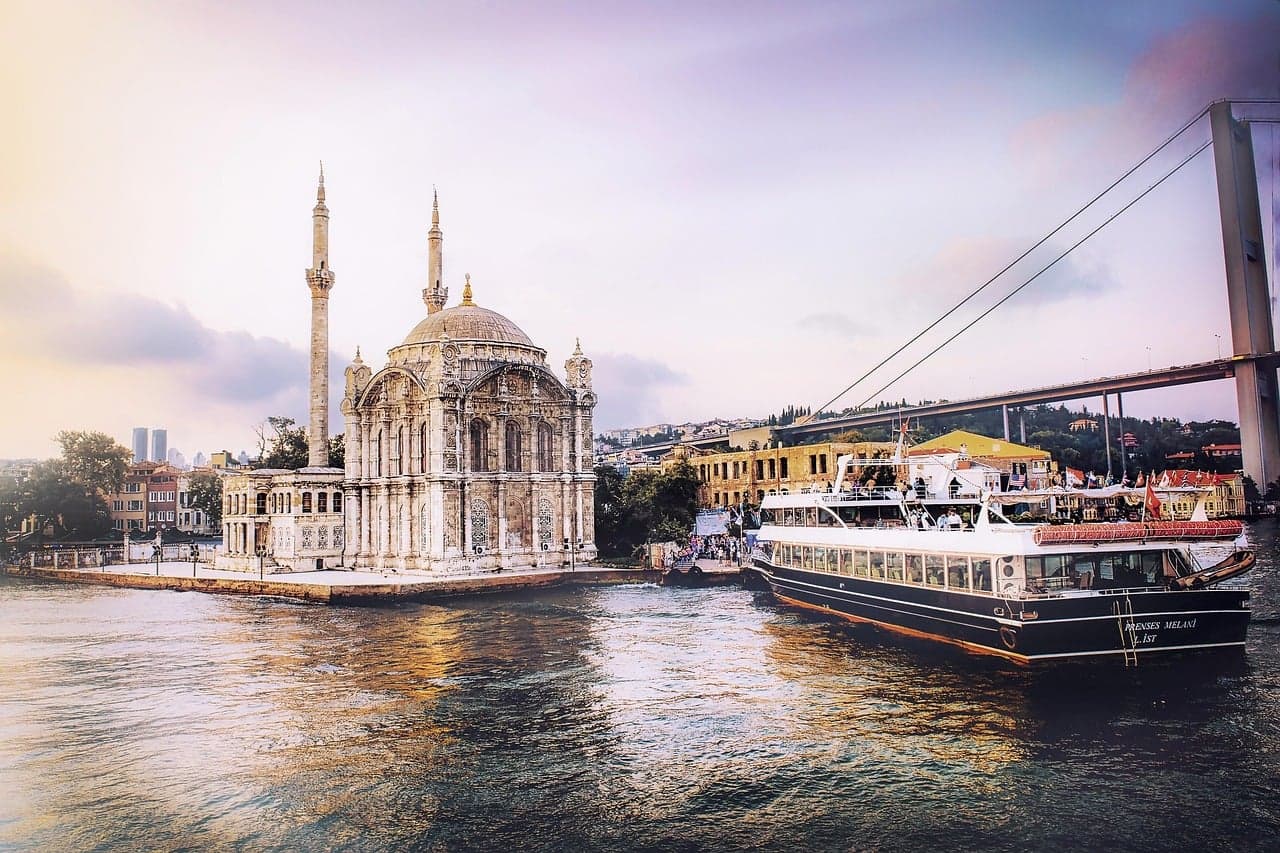
If it is your first time in Istanbul, build your route around the monuments of the walled old city, the Bosphorus shore, Galata and Karaköy, Kadıköy and Üsküdar on the Asian side, and the islands you reach by ferry. Topkapı Palace, Hagia Sophia and the Süleymaniye on the historic peninsula are part of the "Historic Areas of Istanbul", which UNESCO inscribed in 1985. Give it three days and you will see two continents and the sea on the same trip.
What should first-time visitors see in Istanbul?
Hagia Sophia
Built in the sixth century, Hagia Sophia is the city's best-known building, famous for its vast dome and its mosaics. It is used as a mosque today, so plan your visit outside prayer times and wear clothes that cover your shoulders and knees. Walking around the outside and looking at it from different angles is the best way to grasp the scale of the dome.
The Blue Mosque and the Hippodrome
Completed in the early seventeenth century, the Sultanahmet Mosque is also called the "Blue Mosque" because of the blue-toned İznik tiles that cover its interior. Right next to it, At Meydanı was the Hippodrome of the Byzantine city; the Egyptian Obelisk and the Serpent Column still stand there. The square is far quieter early in the morning.
Topkapı Palace
Built for Sultan Mehmed II between 1460 and 1478, the palace was for centuries both the home of the Ottoman sultans and the seat of their government. The courtyards, the Harem, the Holy Relics and the Treasury each need their own time, so allow at least half a day. The terraces facing Sarayburnu give you a view down onto the mouth of the Bosphorus.
Basilica Cistern
Built in the Byzantine era to supply the city with water, the cistern creates a completely different world underground with its forest of columns and soft light. The two column bases carved with Medusa heads draw the most attention. It stays cool inside even in the summer heat.
Süleymaniye Mosque
The Süleymaniye, which the architect Sinan called the work of his journeyman years, was built between 1551 and 1558 and is regarded as the high point of classical Ottoman architecture. Its dome rises fifty-three metres above the floor, and even the acoustics inside were carefully planned. The viewpoint in the rear courtyard of the complex looks out over the Golden Horn and Galata.
The Grand Bazaar and the Spice Bazaar
The Grand Bazaar, founded in 1461, grew over the centuries into a city within the city made up of thousands of shops. Getting lost among the carpet, tile, silver and antique shops is part of the experience. The Spice Bazaar in Eminönü is smaller but livelier, filled with the scent of spices, dried fruit and Turkish delight.
Galata Tower and Karaköy
Galata Tower, a survivor of the Genoese period, is the symbol of the district north of the Golden Horn. The slopes running down from the tower bring you to Karaköy's restored old inns, art spaces and waterfront. From here you can walk up to İstiklal Avenue and add the arcades of Beyoğlu to the same day.
Dolmabahçe Palace
Built on the Bosphorus shore in the nineteenth century, Dolmabahçe is an Ottoman take on European palace architecture. Its ceremonial hall with crystal chandeliers and its garden reaching down to the water tell the story of a palace life very different from Topkapı. Visits inside are in guided groups, so allow for some waiting time.
Rumeli Fortress and the Bosphorus shore
Rumeli Fortress rises at one of the narrowest points of the Bosphorus and is best seen together with the waterside mansions and villages along the shore. You can walk the waterfront between Ortaköy, Bebek and Arnavutköy, or take the Bosphorus ferry from Eminönü to watch both shores from the water. Beylerbeyi Palace on the Asian side is one of the stops on the same line.
Maiden's Tower and Üsküdar
The Maiden's Tower, on a tiny islet just off the Üsküdar shore, is best watched at sunset with the skyline of Sarayburnu behind it. Üsküdar itself is a calm district with mosques by Sinan, a market and seaside tea gardens. Sitting on the Salacak waterfront and looking across at the silhouette of the historic peninsula is one of the finest ways to understand the city.
Kadıköy and Moda
Kadıköy's market, with its fishmongers, delicatessens and bookshops, is the liveliest place to stroll on the Asian side. As you walk on towards Moda the streets grow quieter and the seaside park opens onto the water. Taking the ferry back from Kadıköy to Karaköy or Eminönü in the evening is the best way to end the day.
Büyükada and Heybeliada
There is no motor traffic on Büyükada, the largest of the islands; people get around by bicycle, on foot and in electric vehicles. The path up to the Church of Aya Yorgi on the island's highest hill rewards you with a wide view of the Sea of Marmara. Heybeliada, with its pine woods and old mansions, is the quieter alternative.
How do you pace a visit to Istanbul's neighbourhoods?
The easiest way to see Istanbul is to group its districts. The historic peninsula (Sultanahmet, Eminönü, Süleymaniye) is explored on foot; the monuments are close together, but each one takes time. Beyoğlu and Karaköy, with their steep streets, arcades and art spaces, suit the late afternoon. For the Bosphorus shore the best vehicle is the ferry; seen from the water, the sequence of mansions and fortresses makes sense.
The Asian side shows a more local face of the city: Kadıköy's market and the Üsküdar shore are ideal for a day away from the crowds. The islands are a full-day escape; leaving on an early ferry and returning in the evening is the easiest plan. You can spread the food culture across the districts too: fish sandwiches in Eminönü, meze and pickles in Kadıköy, simit and tea by the Bosphorus.
How many days do you need in Istanbul?
Three days is enough to see the highlights; if you want to visit the islands and the museums in detail, stretch it to five. A sample three-day route:
- Day one: Hagia Sophia and the Blue Mosque in the morning, Topkapı Palace in the afternoon, the Basilica Cistern and the Hippodrome in the late afternoon.
- Day two: The Süleymaniye, the Grand Bazaar and the Spice Bazaar; in the afternoon walk across the Galata Bridge to Karaköy and Galata Tower, then İstiklal Avenue in the evening.
- Day three: A Bosphorus ferry in the morning, or Dolmabahçe and Rumeli Fortress; cross to Üsküdar in the afternoon, the Maiden's Tower at sunset, Kadıköy and Moda in the evening.
If you can add a fourth day, give it to Büyükada and Heybeliada. For a different trip focused on contemporary art, browse the other articles in City Routes.
When should you go, and how do you get there?
Spring and autumn are the most comfortable seasons for exploring on foot; late April to early June and late September to early November are mild and have plenty of daylight. Summer is crowded and hot, while winter is rainy but the museums are quiet.
The city has an international airport on each side, European and Asian; from both you can reach the centre by rail and bus. Within the city, trams, the metro, Marmaray and the ferries all run on a shared transit card. Traffic is heavy, so choosing the ferry or Marmaray to cross between the two sides saves time.
What should you keep in mind?
- Opening days, hours and ticket prices of museums and palaces can change; check their official pages before you go.
- When visiting mosques, mind the prayer times, dress appropriately and keep quiet inside.
- Carry your bag in front of you in crowded spots; bargaining is common in the Grand Bazaar, so take your time before deciding.
- Wear comfortable shoes for the hilly districts; stepped streets are common in Beyoğlu and Üsküdar.
- Ferry timetables to the islands and along the Bosphorus change with the season, so check the return sailing in advance.
Frequently asked questions
How many days do you need in Istanbul?
Three days is enough to see the historic peninsula, Beyoğlu and Karaköy, the Bosphorus and the Asian side in outline. If you want a day on the islands and time for the museums, plan four or five days.
When is the best time to visit Istanbul?
Spring and autumn are the most comfortable seasons for walking. Summer is hot and crowded; winter is rainy, but the museums and palaces are quieter.
Which places in Istanbul are on the UNESCO World Heritage List?
The "Historic Areas of Istanbul", inscribed in 1985, cover the monuments around Sultanahmet, Topkapı Palace, the Süleymaniye and its surroundings, Zeyrek and the land walls.
How do you get to the Princes' Islands?
Regular ferries run to Büyükada, Heybeliada, Burgazada and Kınalıada from piers on both the European and Asian sides. Timetables change with the season, so find out the time of the return ferry in advance.
What should you keep in mind when visiting Hagia Sophia?
Hagia Sophia is used as a mosque, so time your visit outside prayer times, wear clothes that cover your shoulders and knees, and stay quiet inside. Check the current visiting arrangements on official sources.
Editorial desk
Stories signed by the Cultvia editorial desk follow our editorial policy; every story lists its sources at the end and errors are fixed under our corrections policy.
Last updated:
What changed?
- : First published
Sources
- Historic Peninsula Istanbul Guide — Go Türkiye (Türkiye Turizm Tanıtım ve Geliştirme Ajansı)
- Bosphorus Istanbul Travel Guide — Go Türkiye (Türkiye Turizm Tanıtım ve Geliştirme Ajansı)
- Topkapı Sarayı — Kültür Portalı – T.C. Kültür ve Turizm Bakanlığı
- Büyükada — Kültür Portalı – T.C. Kültür ve Turizm Bakanlığı
Up next
 City RoutesParis Photo 2026: opening hours, sectors and what to see13 November 2026 · 1 min read


