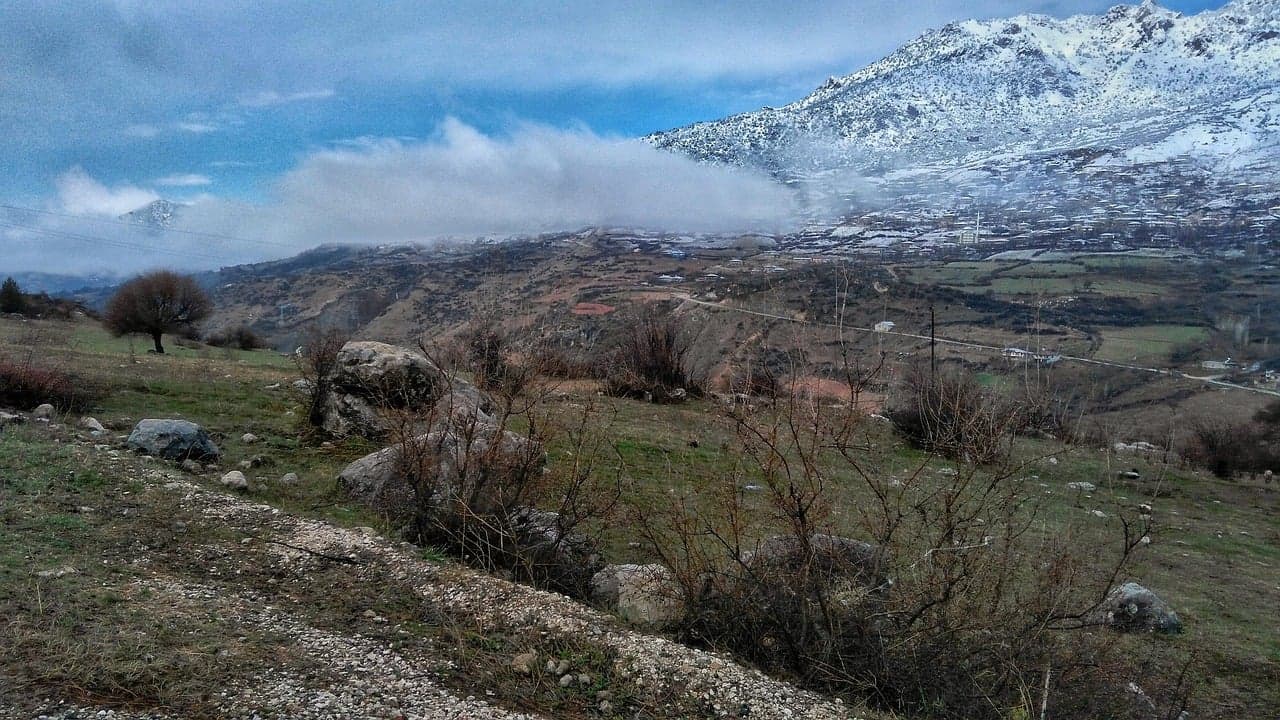
Make your first stop in Kahramanmaraş Germanicia, visited as an open-air museum, with its Roman mosaics depicting everyday life; then walk to the historic bazaars where crafts are still passed from master to apprentice. Yedi Kuyular just above the city, Başkonuş Yaylası and the centuries-old cedars of Yavşan stand for nature, while the pounded ice cream made with goat's milk and salep stands for the table. Before visiting the historic buildings in the area, do not forget to check on their official pages whether they are open.
What should you see in the centre of Kahramanmaraş?
Kahramanmaraş was the centre of the Kingdom of Gurgum in the Late Hittite period and of Germanicia in the Roman period. You can trace these layers in the museum, in the mosaics and in the stone buildings of the bazaars. For each of the buildings below, check on its official page whether it is open before your visit.
The Germanicia Mosaic Site
The city came under Roman rule in 64 BC and was called Germanicia after the emperor. Excavations that began in 2009 in Dulkadiroğlu uncovered about three hundred square metres of mosaics, thought to be the floors of hillside villas. Dated to the fourth and fifth centuries AD, the mosaics depict daily life, plant motifs and the architecture of the period more than mythology. The site opened to visitors as an archaeological site in 2018; check its current status and hours on the official page.
The Kahramanmaraş Museum
The museum's most famous pieces are two elephant skeletons recovered from the Gâvur Gölü marshes and dated to the fourteenth century BC. Stelae with banquet scenes from the Kingdom of Gurgum, the Maraş Lion known to have decorated the castle gate and a Roman corridor mosaic brought from Germanicia are also here. Before your visit, check on its official page whether the museum is open.
The historic bazaars of Maraş
The foundations of the Covered Bazaar and the Saraçhane, Bakırcılar, Semerciler, Kazzazlar and Demirciler bazaars go back to the period of the Dulkadirids. These bazaars are among the places in Türkiye where traditional crafts are kept alive most intensely: sim sırma embroidery, coppersmithing, shoemaking, felt-making, saddlery and knife-making still go on in the workshops. Restoration and infrastructure work continues in and around the bazaars; find out before you go which parts are open.
The Covered Bazaar and the Taşhan
Thought to have been built in the late sixteenth century, the Covered Bazaar, with the prayer dome at its centre, is one of the early examples of Ottoman covered bazaars. The Taşhan to its east was built around 1650 for the caravans arriving in the city, on two floors around a square courtyard. Check in advance whether both are open to visitors.
The Grand Mosque, the Taş Medrese and Kahramanmaraş Castle
Built in the Dulkadirid period, the Grand Mosque, with its kiosk-topped minaret and its portal with muqarnas, is an original example of the principality's architecture; the Taş Medrese right next to it also dates from the late fifteenth century. The castle rising on the hill in the middle of the city has come down to us through the repairs of many civilisations, starting in the Late Hittite period. Check on the official pages whether these buildings are open to visitors today.
The Eshab-ı Kehf Complex (Afşin)
The complex, about seven kilometres north-west of Afşin, was built around a cave regarded as sacred since antiquity. In the Anatolian Seljuk period, a mosque, a madrasa, a soup kitchen and an inn were added around the cave to form a group of buildings. Check whether it is open to visitors before you go.
Where should you go for highland pastures and nature?
Yedi Kuyular Ski Centre
Only thirteen kilometres from the city centre and at an altitude of about two thousand metres, the centre is promoted as the closest ski resort to a city in Türkiye. In winter you can ride up to the runs by chairlift and ski lift, and in summer you can hike in the same area.
Başkonuş Yaylası and Yavşan Nature Park
Başkonuş Yaylası, on the Andırın road, is a favourite with campers for its juniper, cedar and fir forests, its natural lake and one of the few deer breeding stations in Türkiye. Yavşan Nature Park, thirty-six kilometres from the city, has Taurus cedars six to seven hundred years old and many endemic plants.
Yeşilgöz, Uludaz and Ali Kayası
Yeşilgöz, on the Kayseri road, is a sinkhole about twenty-five metres deep, fed with ice-cold water from an underground cave. On Uludaz Hill south of the city, swarms of ladybirds can be seen in the summer months. The Ali Kayası Glass Terrace in Bulutoğlu looks out over Güredil Castle and the lake from one hundred and sixty metres above the Menzelet Dam Lake.
The Andırın Minaret Suspension Bridge
The bridge connecting two neighbourhoods of Andırın is strung between four minarets; it is about a hundred metres above the ground and three hundred and sixty metres long. As you walk across it, you can see the whole district.
What is there in Maraş crafts and at the Maraş table?
Kahramanmaraş has more than thirty registered geographical indications, and many of them are handmade. Sim sırma, known as Maraş work, yemeni shoes made entirely by hand-stitching from calfskin, knife-making passed down from father to son in Hartlap village, the carved walnut dowry chest and the Maraş twisted bracelet top the list.
The star of the table is Maraş ice cream: the milk of goats fed on keven grass is boiled, then mixed with sugar and salep, made from the tubers of orchids growing on Ahır Dağı, until it reaches the consistency of chewing gum. Maraş tarhana, spread out in summer through communal work, Maraş pepper, Maraş çöreği, ekşili çorba, sıkma cheese, Maraş samsa and ravanda sherbet are also among the registered flavours.
How many days do you need in Kahramanmaraş?
Two days is enough; you can add another day for the highland pastures. A sample route:
- Day one: the Germanicia Mosaic Site in the morning; the museum and the historic bazaars in the afternoon (after checking in advance that they are open); an ice cream break in the evening.
- Day two: the Ali Kayası Glass Terrace in the morning; Yedi Kuyular or Yeşilgöz in the afternoon, depending on the season.
- Day three: Başkonuş Yaylası and the suspension bridge in Andırın, or the Eshab-ı Kehf Complex in Afşin.
For other routes in the southeast and the Mediterranean, take a look at the City Routes page.
When should you go, and how do you get there?
June to September suits the highland pastures and the sinkhole, and the winter months suit skiing at Yedi Kuyular. If you want to see tarhana being made, choose July and August. Spring and autumn are the most comfortable times for exploring the city centre on foot. You can reach Kahramanmaraş by air, road and rail; the stops in the centre are close to one another, while you need a vehicle for the highland pastures and Andırın.
What should you keep in mind?
- Before your visit, check on their official pages whether museums, archaeological sites and historic buildings are open, along with their current hours and fees.
- In bazaars under restoration, walk only in the areas open to visitors and do not enter work areas.
- The weather changes quickly on highland roads; in winter, take chains on the Yedi Kuyular road.
- When buying crafts, ask the master how the piece was made; check the label on products with a geographical indication.
Frequently asked questions
How many days do you need in Kahramanmaraş?
With one day for Germanicia, the museum and the historic bazaars and one for Ali Kayası and Yedi Kuyular or Yeşilgöz, you can see the city comfortably in two days. You can add a third day for Başkonuş Yaylası, Andırın or Afşin.
Are the historic buildings in Kahramanmaraş open?
Restoration and infrastructure work continues in and around the historic bazaars. Before you go, check on their official pages whether museums, archaeological sites, mosques and inns are open to visitors.
When is the best time to visit Kahramanmaraş?
June to September suits the highland pastures and nature trips, and the winter months suit skiing at Yedi Kuyular. July and August are the time to see tarhana being made, and spring and autumn are the most comfortable for city walks.
How do you get to Kahramanmaraş?
You can reach Kahramanmaraş by air, road and rail. The stops in the centre are close to one another; for the highland pastures, Andırın and Afşin you need a vehicle.
What makes Maraş ice cream different?
Maraş ice cream is made from the milk of goats fed on keven grass. The milk is boiled, mixed with sugar and salep from the tubers of orchids on Ahır Dağı until it becomes gum-like, then rested and cooled.
Editorial desk
Stories signed by the Cultvia editorial desk follow our editorial policy; every story lists its sources at the end and errors are fixed under our corrections policy.
Last updated:
What changed?
- : First published
Sources
- Gör Kahramanmaraş — Go Türkiye (Türkiye Turizm Tanıtım ve Geliştirme Ajansı)
- Doğa Turizmi — T.C. Kahramanmaraş Valiliği
- Tescilli Coğrafi İşaretlerimiz — T.C. Kahramanmaraş Valiliği
- Tarihi Maraş Çarşıları — Kültür Portalı – T.C. Kültür ve Turizm Bakanlığı
Up next
 City RoutesParis Photo 2026: opening hours, sectors and what to see13 November 2026 · 1 min read


