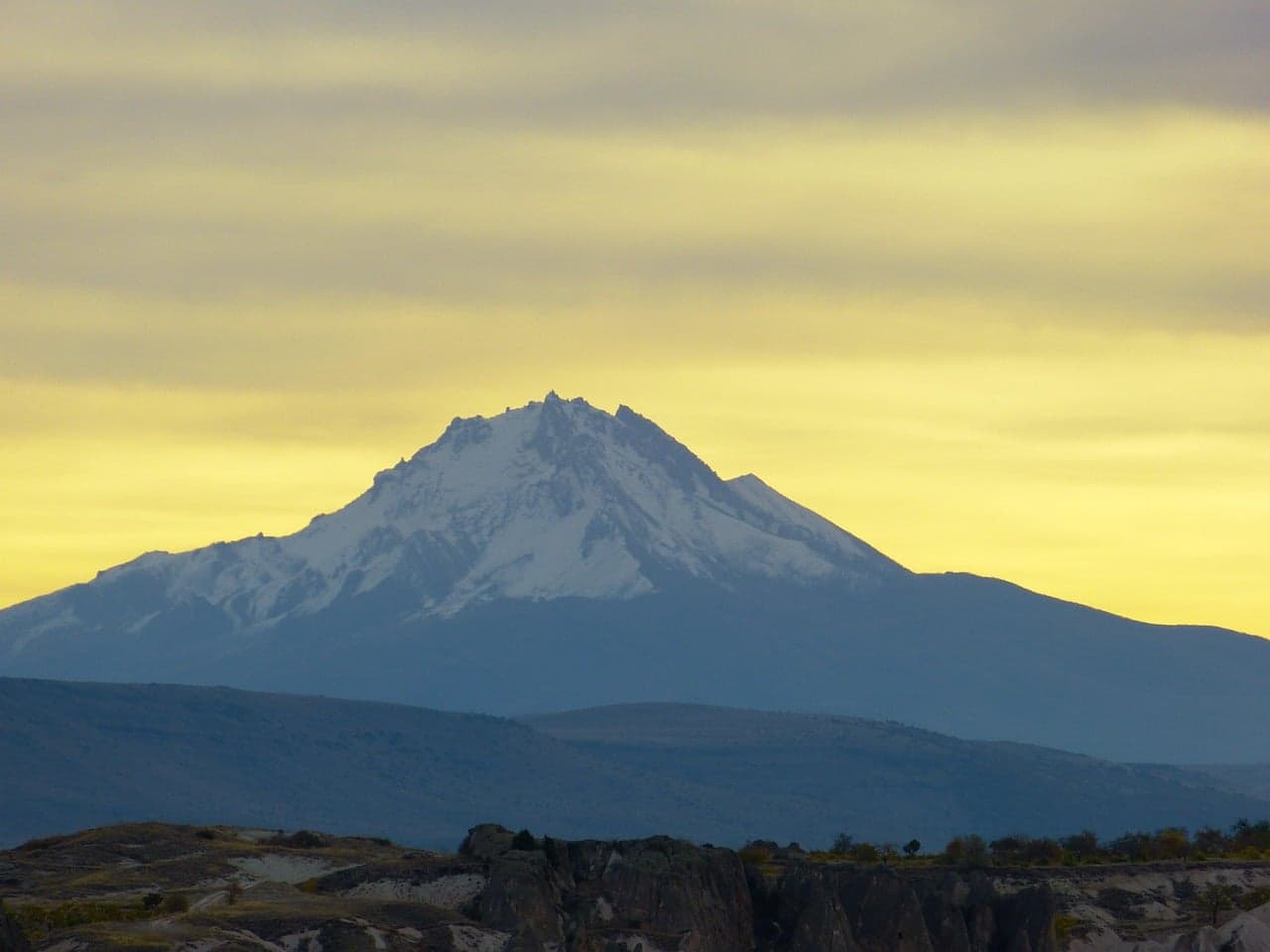
In Kayseri, start with the Seljuk buildings in the city centre: the Gevher Nesibe Darüşşifa, the Grand Mosque, the Döner Kümbet and Kayseri Castle, which houses the archaeology museum in its citadel, are within walking distance of one another. Then add Kültepe, where Anatolia's first written documents were found, and Mount Erciyes, visible from everywhere in the city, to your route. The rock churches of Soğanlı, the Sultanhanı Caravanserai and the Kapuzbaşı Waterfalls make Kayseri a trip spread over several days.
What should first-time visitors see in central Kayseri?
Most of the monuments in the centre are gathered around the castle; you can spend a day exploring on foot. Pay attention to the stonework of the buildings: Kayseri is one of the richest cities for Anatolian Seljuk architecture.
Kayseri Castle and the Archaeology Museum
The castle's outer walls were built in the third century under the Roman emperor Gordian III and its citadel in the early sixth century under the Byzantine emperor Justinian; it took its present appearance largely through repairs in the time of the Anatolian Seljuks. The Archaeology Museum, moved into the citadel, has a rich collection, above all the finds from Kültepe. The single-domed Kale Mosque in the north-west corner of the castle is also an example of early Ottoman architecture.
The Grand Mosque and the Covered Bazaar
The Grand Mosque, right next to the covered bazaar, is held to have been built between 1134 and 1143; it is one of the city's oldest Turkish-Islamic buildings. In the Covered Bazaar beside it, thought to date from the fifteenth century, shops selling local foods and handicrafts are still at work; you can choose your pastırma here.
The Gevher Nesibe Darüşşifa (Museum of Seljuk Civilisation)
Built in 1205, the building consists of a medical madrasa and a place of care; it is regarded as Anatolia's first medical school with practical training. Water and the sound of music are known to have been used as therapy here. Today, as the Museum of Seljuk Civilisation, it tells the story of the medical practices of the period through re-enactments. Check the current hours and fees on the museum's official page.
The Döner Kümbet
Built for Şah Cihan Hatun, the tomb is thought, on the basis of its architectural and decorative features, to have been constructed in the last quarter of the thirteenth century. The relief motifs around it are so similar to one another that as you walk around it, the building seems to turn; that is where its name, the "Turning Tomb", comes from.
The Kurşunlu Mosque
Built in 1573 by the architect Sinan, a native of Kayseri, the mosque takes its name from its lead-covered dome. It is known as the only work by Sinan in the city to have survived; be sure to look at the domed, eight-columned ablution fountain in the courtyard.
Güpgüpoğlu Mansion (Ethnography Museum)
The oldest and best preserved of the Kayseri houses, the mansion was first built in the fifteenth century and grew with additions until the eighteenth century. The stone decoration outside and the painted decoration on wood inside are striking. Its haremlik and selamlık sections are visited today as an ethnography museum.
The Ahi Evran Zaviye (Museum of Tradesmen and Craftsmen)
Built in the thirteenth century, the zaviye is associated with Ahi Evran, the founder of the Ahi brotherhood of craftsmen. In the building, Türkiye's first museum of tradesmen, a leather-tanning stone believed to have belonged to Ahi Evran and other local objects are displayed.
Why is Kültepe so important?
The Kültepe (Kanesh-Karum) archaeological site
Kültepe, about twenty-one kilometres from the city centre, consists of a mound and the trading colony around it, the karum. The centre of the trade network set up by Assyrian merchants was here; excavations have uncovered tens of thousands of cuneiform tablets. Made up of letters, bonds and agreements, these tablets have been inscribed in UNESCO's Memory of the World Register, and the site was added to the UNESCO World Heritage Tentative List in 2014. To see the finds, combine your visit with the Archaeology Museum.
What are Erciyes and the waterside spots like?
Mount Erciyes
The symbol of Kayseri, this extinct volcano about 3,917 metres high created Cappadocia through eruptions millions of years ago. In winter it is an important ski centre with powder snow; in summer it is popular for mountaineering, hiking and highland trips. The Hittites are said to have given this mountain a name meaning "White Mountain".
The Kapuzbaşı Waterfalls
The waterfalls in Yahyalı are fed by snow and glacier water from the peaks of Aladağ. Seven waterfalls, five large and two small, pour side by side down the mountainside and flow strongly all year. The walking trail from the lakes area between Kayseri and Niğde to Kapuzbaşı is one of the province's favourite routes.
Sultan Sazlığı
In this wetland, home to hundreds of bird species, more than three hundred bird species and more than four hundred plant species are recorded, according to the governorship's figures. Thanks to its bird museum and walking trail, you can spend hours here with your binoculars.
What is on the Kayseri side of Cappadocia?
The Soğanlı archaeological site
In the valley in Yeşilhisar, rock churches and caves are intertwined with today's village houses. Rock spaces used as a cemetery in the Roman period were turned into churches in the Byzantine period; the valley has nearly fifty rock churches and caves and thousands of dovecotes. The Karabaş, Tahtalı, Yılanlı and Kubbeli churches are among the highlights.
The Koramaz Valley
In the valley, which stretches about twelve kilometres from east to west, there are houses, tombs and churches carved into the rock and hundreds of dovecotes. The conversion of some of the Roman-era columbaria into dovecotes is a tradition unique to the valley. The valley is on the UNESCO World Heritage Tentative List.
Ağırnas and Talas
Ağırnas, about twenty-seven kilometres from the centre, is known for the house where the architect Sinan was born, its underground city and its stonework. In Talas, you can take a pleasant half-day walk through restored streets and mansions and to the Yaman Dede Mosque, formerly the Panaya Church.
Which buildings stand on the caravan road?
Sultanhanı, the Karatay Caravanserai and the Tekgöz Bridge
Sultanhanı in Bünyan, built between 1232 and 1236, is one of the finest examples of Seljuk caravanserais, with its summer and winter sections. The Karatay Caravanserai, also in Bünyan and built in the 1240s, resembles a small castle with its high walls and draws the attention of art historians with its rich stone decoration. The Tekgöz Bridge over the Kızılırmak, from the early thirteenth century, lives up to its name, "single-eyed", with its one large arch.
What is on the table in Kayseri?
The first thing that comes to mind with Kayseri is mantı: minced meat is placed inside dough cut into small squares, then topped with butter and tomato paste, garlic yoghurt and sumac. According to the governorship, there are more than thirty kinds of mantı in the area; try tepsi mantısı too. Pastırma coated with çemen and Kayseri sucuk are the classic gifts to take home from the city. Bulamaç soup, the sweet aside and girabolu, gathered in autumn, are also part of the local table.
How many days do you need in Kayseri?
Three days is ideal. A sample route:
- Day one: the castle and the Archaeology Museum, the Grand Mosque, the Covered Bazaar, Gevher Nesibe, the Döner Kümbet and the Kurşunlu Mosque.
- Day two: Kültepe in the morning, the Sultanhanı and Karatay caravanserais in the afternoon.
- Day three: the Soğanlı Valley; sunset at Sultan Sazlığı on the way back.
- Give a day to Erciyes in winter, or to the Kapuzbaşı Waterfalls in summer.
For other cities in Central Anatolia, take a look at the City Routes page.
When should you go, and how do you get there?
The winter months suit skiing on Erciyes, and spring and autumn suit Kapuzbaşı, Soğanlı and Sultan Sazlığı; mountain walks are also done in summer. You can reach Kayseri by air, rail and road. The monuments in the centre are within walking distance; for Kültepe, Soğanlı and Kapuzbaşı you need a vehicle.
What should you keep in mind?
- Check the current visiting hours and fees of museums and archaeological sites on their official pages.
- The weather on Erciyes can change very quickly; do not set off in winter or on summit walks without proper equipment.
- At Sultan Sazlığı, do not leave the walking trail, so as not to disturb the birds.
- Do not touch the frescoes in the rock churches, and do not use flash.
Frequently asked questions
How many days do you need in Kayseri?
With one day for the city centre, one for Kültepe and the caravanserais, and one for the Soğanlı Valley and Sultan Sazlığı, you see the main sights in three days. Plan an extra day for Erciyes or Kapuzbaşı.
Where is Kültepe and why is it important?
Kültepe is about twenty-one kilometres from the city centre. At Kanesh-Karum, the centre of the Assyrian trade colonies, cuneiform tablets regarded as Anatolia's first written documents were found and inscribed in UNESCO's Memory of the World Register.
When is the best time to visit Kayseri?
The winter months suit skiing on Erciyes, and spring and autumn suit Soğanlı, Kapuzbaşı and Sultan Sazlığı. The summer months are a good time for mountain walks and highland trips.
How do you get to Kayseri?
You can reach Kayseri by air, rail and road. The monuments in the centre are within walking distance; for Kültepe, Soğanlı and Kapuzbaşı you need a vehicle.
What should you eat in Kayseri?
Mantı and tepsi mantısı, pastırma coated with çemen, Kayseri sucuk, bulamaç soup and aside stand out. According to the governorship, there are more than thirty kinds of mantı in the area.
Editorial desk
Stories signed by the Cultvia editorial desk follow our editorial policy; every story lists its sources at the end and errors are fixed under our corrections policy.
Last updated:
What changed?
- : First published
Sources
- Gör Kayseri — Go Türkiye (Türkiye Turizm Tanıtım ve Geliştirme Ajansı)
- Turizm — T.C. Kayseri Valiliği
- Erciyes Dağı — T.C. Kayseri Valiliği
- Koramaz Vadisi — T.C. Kayseri Valiliği
Up next
 City RoutesParis Photo 2026: opening hours, sectors and what to see13 November 2026 · 1 min read


