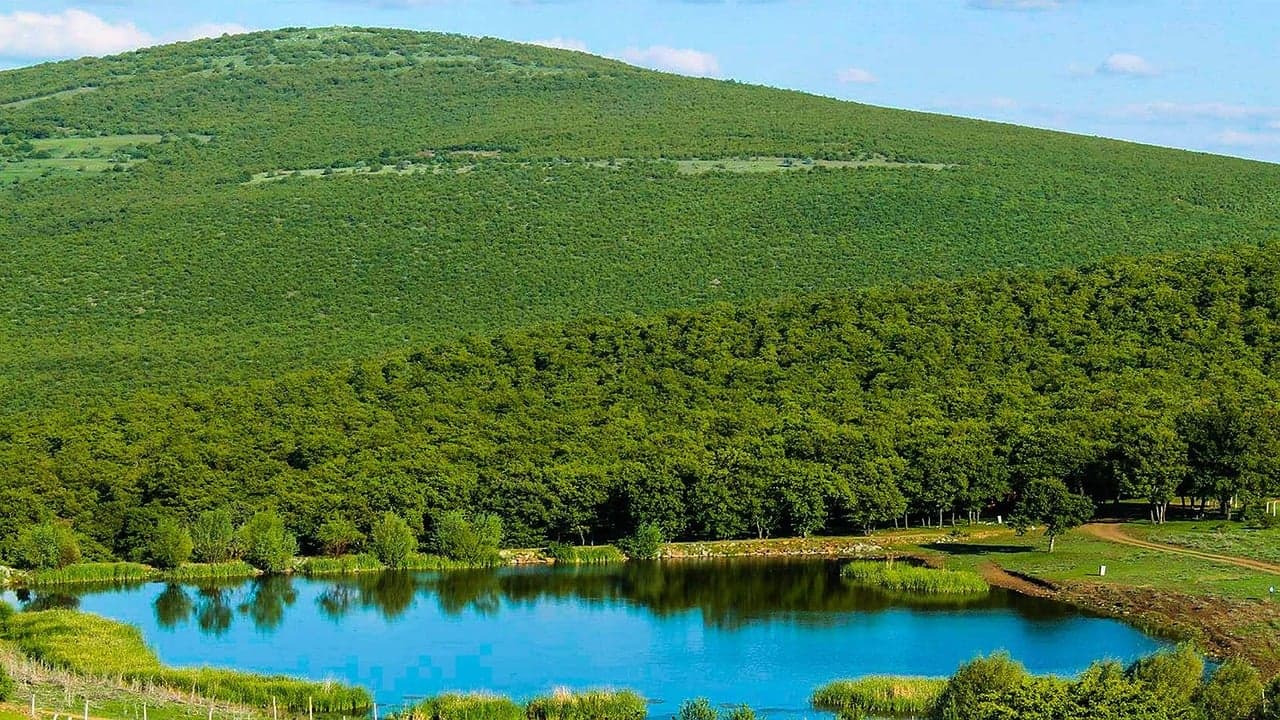
In Kırşehir, first see the two Seljuk legacies in the city centre: the Cacabey Madrasa, where astronomy was taught, and the Ahi Evran Complex, the heart of the Ahi tradition. Then go to the mound-shaped Kalehöyük Archaeology Museum and the Japanese Garden in Kaman, to the underground cities of Mucur and to Lake Seyfe, where flamingos gather. In summer, the Hirfanlı Dam Lake, known as "the sea of Central Anatolia", offers a cool break in the middle of the steppe.
What should you see in and around central Kırşehir?
From the thirteenth century on, Kırşehir was the centre of the Ahi brotherhood, which brought together tradesmen and craftsmen in Anatolia. The monuments in the centre tell of this heritage and of the Seljuk period's curiosity for science side by side; you can see most of them on foot.
The Cacabey Astronomy Madrasa
Built in 1272 by Cacabey, the emir of Kırşehir, for the teaching of mathematics, science and astronomy, the madrasa is regarded as one of the first centres where astronomy was taught. The observation well in the courtyard, the skylight lantern and the observation tower, about twenty-one metres high, in the south-west corner are the building's most striking features. Some of the shapes on the portal are interpreted as symbols of the moon and the sun. Used today as a mosque and known locally as the Cıncıklı Mosque, the building was added to the UNESCO World Heritage Tentative List in 2014 under the heading of Anatolian Seljuk Madrasas.
The Ahi Evran Complex
Ahi Evran, regarded as the founder of the Ahi brotherhood, was a scholar who wrote works in many fields, from Quranic commentary to medicine and from philosophy to chemistry. Thought to have been founded as a simple zaviye in the fourteenth century, the complex became the spiritual centre of craftsmen in the Ottoman period; tradesmen received their mastery certificates here. The tomb in the complex was added to the UNESCO World Heritage Tentative List in 2014.
Ağalar Mansion
This is one of the rare examples of civil architecture to have survived in Kırşehir. The mansion is used as a culture house to keep the city's culture alive; it is a good stop for seeing the room layout of an old Kırşehir house.
The kümbets and the Tomb of Aşık Paşa
The city's historic kümbets, or tomb towers, show Kırşehir stonework on a small scale. The tomb of the poet Aşık Paşa, regarded as one of the early champions of writing in Turkish, is also among the stops on this walk. Kırşehir is also a city with a deep-rooted folk music tradition; among the governorship's cultural publications are works devoted to Kırşehir folk music.
Kesikköprü and its caravanserai
Kesikköprü, outside the city, is one of the Seljuk bridges of Central Anatolia; it took its name, the "Cut Bridge", because the caravan roads over it were cut in the seventeenth and eighteenth centuries. The caravanserai right next to it, also known as the Cacabey Han, was a building where caravans stopped with their people, loads and animals.
What can you see in Kaman?
The Kaman Kalehöyük Archaeology Museum
There are more than a hundred registered mounds in Kırşehir; the best known is Kalehöyük in Kaman. Excavations that began in 1986 shed light on the province's settlement history, which goes back to the Early Bronze Age. The museum right next to the excavation site was built in a design inspired by the shape of the mound itself; it lets you see the excavation methods and the finds at the same time. Check the current hours and fees on the museum's official page.
The Japanese Garden (Mikasanomiya Memorial Garden)
The garden next to the Kalehöyük excavation house was built in 1993 by the Middle Eastern Culture Center in Japan, to commemorate the start of the excavations and to give local people a place to relax. Promoted as the largest Japanese garden outside Japan, it is a place for a quiet walk. Kaman is also the home of its famous walnuts; a walnut culture and arts festival is held in the district every year.
Why should you go to the underground cities of Mucur?
Some of the underground cities of the Cappadocia region, dating from the third and fourth centuries, are in the Mucur district; stop here if you want a trip away from the crowds.
The Mucur Underground City
In the city, seven or eight metres below ground, the rooms are linked by passages you can only pass through by bending down. You can see the round stones thought to have been used to close the passages, ventilation shafts, places of worship and stables for small livestock.
The Kepez and Dulkadirli underground cities
Kepez, with its soil in two different colours and its rectangular halls arranged in groups of three, is one of the most orderly underground cities in the region. Dulkadirli recalls a Seljuk caravanserai in its plan; it was used as a shelter in the early Christian period.
What are Lake Seyfe and Hirfanlı, the waters of the steppe, like?
The Lake Seyfe Bird Paradise
Seyfe, about sixteen kilometres from Mucur, is one of the few salt lakes in Central Anatolia. The lake and its surroundings were declared a nature conservation area in 1990; more than a hundred and eighty bird species have been recorded here, and its flamingo colonies in particular are famous. You see the lake best from the mound near Seyfe village. Because the water level varies from year to year, ask about the current situation before you go.
The Hirfanlı Dam Lake
The large dam lake on the Kızılırmak is known as "the sea of Central Anatolia". The shores of the villages of Yeşilli, Uzunali and Karaduraklı are used as camping areas in summer, and water sports such as sailing, rowing and canoeing are done on the lake. In winter, thousands of waterbirds take refuge here.
What is on the table in Kırşehir?
The tandır oven is the heart of Kırşehir cuisine: yufka (nan) baked in the tandır, dönderme with eggs and parsley, and tandır sac böreği with minced meat or aubergine are products of this culture. Besmeç, popular in Kaman, is a köfte made with minced meat and bulgur. Köftür is made from Kırşehir pekmez, grape molasses boiled with a special earth; Ahi helvası, prepared with flour, molasses and Kaman walnuts, and kayısı yağlaması are the stars of the sweet side. Çömlek paça cooked in the tandır, madımak and ayran soup are also often seen on the local table.
How many days do you need in Kırşehir?
Two days is enough. A sample route:
- Day one: the Cacabey Madrasa and the Ahi Evran Complex in the morning; Ağalar Mansion, the kümbets and Kesikköprü in the afternoon.
- Day two: the Kaman Kalehöyük Archaeology Museum and the Japanese Garden in the morning; the underground cities of Mucur in the afternoon, and Lake Seyfe at sunset.
- In the summer months, spend another day relaxing on the shore of the Hirfanlı Dam Lake.
For other routes in Central Anatolia, take a look at the City Routes page.
When should you go, and how do you get there?
Spring and summer suit birdwatching at Seyfe, and the summer months suit camping and water sports at Hirfanlı. Summers on the steppe are hot and winters cold; spring and autumn are the most comfortable seasons for exploring the city. Kırşehir is reached by road; it is easy to get to from Ankara and Cappadocia. For Kaman, Mucur and Seyfe you need a vehicle.
What should you keep in mind?
- Check the current visiting hours and fees of the museums and underground cities on their official pages.
- The passages in the underground cities are narrow and low; move slowly to protect your head.
- At Lake Seyfe, do not try to approach the birds; watch them from a distance with binoculars.
- Because the Cacabey Madrasa is used as a mosque today, visit it outside prayer times.
Frequently asked questions
How many days do you need in Kırşehir?
With one day for the city centre and Kesikköprü and one for Kaman, Mucur and Lake Seyfe, you see the main sights in two days. In summer you can add another day for the Hirfanlı Dam Lake.
Why is the Cacabey Madrasa important?
Built in the thirteenth century for teaching mathematics, science and astronomy, the madrasa is regarded as one of the first centres where astronomy was taught. It stands out for its observation well, skylight lantern and observation tower; today it is used as a mosque.
When can you see flamingos at Lake Seyfe?
In spring thousands of birds nest on the islets in the lake, and in the summer months flamingos can be watched from many points around it. Because the lake's water level varies from year to year, find out the current situation before you go.
How do you get to Kırşehir?
Kırşehir is reached by road; it is easy to get to from Ankara and Cappadocia. The monuments in the centre are within walking distance; for Kaman, Mucur, Seyfe and Hirfanlı you need a vehicle.
What should you eat in Kırşehir?
Tandır yufka, dönderme, tandır sac böreği, Kaman's besmeç köfte and çömlek paça from the tandır stand out. For dessert try köftür made from Kırşehir pekmez, Ahi helvası and kayısı yağlaması.
Editorial desk
Stories signed by the Cultvia editorial desk follow our editorial policy; every story lists its sources at the end and errors are fixed under our corrections policy.
Last updated:
What changed?
- : First published
Sources
- Gör Kırşehir — Go Türkiye (Türkiye Turizm Tanıtım ve Geliştirme Ajansı)
- Doğal Güzelliklerimiz — T.C. Kırşehir Valiliği
- Kültür Yayınları — T.C. Kırşehir Valiliği
- Taste Kırşehir — Go Türkiye (Türkiye Turizm Tanıtım ve Geliştirme Ajansı)
Up next
 City RoutesParis Photo 2026: opening hours, sectors and what to see13 November 2026 · 1 min read


