Make your first stops in Niğde the Alaeddin Mosque, famous for the shadow on its portal, and the clock tower on the castle's bastion; some of the finest stonework of the Seljuk and Beylik periods is gathered in the city centre. The aqueducts of ancient Tyana at Kemerhisar, the rock-cut Gümüşler Monastery and the Aladağlar with Demirkazık peak make Niğde a route for mountain lovers as much as for history.
Which buildings should you look at in central Niğde?
Niğde is a caravan city founded on the route of the King's Road, regarded as the oldest road in Anatolia. Most of the monuments in the centre are around the hill where the castle stands, close enough to explore on foot.
The Alaeddin Mosque
Built in 1223, the mosque has come down to us through repairs and largely keeps its original character. Its real surprise is on its east-facing door: in the summer months, when the morning sun strikes the door's decoration, the shadows reveal the head of a crowned woman. According to legend, its master builder worked a love he could never fulfil into the stone in this way. If you want to see this shadow, be there early in the morning in summer.
The Sungurbey Mosque
The mosque has no inscription and is thought to have been built around 1335. The iwan-shaped portal on the east is covered with a ribbed vault familiar from Gothic architecture; its walls are covered with plant, geometric and figural decoration. Figures such as a bird, an elephant, a horse, a dragon, a rabbit, a monkey and a fish are believed to carry traces of the Twelve-Animal Turkic Calendar. Stand in front of the door and try to find the figures one by one.
The Hüdavent Hatun Tomb
Built in 1312–1313, this octagonal, single-storey tomb holds a special place among Anatolian tombs for its figural stone reliefs. It is a small building, but its surface is full of plant, geometric and figural decoration; it is worth a close look.
Niğde Castle and the clock tower
The hill on which the old city was founded is said to have been surrounded by three walls; today the citadel on the north-east of the hill and the main tower at the highest point still stand. Although traces of the Byzantine and Arab periods can be seen in the lower walls, the castle's origins are thought to go back as far as the eighth century BC. The clock tower, built on top of one of the old bastions, is today the symbol of Niğde.
The Niğde Museum
Most of the objects in the museum, which tells the story of Central Anatolian archaeology in chronological order across six halls, come from excavations in the province. Finds from Tyana and Porsuk Höyük are also here. Check the current hours and fees on the museum's official page.
The Niğde houses
In the traditional houses on Kadıoğlu and Cullaz streets, wooden beams are set into the walls and the garden gates are built on a monumental scale. The buildings with inscriptions date from the late nineteenth century. A few steps off the main street, you see the old face of the city.
What can you see at ancient Tyana?
Kemerhisar, in the Bor district, takes its name from its Roman-era aqueducts. The city, known as Tuwanuwa in the Hittite period and Tyana in the Roman period, was the centre of a kingdom in the Late Hittite period; King Warpalawa ruled here in the eighth century BC.
The Tyana aqueducts
The arches, from the second and third centuries AD, were built to carry the spring water feeding the Roman Pool to the city. Because most of the ancient city lies beneath today's town, the aqueducts are the best place to grasp the scale of Tyana.
The Roman Pool and Köşk Höyük
The water bubbling up from beneath the pool, built in the second century AD under Trajan and Hadrian, was carried to the city by the aqueducts; the pool is known to have been built to Olympic dimensions. Köşk Höyük, on the rocky slope just to the east, keeps traces of the oldest community farming and herding on the Bor Plain in its Late Neolithic and Early Chalcolithic layers.
Why is the Gümüşler Monastery worth a separate trip?
The Gümüşler Monastery
Carved into a large rock mass, the monastery is one of the largest well-preserved monasteries in Cappadocia. The most important building of the complex is the church, with a closed Greek-cross plan and four free-standing supports. At least three masters are thought to have worked on the wall paintings, which date from the eleventh and twelfth centuries. The hunting scenes and animal compositions in the room above the narthex are among paintings with no other example in Cappadocia. The monastery's best-known fresco is the depiction of a smiling Mary with the infant Jesus; the paintings were restored in the 1960s by the archaeologist and restorer Michael Gough.
What should you know before going to the Aladağlar?
Aladağlar National Park
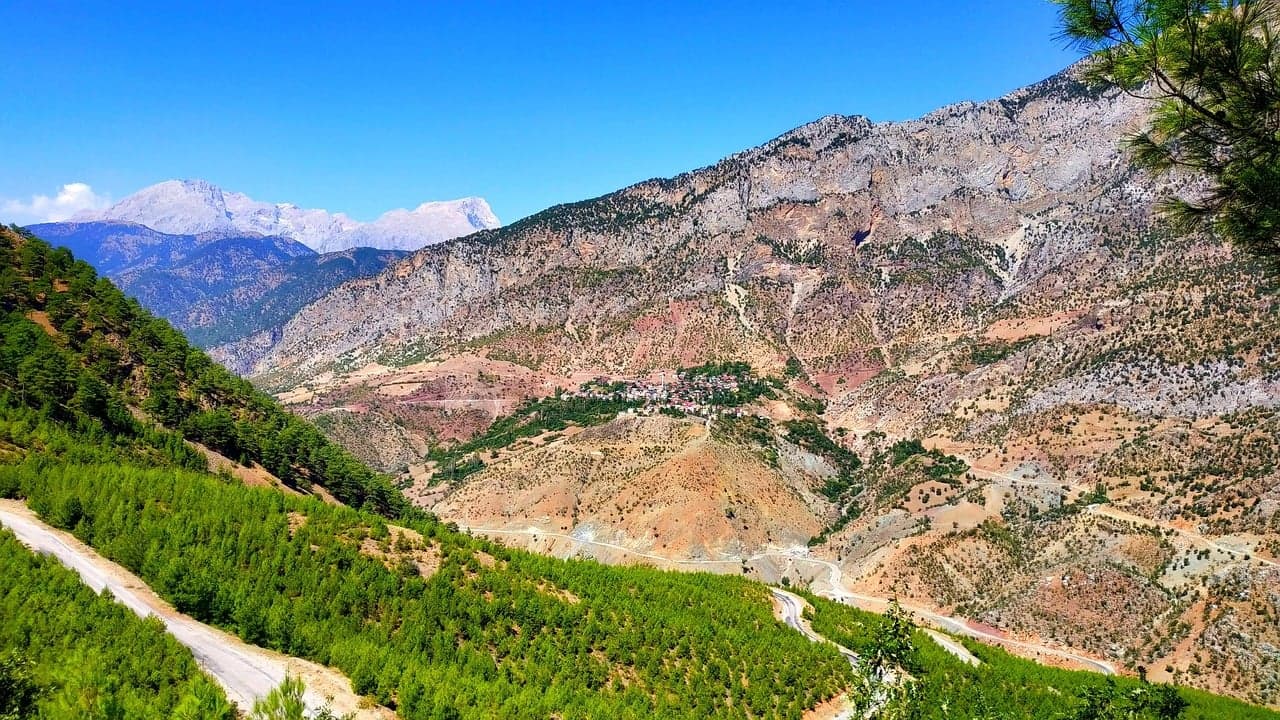
Spreading across the borders of Niğde, Kayseri and Adana, the Aladağlar form one of the highest groups of peaks in the Taurus Mountains; the main summits exceed three thousand seven hundred metres. The glacial valleys, karst landforms and endemic plants in the limestone massif also make the park valuable for geology and botany. With birds such as the Caspian snowcock and the wallcreeper, it is also a favourite with birdwatchers.
Demirkazık and Yedigöller
Mountaineers usually enter the Aladağlar from the villages of Çukurbağ or Demirkazık on the Çamardı road. The first summer ascent of Demirkazık peak was made in 1927; the normal routes start from the Sokulupınar campsite and require experience. At Yedigöller in the Ak Aladağlar, seven lakes are lined up in a glacial basin; six dry up in summer, while Büyük Göl at the foot of Direktaş holds water in every season.
The Bolkar Mountains ski area
South of Darboğaz in the Ulukışla district, the ski area on the northern slopes of the Bolkar Mountains stretches from about two thousand three hundred to three thousand metres. The best time for skiing is December to April, when the snow is one to two metres deep.
Where is the trace of the caravan road in Ulukışla?
The Öküz Mehmet Paşa Complex
Known as one of the largest caravanserais in Türkiye, the building was constructed in 1619. With its single-domed mosque, courtyard, arasta lined with twenty-three shops on both sides, hamam and stable, it was designed like a roadside town. This is also the inn that inspired Faruk Nafiz Çamlıbel's famous lines "Han Duvarları" (The Walls of the Inn).
What is in Niğde's cuisine?
Niğde's signature is tahinli pide, whose dough is stretched over the arms and folded with tahini; it is made sweet or plain. Niğde tava, with tomatoes, peppers and lamb baked in an earthenware pot, Bor söğürmesi, made with lamb and shallots, mazaklı köfte with semolina and bulgur, and ayva boranası, in which lamb is cooked with quince, chickpeas and grape molasses, stand out. Elma dolması, apples stuffed with minced meat and rice and baked, is a surprising but tasty experience. For dessert try sarım burma with walnuts, and in summer Darboğaz cherries.
How many days do you need in Niğde?
One day for the city and Tyana and one day for Gümüşler and Ulukışla is enough; set aside extra time for the Aladağlar. A sample route:
- Day one, morning: the Alaeddin Mosque, the Sungurbey Mosque and the Hüdavent Hatun Tomb; then the castle, the clock tower and the Niğde Museum.
- In the afternoon, move on to Kemerhisar: the aqueducts, the Roman Pool and Köşk Höyük.
- Day two: the Gümüşler Monastery in the morning, the complex in Ulukışla in the afternoon.
- If you love mountains, set aside a day or two for the Aladağlar towards Çamardı.
For other routes around Cappadocia and the Taurus Mountains, see the City Routes page.
When should you go, and how do you get there?
Spring and autumn are comfortable for the city and the archaeological sites. In the Aladağlar, mid-May to mid-July suits hiking and mid-July to mid-September suits rock climbing; skiing on the Bolkar is in winter. Niğde is reached by road; the nearest airports are in neighbouring provinces. Çukurbağ village, the gateway to the Aladağlar, is on the asphalted Niğde–Çamardı road.
What should you keep in mind?
- Check the current hours and fees of museums and archaeological sites on their official pages.
- Sunlight is very strong in the Aladağlar; take light-coloured clothes, a hat and sunscreen, and do not camp outside the designated campsites.
- Summit climbs require technical knowledge and experience; do not set off alone or unprepared.
- Visit mosques and tombs outside prayer times and in suitable clothing; at the Gümüşler Monastery, do not touch the frescoes or use flash.
Frequently asked questions
How many days do you need in Niğde?
With one day for the city centre and Tyana and one for the Gümüşler Monastery and Ulukışla, you can see Niğde comfortably in two days. Plan extra days if you will hike or climb in the Aladağlar.
When is the best time to visit the Aladağlar?
Mid-May to mid-July is the best time for hiking, and mid-July to mid-September for rock climbing. There may be snow in the deep valleys until mid-June.
Where do you enter the Aladağlar?
Mountaineers usually start from Çukurbağ village on the Niğde–Çamardı road or from nearby Demirkazık village. Both villages are linked to the provincial centre by asphalt road.
Where is the Gümüşler Monastery?
The monastery is carved into a large rock mass in the town of Gümüşler, part of central Niğde. It is one of the largest well-preserved monasteries in Cappadocia and is a short drive from the city centre.
What should you eat in Niğde?
Tahinli pide, Niğde tava, Bor söğürmesi, mazaklı köfte, ayva boranası and elma dolması stand out. For dessert try sarım burma with walnuts, and in summer Darboğaz cherries.
Editorial desk
Stories signed by the Cultvia editorial desk follow our editorial policy; every story lists its sources at the end and errors are fixed under our corrections policy.
Last updated:
What changed?
- : First published
Sources
- Gör Niğde — Go Türkiye (Türkiye Turizm Tanıtım ve Geliştirme Ajansı)
- Aladağlar — T.C. Niğde Valiliği
- Gümüşler Manastırı — T.C. Niğde Valiliği
- Taste the Flavors of Niğde Guide — Go Türkiye (Türkiye Turizm Tanıtım ve Geliştirme Ajansı)
Up next
 City RoutesParis Photo 2026: opening hours, sectors and what to see13 November 2026 · 1 min read


