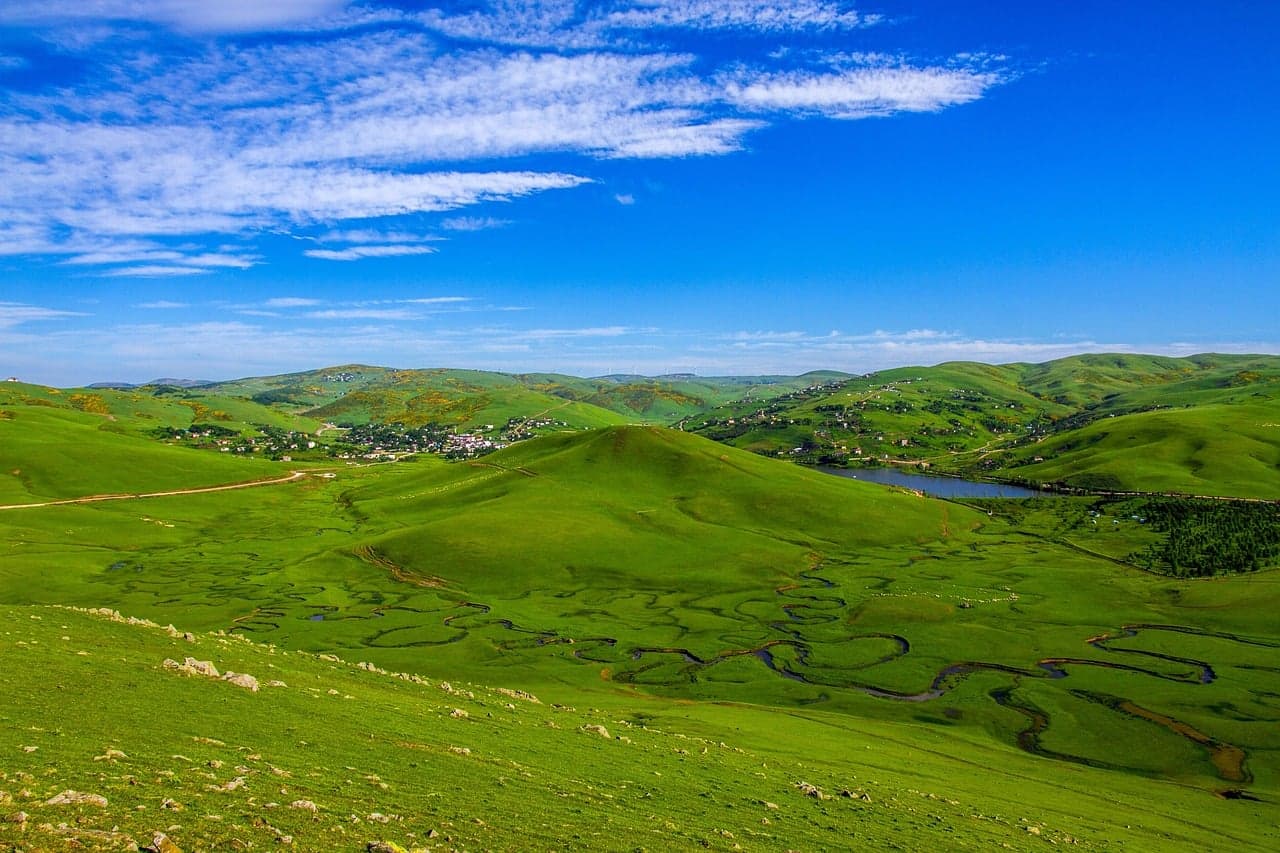
Make Boztepe, reached by cable car, your first stop in Ordu; from here you can take in the city and the Black Sea at a glance, then come down and explore Paşaoğlu Mansion, famous for its stonework. Along the coastal road, Cape Jason, where the legend of the Argonauts is set, and the castles of Ünye and Bolaman, and inland the Çambaşı and Perşembe yaylas, make Ordu a route of both sea and mountains.
What can you see in the city after coming down from Boztepe?
Ordu is a coastal city leaning against the slopes of Boztepe. Colonists from Miletus settled on this coast in the seventh century BC; the city then went through the Pontic, Roman and Byzantine periods. The stops in the centre are close to one another.
Boztepe
The hill, four hundred and fifty metres above the sea, is reached by a six-kilometre road from the provincial centre or by the cable car that leaves from the park in the city centre. At the top there are picnic areas and places to rest. Go up towards sunset to see the city lights and the coastline.
Paşaoğlu Mansion and the Ethnography Museum
The mansion in the Selimiye neighbourhood was built in 1896 by Paşaoğlu Hüseyin Efendi. Its stone was brought from Ünye and its timber from Romania; the half-columns at the corners, the windows with eaves and the carved stone balustrades are regarded as among the finest examples of nineteenth-century civil architecture. The wooden ceiling of the hall on the upper floor is decorated with oil-painted patterns and medallions with landscape paintings. In the building, a museum since 1987, one floor is devoted to local clothing and jewellery and the other to the room arrangements of the period; ancient objects depicting Apollo and Dionysus are also on display. Check the current hours and fees on the museum's official page.
Taşbaşı Cultural Centre, Sıtkıcan Caddesi and Menekşe Sokak
In the Taşbaşı neighbourhood rises an 1853 church with a basilica plan, built entirely of cut stone; the building has been used as a cultural centre since 2000. On Sıtkıcan Caddesi and Menekşe Sokak in the same neighbourhood, you can see the finest examples of historic houses built in the Ottoman period and restored.
Kurul Kalesi
Thirteen kilometres from the provincial centre, within the boundaries of Bayadı village, this ancient settlement is a first-degree archaeological and natural conservation site. Excavations that began in 2010 uncovered a temple and fortress walls; the marble statue of Cybele found in 2016 stands out as the first of the Hellenistic Cybele statues to be found in its original location.
Where should you stop along the coastal road?
Cape Jason and the Church of Jason
In the Perşembe district, on the Samsun–Ordu road, the cape is the only peninsula along the Black Sea coast with a church on it. The small church, built in 1869, has been repaired and opened to visitors. The legend of the Argonauts in search of the Golden Fleece is said to be set on this coast. Take a short walk at the tip of the cape, listening to the sea; nearby Perşembe is also a member of the Cittaslow network of slow towns.
Bolaman Castle and Haznedaroğlu Mansion
Inside the castle at Bolaman, in the Fatsa district, is a small chapel with a basilica plan. The wooden Haznedaroğlu Mansion, built inside the inner castle in the eighteenth century, is one of the region's most important examples of civil architecture. The wooden mansion rising within the stone walls makes an intriguing contrast.
Ünye Castle and the Ünye Museum House
At the entrance to Ünye Castle, about two thousand five hundred years old, is a rock tomb with four columns in front of it; eagle reliefs can be seen at the corners of its triangular pediment. In the town you can also visit the Ünye Museum House, built of wood on a stone base with the features of classical Ottoman architecture, and the stone Saray Hamam, still in use today.
Gaga Gölü
About ten kilometres north-east of Fatsa, among the hazelnut orchards, the lake was formed by a landslide. It has a small islet in the middle; the lake, home to a rich variety of plant and animal species, is protected as a natural conservation site. It suits a quiet walk and a photo stop.
When should you head up to Ordu's highland pastures?
Ordu is a province where the tradition of going up to the yaylas is still alive. When summer comes, many families from the coast move up to the highland pastures, where festivals and local markets are held.
Çambaşı Yaylası
At one thousand eight hundred and fifty metres above sea level, Çambaşı is one of the widest highland pastures in Türkiye, with more than seventy hamlets. With its cool air and trout in summer and its ski centre, opened in 2017, in winter, it welcomes visitors in all four seasons. There are regular minibus services from the city.
Perşembe Yaylası and its meanders
Seventeen kilometres from Aybastı, the yayla is at about one thousand five hundred metres. The curves drawn by the stream crossing the pasture, its meanders, are the area's most famous view; the governorship promotes this sight as a natural asset unmatched on the continent. Traditional oil wrestling takes place at the yayla festival held every July.
Keyfalan Yaylası and Ulugöl
Keyfalan, among pine forests at the foot of Kara Tepe, is at one thousand two hundred metres and stands out for its traditional highland houses. Ulugöl Nature Park, seventeen kilometres from Gölköy, has a crater lake two hundred and fifty metres across, surrounded by forest; it is suitable for camping.
What can you see in Ordu's wooden mosques?
The Laleli Nailless Mosque
The mosque in İkizce was built entirely of wood in the Tulip Era. Made of oak, which withstands the local climate, the building has come down to us through the centuries without wearing away; its door is decorated with tulip motifs.
The Eskipazar Mosque
The mosque in Eskipazar, one of Ordu's old settlements, is believed to have been built in the late fourteenth century by the Hacıemirids. Its carved window shutters and minbar are displayed as outstanding examples of woodwork at the Ankara Ethnography Museum. Next to it are a large domed hamam and a smaller one.
What is on the table in hazelnut country?
Ordu's cuisine varies between the coast and the highlands. Collard green (karalahana) soup and sarma, fried hamsi (anchovies), hamsi pilavı and corn bread are flavours shared across the Black Sea. Also try the ones unique to Ordu: hazelnut paste, fındıklı bal topu with hazelnuts and honey, Ordu pide, kuru yufka böreği, ısırgan yağlacı with nettles, Akkuş beans, Yalıköy köftesi and keşkek. Sautéed galdirik, melocan and sakarca greens and dürme pickles are also among the well-known flavours of the local table. Do not forget to buy hazelnuts on your way home.
How many days do you need in Ordu?
Two days is ideal; you can set aside another day for a yayla. A sample route:
- Day one: Paşaoğlu Mansion, Taşbaşı and Sıtkıcan Caddesi in the morning; Kurul Kalesi in the afternoon, and Boztepe by cable car in the late afternoon.
- Day two: west to Cape Jason and Perşembe; on the way back, cross east to Bolaman, Gaga Gölü and Ünye Castle.
- Day three: head up to Çambaşı or Perşembe Yaylası.
For other routes on the Black Sea coast, take a look at the City Routes page.
When should you go, and how do you get there?
June to September is the best time for the coast and the highland pastures; the festival at Perşembe Yaylası is in July. Çambaşı is open for skiing in winter. In the Black Sea climate, rain can surprise you in any season. You can reach Ordu via Ordu-Giresun Airport or by the coastal road; the yaylas are reached by minibus or car.
What should you keep in mind?
- Check the current hours and fees of museums and cultural centres on their official pages.
- Highland roads are winding and narrow in places; drive slowly in fog and rain, and check the weather before you set off.
- Take a raincoat and layers; summer nights on the yaylas are cool.
- Hazelnut orchards are private property; do not enter without permission or break off branches.
Frequently asked questions
How many days do you need in Ordu?
With one day for the city centre, Boztepe and Kurul Kalesi and one for Cape Jason, Bolaman and Ünye, you can see Ordu comfortably in two days. You can add a third day for Çambaşı or Perşembe Yaylası.
How do you get up to Boztepe?
Boztepe is reached by a road of about six kilometres from the provincial centre or by the cable car that leaves from the park in the city centre. The hill is four hundred and fifty metres above the sea.
When is the best time to visit Ordu?
June to September is the best time for the coast and the highland pastures; the Perşembe Yaylası festival takes place in July. In winter the ski centre at Çambaşı is open.
How do you get to Ordu?
You can reach Ordu by air via Ordu-Giresun Airport or along the Black Sea coastal road. There are regular minibus services from the city to Çambaşı Yaylası.
What should you eat in Ordu?
Collard green soup and sarma, fried hamsi, hamsi pilavı, corn bread, Ordu pide, ısırgan yağlacı, Akkuş beans and keşkek stand out. Hazelnut paste and fındıklı bal topu are Ordu's sweet signature.
Editorial desk
Stories signed by the Cultvia editorial desk follow our editorial policy; every story lists its sources at the end and errors are fixed under our corrections policy.
Last updated:
What changed?
- : First published
Sources
- Gör Ordu — Go Türkiye (Türkiye Turizm Tanıtım ve Geliştirme Ajansı)
- Ordu Aybastı Perşembe Yaylası - Menderesler — T.C. Ordu Valiliği
- Paşaoğlu Konağı Etnografya Müzesi — Kültür Portalı – T.C. Kültür ve Turizm Bakanlığı
- Taste the Flavors of Ordu Guide — Go Türkiye (Türkiye Turizm Tanıtım ve Geliştirme Ajansı)
Up next
 City RoutesParis Photo 2026: opening hours, sectors and what to see13 November 2026 · 1 min read


