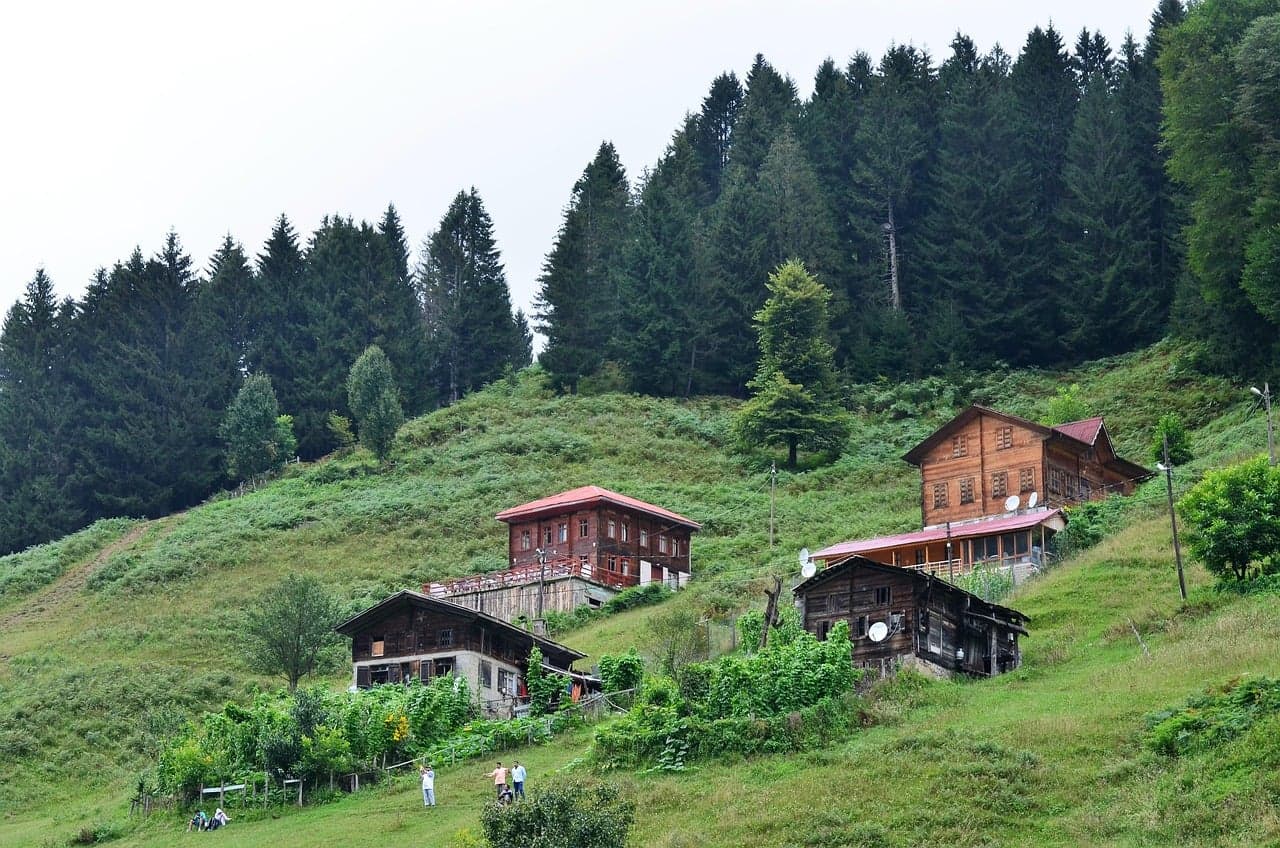
Most of what you should see in Rize is not on the coast but in the valley carved by the Fırtına stream and in the highland pastures on the slopes of the Kaçkar Mountains. Stops such as Ayder, Zil Castle and Pokut show the deepest shades of green, while the castle and tea gardens in the city centre tell the story of this land's bond with tea. With two or three days you can see both the valley and the yaylas without rushing.
What should first-time visitors see in Rize?
Ayder
Ayder, south-east of Çamlıhemşin, is Rize's best-known yayla (highland pasture) and the starting point for climbs into the Kaçkars from the north. Its wooden highland houses, the streams pouring down the slopes and its thermal spring make it the most visited place in the region. It gets crowded at weekends and on holidays; if you are looking for a quiet highland atmosphere, choose a weekday.
The Fırtına Valley and the Fırtına stream
Fed by waters gathered from the seaward slopes of the Kaçkars, the Fırtına is the best known of Rize's streams. Its strong flow makes it a rafting river, and the road along the valley carries you up to the yaylas through forest, bridges and stone houses. The valley is best explored slowly, stopping often.
Zil Castle
Zil Castle, built on top of a rock mass rising about a hundred metres above the stream bed on the west side of the Fırtına, is the region's most characteristic building. Inside the inner walls are a guardroom, a small chapel and a main tower that appears to have had four storeys. The castle protected the caravan road through the valley in the Middle Ages; restored today, it is one of the finest viewpoints over the valley.
Historic stone arch bridges
In the Fırtına Valley and along Rize's other streams you will see many stone arch bridges linking villages with yaylas and fields. For most of them the construction date is unknown; their round or slightly pointed arches are set on both banks so as to withstand floodwater. Taking photos from the bank rather than from the bridge itself is both safer and more beautiful.
Kaçkar Mountains National Park
The national park starts south of Çamlıhemşin and stretches as far as Erzurum and Artvin, covering three great massifs known as Verçenik, Hunut and Kaçkar. Kaçkar Peak is one of the highest summits in the country. The park has marked hiking trails, glacial lakes and highland settlements. The summit and the long trails require experience; for a short walk, start with the trails around Ayder.
Pokut
Among the yaylas of Çamlıhemşin, Pokut, with its wooden houses lined up along a ridge, is known for views that appear out of the mist. It is a good choice if you want to see a quieter yayla than Ayder. The road is narrow and partly gravel, so consider covering this stretch in local vehicles.
Ovit and Dağbaşı Glacial Lake
The Ovit route on the İkizdere side is one of the routes that show Rize's high-mountain face. Dağbaşı Glacial Lake along the way, with air that stays cool even in summer and a stark landscape ringed by bare peaks, is ideal for a short stop. At this altitude the weather changes quickly, so do not set off without a warm layer.
Rize Castle
The castle on the hill south-west of the city centre has two parts, the inner and the lower castle. The inner castle is thought to have been built in the sixth century and the lower castle in the thirteenth. The area around it has been laid out as a tea garden; it is one of the best spots in the centre for looking down over the city and the sea.
The Botanical Tea Garden
This park just above the city centre brings together the region's plants with trees and flowers that have adapted to the humid climate. Drinking tea from a tulip-shaped glass with views over the Black Sea, the castle and the city is the most natural welcome to Rize.
The terraced tea gardens of Çayeli
Haremtepe (Çeçeva), a few kilometres from Çayeli, is one of Rize's best-known viewpoints, with neat tea terraces wrapping the hills. The landscape left by tea growing, which spread in the region from the late nineteenth century, is seen most clearly here. Go during the harvest and the gardens are full of life; do not enter private land without permission.
Serenders and Çamlıhemşin houses
Serenders, wooden granaries raised on posts, were built to protect corn, cheese and butter from damp and from animals. The stone and timber mansions around Çamlıhemşin also show the region's traditional building craft. Some serenders have now been turned into guest accommodation.
How are Rize's coast, valleys and yaylas laid out?
You can think of Rize as a three-storey building. On the ground floor are the coastal strip and the city centre, in the middle the slopes covered in tea gardens and the stream valleys, and at the top the yaylas of the Kaçkars. West of the Pazar district, Kız Kalesi, on a small rock with no land connection, is one of the coast's emblems. The road from Ardeşen climbs to Çamlıhemşin, and from there into the Fırtına Valley and up to the yaylas.
At the table, anchovies come first: hamsikoli (anchovies with corn bread), anchovy pilaf, steamed anchovies and fried anchovies are the best known. A highland breakfast brings muhlama (cornmeal and cheese fondue), butter, cheese, grape molasses and Anzer honey, along with, of course, strong tea.
How many days do you need in Rize?
Two or three days is enough for most travellers. You could build a route like this:
- Day one: Rize Castle and the Botanical Tea Garden in the morning, the tea terraces at Çayeli in the afternoon, anchovies by the sea in the evening.
- Day two: After seeing Kız Kalesi at Pazar, head via Çamlıhemşin into the Fırtına Valley, its stone bridges and Zil Castle; spend the night in the valley or at Ayder.
- Day three: A short walk at Ayder, then up to Pokut or another yayla by local vehicle.
If you have more time, add the Ovit route via İkizdere. You will find other Black Sea stops on the City Routes page.
When should you go, and how do you get there?
June to September is the best time for the yaylas; the seasonal moves up to the highland pastures and the festivals usually fall in these months too. In spring the valleys are at their greenest, and in autumn the forests change colour. In winter, roads to the high yaylas can be closed by snow. You can reach Rize by air or by road along the coast; the yaylas are mostly reached by local vehicles leaving from the district centres.
What should you keep in mind?
- Highland roads are narrow, winding and in places dirt or gravel. If you are not used to such roads, go with a local minibus or an experienced driver rather than in your own car.
- Before setting off, check the forecasts and warnings of the Turkish State Meteorological Service. After heavy rain the risk of landslides and flooding rises, and fog can cut visibility to a few metres.
- Phone signal is not available everywhere in the yaylas, and petrol stations are few. Fill up before you go and tell someone your route.
- On mountain walks, stay on the marked trails; walk with a guide on summits and long routes.
- Be careful by streams and on bridges; the current of the Fırtına is much stronger than it looks.
- Check current hours and conditions for paid activities such as the thermal spring, rafting or museums on official sources.
Frequently asked questions
How many days do you need in Rize?
Allow one day for the city centre and tea gardens, one for the Fırtına Valley and Zil Castle, and one for Ayder and the nearby yaylas, and you can explore comfortably in three days.
When is the best time to visit Rize?
June to September is the best time for the yaylas. The valleys are greenest in spring and the forests colourful in autumn; in winter the roads to the high yaylas can be closed by snow.
Where is Ayder?
Ayder is south-east of the Çamlıhemşin district, on the northern slopes of the Kaçkar Mountains. It is known for its thermal spring and wooden highland houses, and it is the starting point for Kaçkar climbs.
Is it safe to drive on the highland roads?
The roads are narrow, winding and partly gravel. If you are not used to them, choose a local minibus or an experienced driver, and check the official weather warnings before setting off, because of landslide and fog risk after rain.
What should you eat in Rize?
Hamsikoli, anchovy pilaf and fried anchovies top the table. A highland breakfast includes muhlama, butter, cheese, grape molasses and Anzer honey, with strong Rize tea alongside.
Editorial desk
Stories signed by the Cultvia editorial desk follow our editorial policy; every story lists its sources at the end and errors are fixed under our corrections policy.
Last updated:
What changed?
- : First published
Sources
- Top Things to See in Rize — Go Türkiye (Türkiye Turizm Tanıtım ve Geliştirme Ajansı)
- Ayder Yaylası — Kültür Portalı – T.C. Kültür ve Turizm Bakanlığı
- Kaçkar Dağları Milli Parkı — Kültür Portalı – T.C. Kültür ve Turizm Bakanlığı
- Rize Kalesi — Kültür Portalı – T.C. Kültür ve Turizm Bakanlığı
Up next
 City RoutesParis Photo 2026: opening hours, sectors and what to see13 November 2026 · 1 min read


