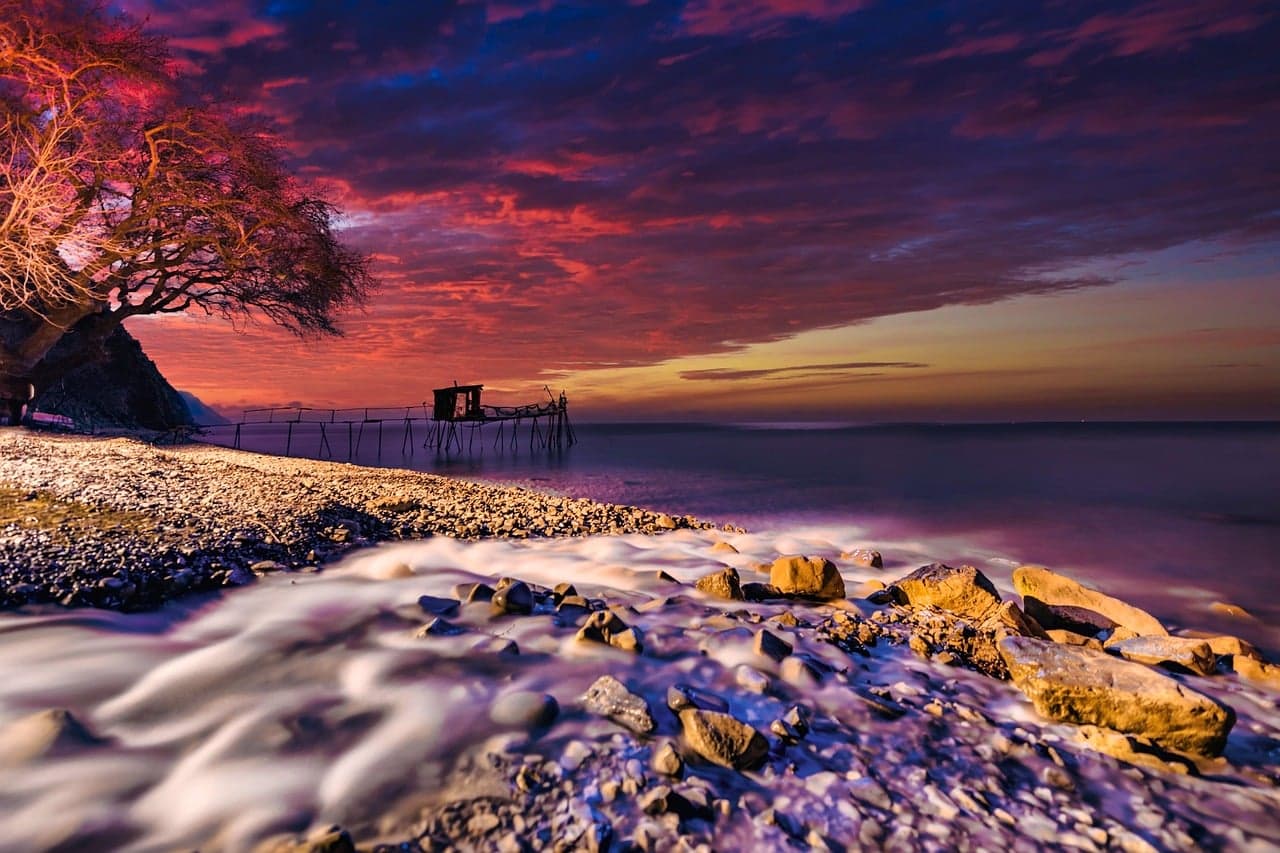
In Tekirdağ, start the day on the sea-facing slope of Süleymanpaşa: the Rüstem Paşa Complex, bearing the signature of the architect Sinan, old houses with bay windows and two small museums fit into the same walk. Then head west along the Marmara coast to Şarköy, among vineyards and olive groves, and to the Hora Lighthouse, which has shone since the nineteenth century. Heraion Teichos, the ancient city of the Thracians, the early Ottoman mosques inland and Tekirdağ köftesi complete the route.
What can you see on the slopes of Süleymanpaşa?
Tekirdağ, on the road between Edirne and Istanbul, became a summer town in the Ottoman period. The stops in the centre are close to one another; explore the streets overlooking the sea on foot.
The Rüstem Paşa Complex
The complex commissioned in the mid-sixteenth century by the grand vizier Rüstem Paşa is the work of the architect Sinan. The mosque, the bedesten, the madrasa, the hamam and the library still stand; according to the sources, it once also had a caravanserai and a soup kitchen. The walnut door of the single-balconied mosque, built of cut limestone, is inlaid with ivory. The six-domed bedesten of stone and brick west of the mosque is one of the best-preserved parts of the complex. A wooden school was later built in place of the madrasa, and the hamam next to it was designed as a double hamam with two sections, for women and men.
The traditional Tekirdağ houses
Some of the houses from the eighteenth and nineteenth centuries are still standing despite urban growth. These houses are usually two or three storeys high, with a stone ground floor and upper floors of timber with mud-brick infill. Almost all of them have projecting bay windows, carved double doors and marble stairs of seven or eight steps leading up from the front facade. To see the finest examples, wander the sea-facing streets between the Archaeology and Ethnography Museum and the Rakoczi Museum.
The Rakoczi Museum
The Hungarian prince Ferenc Rákóczi II spent his last years in Tekirdağ, between 1720 and 1735. In the museum, housed in an old Turkish house restored in his memory, there are documents about Rákóczi's life, objects from the period and, on the upper floor, oil portraits of his companions.
The Archaeology and Ethnography Museum
The museum, in a historic building from the Republic period, displays works going back to 4500 BC. Its large garden, with sarcophagi, grave stelae, altar stones and milestones from the Hellenistic, Roman and Byzantine periods, is like an open-air exhibition area. Check the current hours and fees on the museum's official page.
The Museum of Old Tekirdağ Photographs
Housed in an old mansion, the museum has more than one thousand five hundred photographs showing about a hundred and fifty years of the city's past. Stop by after visiting the other museums to compare today's streets with how they used to look.
Which ancient cities and lighthouses are on the Marmara coast?
Heraion Teichos
The mound on the Marmara coast is one of the most important Thracian settlements in Türkiye. Excavations show that the city was lived in without interruption for about thirty-three centuries, from 2000 BC to the end of the thirteenth century. Layers from the sixth century BC to the first century AD have been uncovered on the acropolis; the finds shed light on the daily and ceremonial life of the Thracians.
The Marmara Ereğlisi Lighthouse
On the cape at the southern tip of the Ereğli bay, the lighthouse, fifty-two metres above sea level, has guided ships since 1861. If you walk along the coast on the paths around the lighthouse, reached by a narrow dirt road, you come across a cave from the ancient city of Perinthos.
The Hora Lighthouse
The lighthouse at Hoşköy in the Şarköy district was also built in 1861, in the reign of Sultan Abdülmecid, by French architects. Its tower of cast-iron and steel panels and its crystal lens mechanism, brought from France, still work. Its position between vineyards, olive groves and the sea offers one of the finest sunset spots on the coast.
Which historic mosques should you see in inner Thrace?
When you head inland from the coast, Tekirdağ's districts hold some of the earliest Ottoman buildings in Rumelia.
The Gazi Ömer Bey Mosque, Malkara
The mosque, built in 1488, and the tomb in its courtyard are among the earliest Ottoman works in Rumelia. It stands in the middle of the Malkara bazaar, woven into the town's daily life.
The Güzelce Hasan Bey Mosque, Hayrabolu
Completed in 1499 according to its inscription, this square, cut-stone mosque is an outstanding example of early classical Ottoman architecture in Thrace. It is also known locally as the Grand Mosque.
The Ayas Paşa Mosque, Saray, and the Süleymaniye Mosque, Çorlu
The Ayas Paşa Mosque in Saray was built in 1525; the century-old boxwood trees in its garden complete the building's calm atmosphere. The Süleymaniye Mosque in Çorlu, built in 1521 by Sultan Süleyman the Magnificent, is a building with a single large dome, known locally as the Camii Kebir.
How do you get to know Tekirdağ through its vineyards and its table?
Viticulture in the region goes back to antiquity; produce was once carried in amphorae to the Mediterranean from small harbours such as Mürefte, Hoşköy, Gaziköy and Uçmakdere. Şarköy is still known today for its vineyards and its dense olive oil with a distinctive aroma. Tekirdağ köftesi, which has a geographical indication, is made by resting the minced meat and cooking it on the grill, and usually comes with pepper paste and ayran. For dessert, try Tekirdağ peynir helvası, made with flour and fresh unsalted cheese and distinguished by its stringy texture. Malkara's aged kaşar cheese, bulama made from grape must and Hayrabolu tatlısı are also well-known flavours of the local table.
How many days do you need in Tekirdağ?
Two days is ideal. A sample route:
- Day one: the Rüstem Paşa Complex, the streets of old houses, and the Rakoczi and Archaeology museums; köfte and peynir helvası on the seafront in the evening.
- Day two: west to Şarköy and the Hora Lighthouse; on the way back, Heraion Teichos, or head east to the Marmara Ereğlisi Lighthouse.
- If you have time, spend a third day visiting the historic mosques of Malkara, Hayrabolu and Saray.
For other routes in Thrace, take a look at the City Routes page.
When should you go, and how do you get there?
June to September is the best time for the sea, and autumn for the grape harvest and quiet shores. Walking among the olive groves in spring is also a pleasure. You can easily reach Tekirdağ by road from Istanbul and Edirne; the stops in Süleymanpaşa are within walking distance, while you need a vehicle for Şarköy, the lighthouses and the district mosques.
What should you keep in mind?
- Check the current hours and fees of the museums on their official pages.
- The lighthouses are working navigation structures; do not go inside the wire fences around them.
- The coastal road gets crowded at summer weekends; set off early.
- Vineyards and olive groves are private property; do not enter without permission.
Frequently asked questions
How many days do you need in Tekirdağ?
With one day for the complex, the old houses and the museums in Süleymanpaşa and one for Şarköy, the Hora Lighthouse and Heraion Teichos, you can see Tekirdağ comfortably in two days. You can add a third day for the historic mosques in the districts.
Which museums can you visit in Tekirdağ?
The Archaeology and Ethnography Museum, the Rakoczi Museum and the Museum of Old Tekirdağ Photographs are close to one another in the centre. Check the current hours and fees on the museums' official pages.
When is the best time to visit Tekirdağ?
June to September is the best time for the sea, and autumn for the grape harvest and quiet shores. Spring is also good for walking.
How do you get to Tekirdağ?
You can easily reach Tekirdağ by road from Istanbul and Edirne. The stops in the centre are within walking distance; for Şarköy, the lighthouses and the district mosques you need a vehicle.
What should you eat in Tekirdağ?
Tekirdağ köftesi and peynir helvası, both with a geographical indication, are the best-known flavours. Malkara's aged kaşar, Şarköy olive oil, bulama made from grape must and Hayrabolu tatlısı are also worth trying.
Editorial desk
Stories signed by the Cultvia editorial desk follow our editorial policy; every story lists its sources at the end and errors are fixed under our corrections policy.
Last updated:
What changed?
- : First published
Sources
- Gör Tekirdağ — Go Türkiye (Türkiye Turizm Tanıtım ve Geliştirme Ajansı)
- Tat Tekirdağ — Go Türkiye (Türkiye Turizm Tanıtım ve Geliştirme Ajansı)
- Rüstem Paşa Külliyesi — T.C. Tekirdağ Valiliği
- Tekirdağ Halk Mimarisi — Kültür Portalı – T.C. Kültür ve Turizm Bakanlığı
Up next
 City RoutesParis Photo 2026: opening hours, sectors and what to see13 November 2026 · 1 min read


