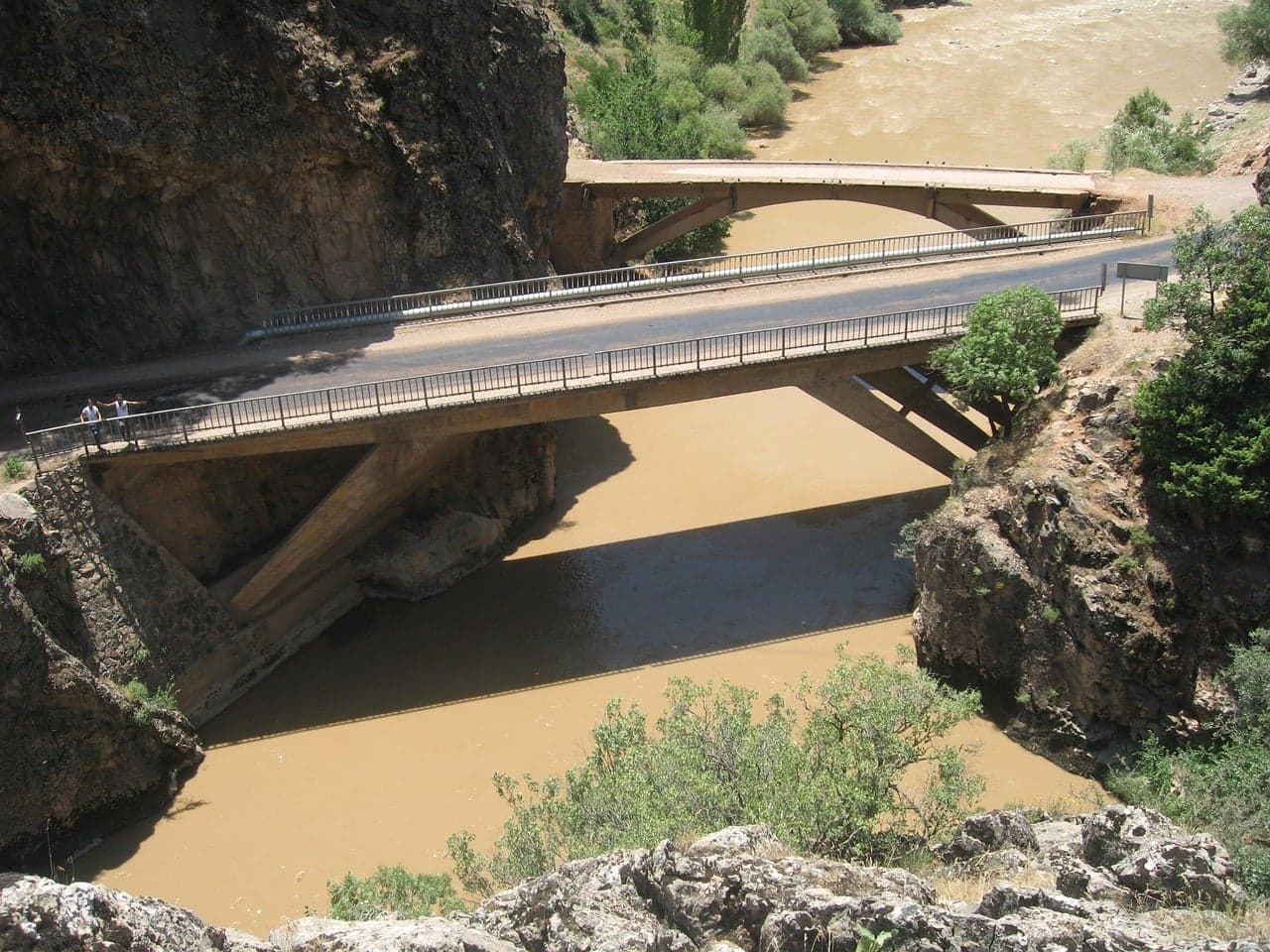
Make Munzur Valley the centre of a Tunceli trip. According to the Tunceli Governorship and Go Türkiye, the province is mountainous, with the Munzur range rising above three thousand metres in the north, narrow steep valleys and plentiful water. Around it you can add a castle on a reservoir, a small town of stonework and valleys with Urartian traces.
What can you see in Munzur Valley?
The valley begins as many branches on the southern slopes of the Munzur Mountains, joins on the Ovacık plain, meets the Pülümür Valley in the city and descends to the Keban reservoir. More than 1,500 plant species are recorded in the national park, 43 of them growing only in the Munzur Mountains, including Munzur thyme and the Munzur peony. Rare animals include the Anatolian wild goat; scan the rocky slopes with binoculars early in the morning. Stay on the paths and do not pick plants.
East of Ovacık, the Munzur Springs feed the Munzur River and Mercan Stream, roughly eighty kilometres of clear water that is valuable habitat for red-spotted trout. The Ovacık plain, at 1,350 metres, is the province's largest flat area, and the small crater lakes above it, the largest being Karagöl at 2,400 metres, can only be reached on foot with an experienced guide.
What is in the Pülümür and Rabat valleys?
The Pülümür Valley, carved by the Pülümür stream, has very narrow, steep walls, the Weeping Rocks and formations around Gelin Lake. Hatun Bridge, about three kilometres from the district centre, stands on a historic route; nearby are the Bride Rooms, deep chambers thought to be rock-cut in the Urartian period. The Rabat Valley, about twenty kilometres from the city, is a first-degree archaeological site where a castle, bridge, waterfall and caves sit close together, according to the Culture Portal of the Ministry of Culture and Tourism.
What is at Pertek and Çemişgezek?
Pertek Castle, about three kilometres southwest of Pertek, was built in the ninth century and became an island in the Keban reservoir. The bronze black bird figure on its tower dates to the Seljuk period; the best view is from the lakeshore near sunset. Sungur Bey Mosque, first built in 1569, was moved stone by stone before the dam filled, and Sağman Mosque dates to 1555.
Çemişgezek, north of the reservoir, packs many historic buildings into a small district: Yelmaniye Mosque with its monumental portal, the single-arched Tahar Bridge built in 1807–1808 and the Seljuk-era Sivdin Bridge, and the rock-cut İn Delikleri chambers. In Mazgirt, the castle is thought to be Urartian, and the Tunceli Museum, opened at the end of 2020, shows archaeological and cultural works.
What do you eat in Tunceli?
Try orcik (walnuts, almonds or hazelnuts strung and dipped in grape or mulberry juice), pestil, mahluta soup with red lentils and bulgur, kumbik pastry and kofik stuffed peppers and aubergines. Go Türkiye also lists the geographically indicated şorbik soup, Tunceli mountain garlic and Çemişgezek Ulukale mulberries.
Okur için: how many days, when and how to get there
Three days work well. Day one: Munzur Valley to Ovacık and the Munzur Springs, then the museum in the city. Day two: Pertek Castle and Sungur Bey Mosque, then Çemişgezek. Day three: Pülümür Valley and Hatun Bridge or Rabat Valley; Mazgirt Castle if time remains.
June to September suits valleys and high plateaus, and spring brings wildflowers; high passes can close with snow in winter. Reach Tunceli by road via Elazığ or Erzincan, and you need a car for the valleys and districts. Mountain roads are narrow and winding, so check the weather first, check museum hours on its official page, and never climb to high lakes or peaks alone. More routes are on City Routes.
Frequently asked questions
How many days do you need in Tunceli?
Three days: one for Munzur Valley and Ovacık, one for Pertek and Çemişgezek, one for Pülümür or Rabat.
What can you see in Munzur Valley?
Endemic plants, rare animals such as the Anatolian wild goat, the Munzur River with its red-spotted trout, and the Munzur Springs east of Ovacık.
When is the best time to visit Tunceli?
June to September for valleys and plateaus; spring adds wildflowers, while high passes can close with snow in winter.
Editorial desk
Stories signed by the Cultvia editorial desk follow our editorial policy; every story lists its sources at the end and errors are fixed under our corrections policy.
Last updated:
What changed?
- : First published
Sources
- Gör Tunceli — Go Türkiye, 22 October 2026
- Tat Tunceli — Go Türkiye, 22 October 2026
- Doğa ve Coğrafya — T.C. Tunceli Valiliği, 22 October 2026
- Rabat Köprüsü ve Şelalesi — Kültür Portalı, 22 October 2026
Up next
 City RoutesParis Photo 2026: opening hours, sectors and what to see13 November 2026 · 1 min read


