Lisbon climbs the slopes above the wide mouth of the Tagus, and a good visit uses its hills rather than fighting them. This three-day route draws on the city's official tourism site Visit Lisboa and the Castelo de São Jorge.
Where should you start in Lisbon?
The centre, Baixa, sits on the flat ground between two hills. To the east are Alfama and the castle, to the west Chiado and Bairro Alto, and Belém lies a few kilometres further along the river. The pavements are polished stone and the slopes are steep, so plan your day around the climbs and rely on trams and lifts when you tire.
What is there to see in Baixa and Chiado?
Praça do Comércio, the great square open to the river on one side, was the palace square before the 1755 earthquake. After the quake Baixa was rebuilt on a regular grid with uniform elegant facades, and a pedestrian street leads from the square to Rossio. The iron Santa Justa Lift, opened in the early twentieth century, links Baixa to Chiado and has a terrace with views of Rossio, the castle walls and the river. Chiado, with its historic cafes, theatres and bookshops, leads up to Bairro Alto, quiet by day and lively at night.
What is in Alfama and on the castle hill?
The Castelo de São Jorge stands on a site settled since the Iron Age and took its present form largely in the thirteenth century: a quadrangular wall, eleven towers and two courtyards. Walk the ramparts for views over the rooftops, the bridges and the river. Below it, the Romanesque cathedral and the stepped lanes of Alfama, the oldest district and one largely spared by the earthquake, reward wandering. Fado, Portugal's melancholy folk music, is on UNESCO's intangible heritage list, and small houses in Alfama, Mouraria and Madragoa let you hear it live; stay silent during the song.
Is Tram 28 worth riding?
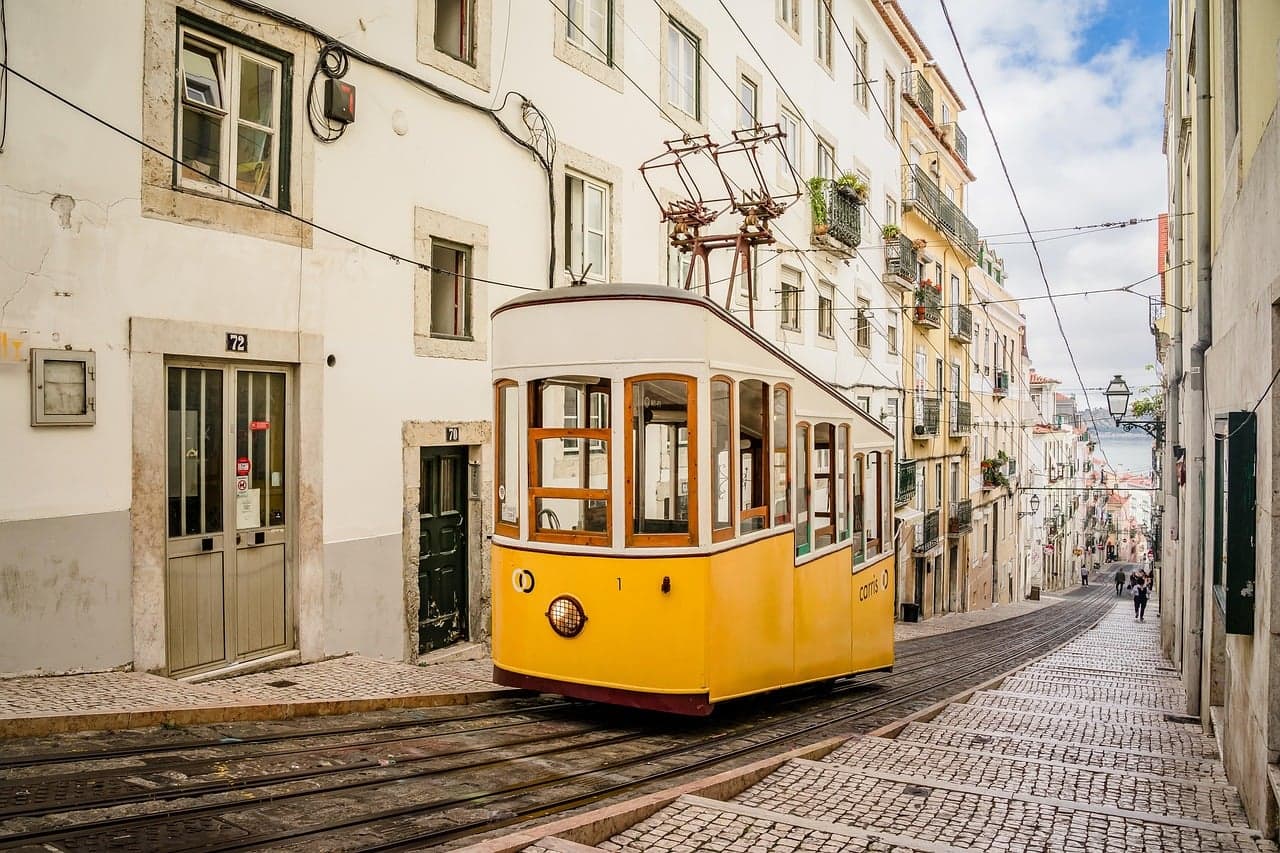
According to Visit Lisboa's page on the route, the little yellow tram runs between Graça and Prazeres past historic districts and the cathedral, crossing Baixa and climbing to Chiado and Estrela. It is very crowded at midday; ride early or in the late afternoon.
Which monuments are in Belém?
The Jerónimos Monastery, founded in 1496, is a masterpiece of sixteenth-century Portuguese architecture, with maritime motifs on its facade. The explorer Vasco da Gama and the poet Luís de Camões are commemorated in the church. Belém Tower, completed in 1514 to guard the river mouth, was designed by Francisco de Arruda. Both were inscribed on the UNESCO list in 1983. Nearby, the MAAT museum and a riverside path offer a contemporary contrast.
| Day | Plan |
|---|---|
| 1 | Praça do Comércio, Baixa and Rossio; Santa Justa Lift to Chiado; evening in Bairro Alto |
| 2 | Tram 28 to Alfama, cathedral and Castelo de São Jorge; evening at a fado house |
| 3 | Belém: Jerónimos Monastery, Belém Tower, MAAT; the aqueduct or Gulbenkian on the way back |
For the visitor: what should you know before going?
Spring and autumn are the most comfortable seasons for walking. Check current opening hours and prices for the monastery, tower and castle on their official pages, and wear shoes with grip, since wet stone is slippery. Keep bags in front of you on Tram 28 and at the viewpoints. Sweet tooth? Try the pastel de nata. More city routes are in our Reads section.
Frequently asked questions
How many days do you need in Lisbon?
Three days cover the main areas; a fourth allows a trip to Sintra or Cascais.
What is Tram 28?
A small yellow tram running between Graça and Prazeres through the historic districts, according to Visit Lisboa.
Editorial desk
Stories signed by the Cultvia editorial desk follow our editorial policy; every story lists its sources at the end and errors are fixed under our corrections policy.
Last updated:
What changed?
- : First published
Sources
- Lisboa Centro — Visit Lisboa, 17 October 2026
- No. 28 Tram — Visit Lisboa, 17 October 2026
- Jerónimos Monastery — Visit Lisboa, 17 October 2026
- The Castelo de São Jorge — Castelo de São Jorge (EGEAC), 17 October 2026
Up next
 City RoutesParis Photo 2026: opening hours, sectors and what to see13 November 2026 · 1 min read


